
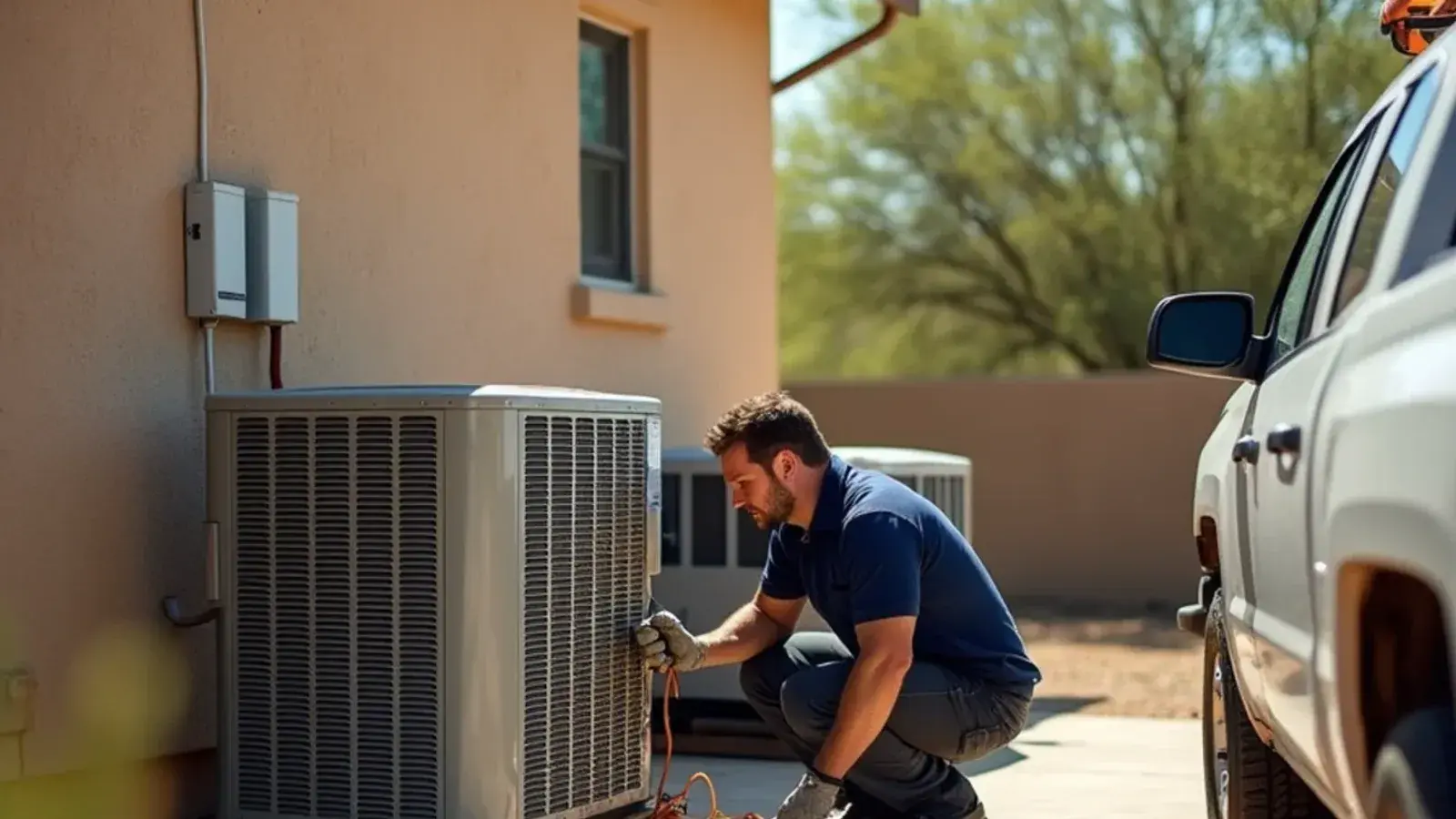
AC replacement in Rio Grande City usually comes up at the worst moment: the compressor has quit in July, or a technician has just told you the system needs another refrigerant charge it cannot hold. Before you spend money either way, it helps to know when repair still makes sense, why the indoor and outdoor halves are changed together, and what a replacement day really involves.
We replace worn-out split systems and package units throughout Starr County, and on many jobs the new equipment is running before the end of the day it was chosen. The old unit's refrigerant is recovered and the equipment goes away on our truck.
Is it time to replace, or is one more repair worth it?
No single number decides this. We look at the age of the system, what failed, what refrigerant it uses, and how often it has needed work. The table below is the rough guide we walk customers through.
| What we find | What it usually means | Lean toward |
|---|---|---|
| Failed capacitor, contactor or fan motor on a system under 10 years old | Common wear part, the rest of the system is fine | Repair |
| Compressor failure out of warranty, system 12+ years old | The most expensive part in the system is gone | Replace |
| R-22 system low on refrigerant | Recharge refrigerant is scarce and the leak is still there | Replace |
| Leaks found in the outdoor coil again after an earlier fix | Coil corrosion tends to spread | Replace |
| Rooms that never cool, high bills, but parts all test good | Possibly undersized, ducts leaking, or simply worn | Inspect ducts, then decide |
If the problem turns out to be a single failed part, our compressor repair and refrigerant leak repair pages explain those fixes. Repairing is a perfectly good answer when the rest of the system has life left.
Local conditions shorten that life. A system here can log more cooling hours in one season than a northern unit does in two, caliche dust packs the condenser coil so the compressor runs hot, and humid air near the river corrodes coil tubing. Owner-built homes that added rooms often outgrew the original tonnage years ago. ENERGY STAR suggests having any system over 10 years old evaluated when repairs, bills or uneven rooms start adding up.
How we reach a recommendation
- Confirm the failure with readings, not a guess.
- Read the data plate for age, tonnage and refrigerant.
- Run a load calculation to see whether the old size was ever right.
- Measure static pressure to judge whether the ducts can carry the airflow.
- Check the line set and pad for size, kinks and settling.
- Write up both paths, repair and replacement, so you compare them side by side.
Why the condenser and indoor coil are changed as a pair
A central air conditioner is one refrigerant circuit split between two boxes. The outdoor condenser and the indoor evaporator coil are designed and efficiency-rated as a matched combination, and the published SEER2 number only holds when the two are paired as tested.
The refrigerant change makes this even more important. New residential systems built from 2025 on use R-454B or R-32 instead of R-410A, and the indoor coil and its metering device have to be designed for that refrigerant. An old coil also carries years of oil and debris that a new compressor should not have to swallow.
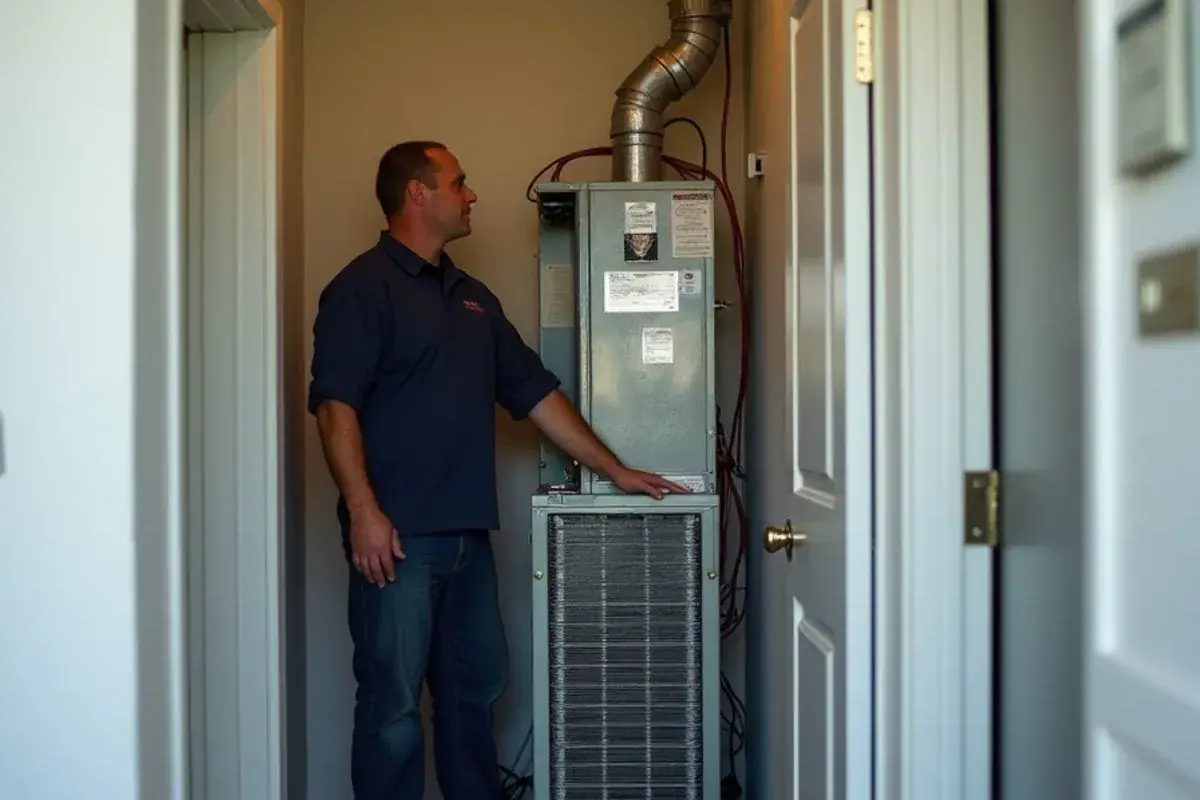
The furnace or air handler cabinet can sometimes stay if the blower is healthy and it is compatible with the new coil. If it is rusted, noisy or undersized for the new tonnage, a full system replacement is the cleaner job.
Retiring an old R-22 air conditioner
R-22 production and import in the US ended in 2020. What is still sold is reclaimed or from old stock, and its price reflects that. A system still running on R-22 is generally 15 years old or more, and adding more refrigerant only buys time if the leak is still there.
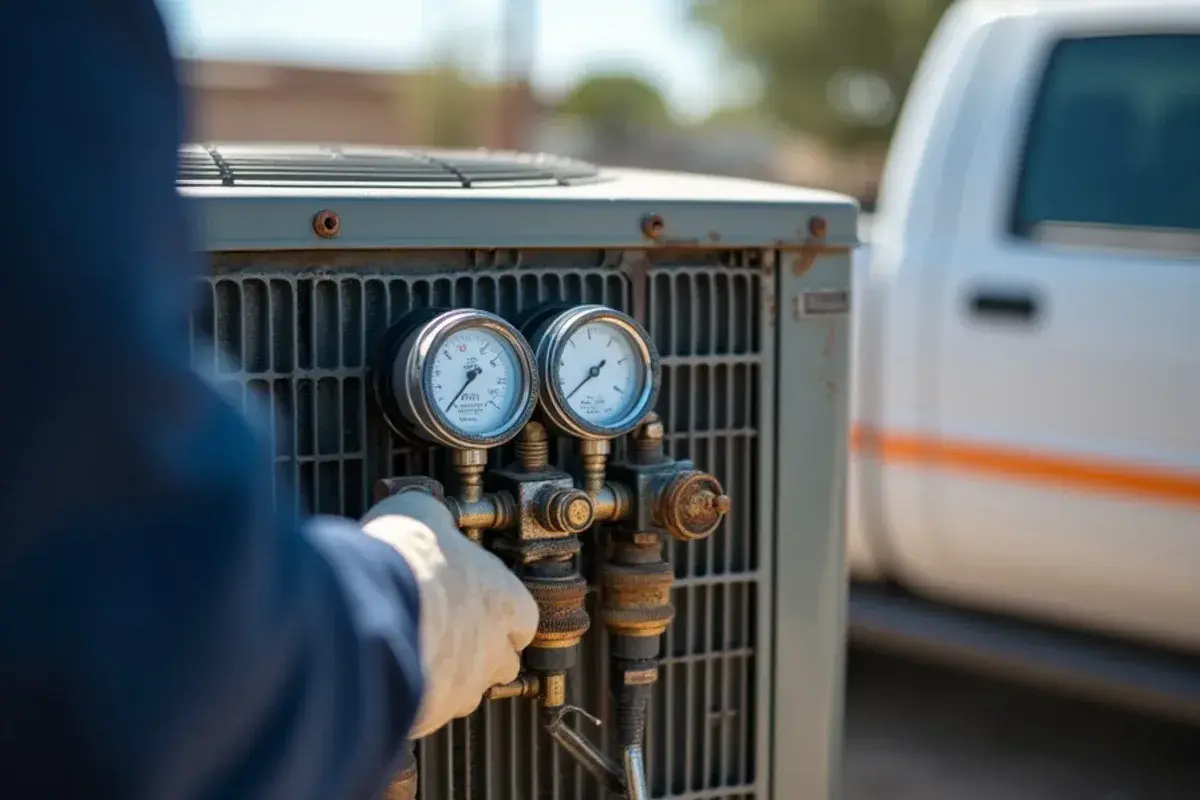
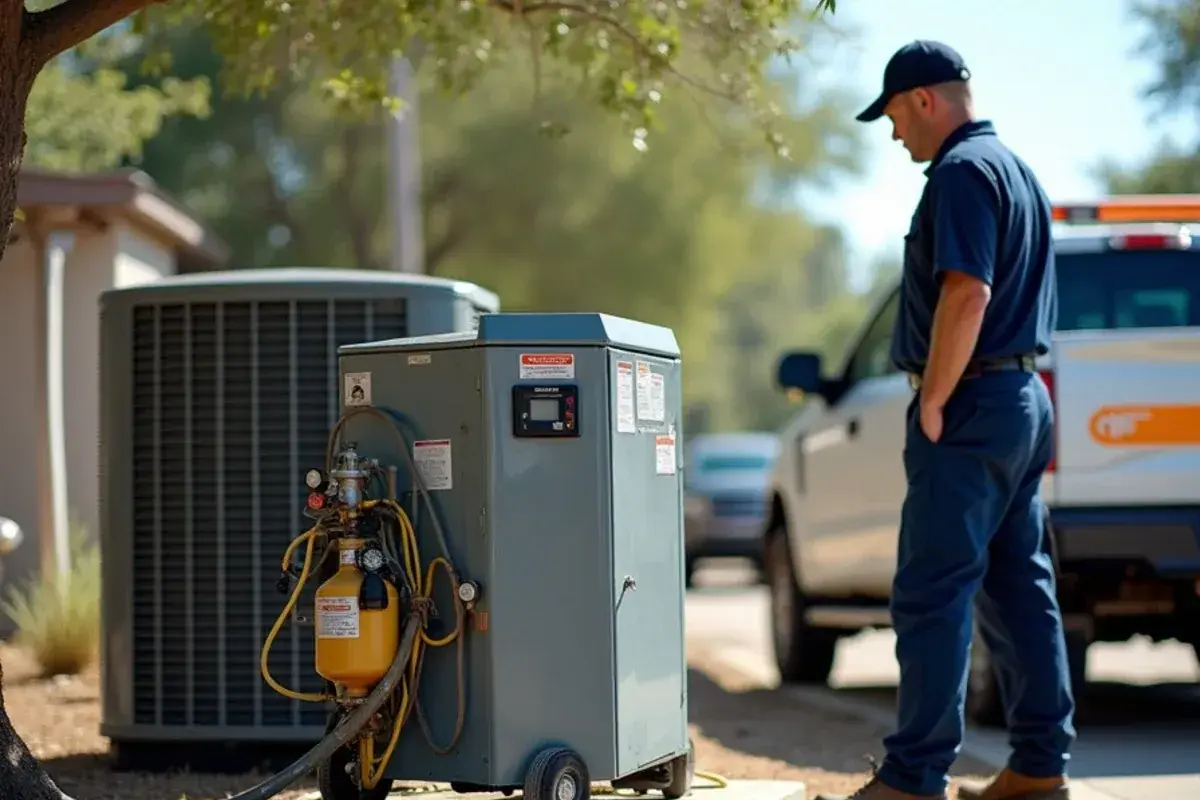
You cannot simply switch an R-22 system to a newer refrigerant. The oils, metering device and pressures are different, so the change requires new equipment on both sides. Before removal, the remaining refrigerant is pumped into a recovery cylinder under EPA Section 608 rules, the federal regulation for handling refrigerant.
What happens on replacement day
What the replacement covers
- Recovery of the old refrigerant and haul-off of the old equipment
- A matched condenser and indoor coil, or a full air handler change
- A line set flushed or replaced, plus the disconnect and drain checked
- Pad leveling or a new pour by our own concrete crew
- Start-up testing, thermostat setup and manufacturer warranty registration details
Morning: shutdown and removal
Power is shut off, refrigerant is recovered, and the old condenser and coil are disconnected and carried out.
Midday: new equipment and copper
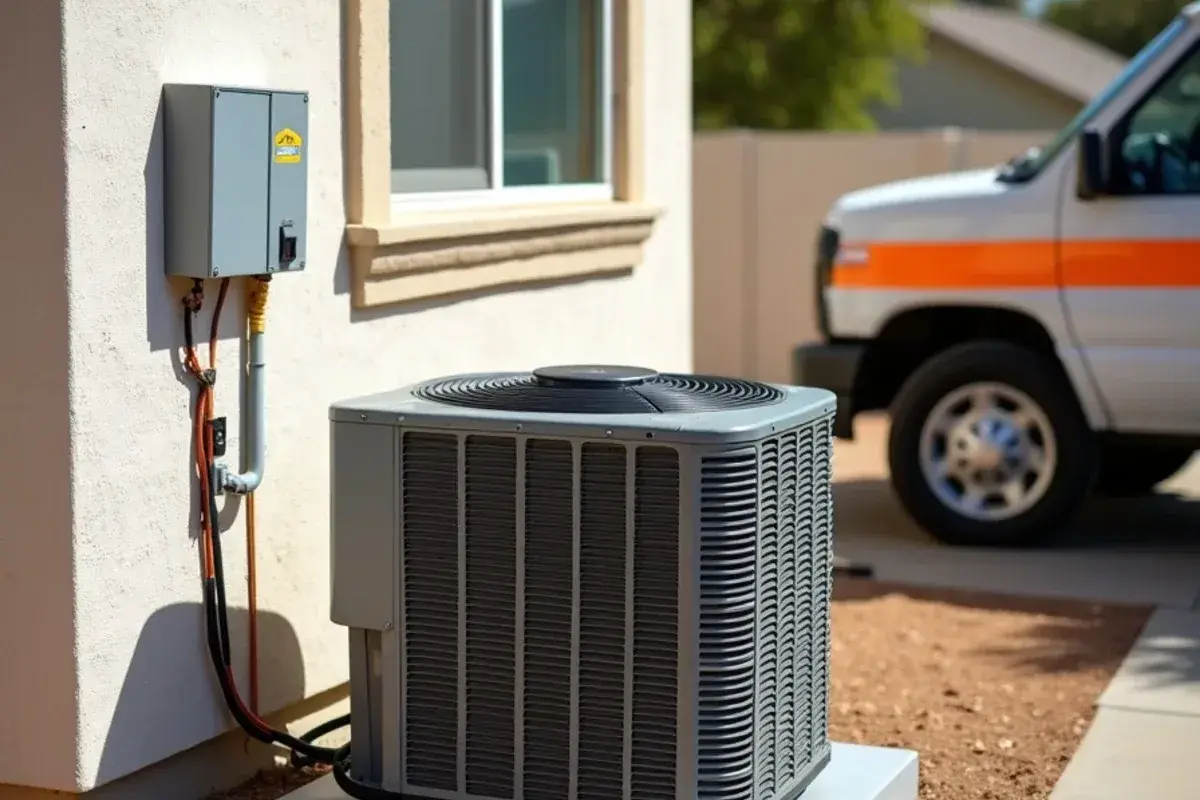
The new outdoor unit is set and leveled, and the new coil goes in. We check whether the existing copper line set is the right size and clean enough to reuse. If it is too small, kinked or contaminated, a new one is run.
Afternoon: vacuum, charge and testing
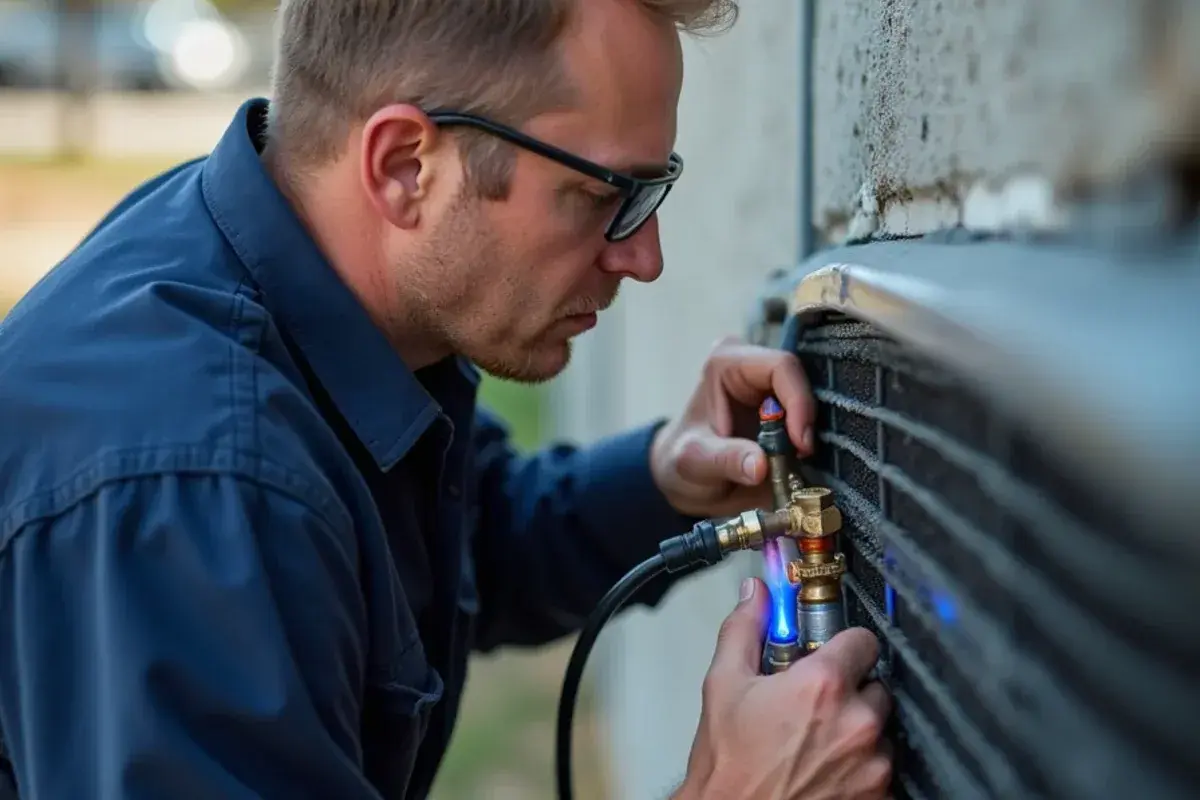
The system is pressure tested with nitrogen, pulled into a deep vacuum, then charged and checked under load. We test temperature drop across the coil, amp draw and drain flow before we leave.
If ducts are leaking badly into the attic, duct sealing at the same time keeps the new system from cooling the attic instead of the house.
Pricing variables on a replacement
We quote replacements after seeing the house, because these items change the job from one address to the next:
- Tonnage and the SEER2 level you choose above the 14.3 minimum.
- Coil-only versus a full air handler or furnace change.
- Line set reuse or replacement.
- Pad condition, since a sunken or cracked pad may need to be repoured.
- Electrical updates such as a new disconnect or breaker.
- Duct repairs, a new thermostat or a float switch on the drain.
- Haul-off of the old unit, which is part of the job rather than an extra trip.
The biggest single variable is how much of the old system can stay. A coil-and-condenser swap on sound ducts and a reusable line set is the leanest job; a full system with an air handler, new copper and duct repairs is a different scope. We can price two efficiency levels so you see what the higher SEER2 tier adds.
Payment does not have to happen all at once. Our AC financing page covers how to compare offers, and you can go back to the main AC installation page for other system types.
Register the new equipment with the manufacturer soon after install, since many parts warranties are shorter if registration is missed. Before anyone starts work, a quick search on the TDLR website shows whether that company holds the A/C contractor licence the state requires.
TDLR, EPA and city permit rules for a change-out
TDLR licenses A/C contractors in Texas and expects them to follow local building rules. A change-out within the city is subject to permits and inspections from Rio Grande City's code enforcement office, while homes in unincorporated Starr County should confirm local requirements before the old unit comes out. Under EPA Section 608, the old charge has to be recovered into a cylinder, and R-22 can only be reused or reclaimed, never vented.
Replacing a system with 956 Multi Service
956 Multi Service is a Rio Grande City company, founded in July 2024, with a small crew that both installs the system and pours the pad under it. Forty-one customers have reviewed us on Google, for a 5.0 average. Call between 8 AM and 7 PM on any day except Sunday. Many replacements are running the same day the equipment is chosen when the schedule allows. We accept cash, Visa, MasterCard, Discover and American Express, and financing is available for a new system.
Google reviews that mention work like ac replacement
5.0 out of 5 from 41 Google reviews
“After my mr. Cool Mini split ac went out nd Mr. Jesus Cantu was notified for Assistance, he suggested and advised on a confort AC mini split 2 ton Unit to cool off my living Quarters. Awesome results , Quick installation and proficient professional job . Very efficient and professional your man . Would recommend to Rio Grande Vally Whole..heartedly. don't fight the heat notify Jesus Cantu.”
“Very great customer service! Talked to them over the phone to explain my A/C situation I was having, and they knew what the problem was right away! Came to fix the problem in a timely manner! Recently I purchased a new unit and they went for an installation the same day! Highly recommended!”
“Excellent service! We bought two units of air conditioners from them at a great price, plus they included installation. They were super friendly and, as I said before, provided excellent service. Highly recommended!”
What else should you know before replacing an old AC?
When is it time to replace rather than repair my AC?
Replacement usually makes sense when a big part such as the compressor or outdoor coil fails on a system that is roughly 15 years old or older, when it uses R-22, when leaks keep coming back, or when you have paid for several repairs in a short span. If the system is younger and the failure is a capacitor, contactor or motor, repairing it is often the better call. We will show you the readings and tell you which way we would go.
Do I have to replace the indoor coil when I replace the outdoor unit?
In almost every case, yes. The outdoor unit and indoor coil are rated as a matched pair, and new systems use R-454B or R-32 refrigerant that an older coil was never built for. Pairing a new condenser with an old coil can lower efficiency, cause charging problems and may affect the manufacturer warranty. Keeping the old furnace or air handler cabinet is sometimes possible if it is in good shape.
What happens to my old R-22 system?
The remaining refrigerant is recovered into a cylinder before anything is disconnected, because venting it is illegal. After that the condenser, coil and any other replaced parts are hauled away with the job. R-22 that is recovered can be reclaimed, which is part of how the remaining supply for older systems is kept going.
How long does a full AC replacement take?
Swapping the outdoor unit and indoor coil on ducts that are in good shape is typically a one-day job, and it is often finished the same day you approve it when the equipment is on hand. Adding a new air handler, a new line set, a pad or duct repairs can stretch it into a second day. You will know the expected schedule before work starts.
Still have a question about ac replacement? Ask us directly.
Call (213) 423-7827Where we handle ac replacement
- AC Replacement in Garceño, TXOlder ranch-style homes here still run R-22 systems that are due for replacement.
- AC Replacement in Mikes, TXManufactured homes need replacement units matched to belly ducts that are often crushed.
- AC Replacement in East Alto Bonito, TXHomes on exposed higher ground take full afternoon sun, so right-sizing the new unit cuts runtime.
- AC Replacement in La Puerta, TXHomes beside roadside businesses on US-83 often run aging splits ready for a matched change-out.
- AC Replacement in La Grulla, TXOlder frame houses with leaky attic ducts need a duct check before a new condenser goes in.
- AC Replacement in Las Lomas, TXWind-blown caliche dust off the hills wears out condenser coils and compressors early.
- AC Replacement in Palmview, TXBuilder systems from the 2000s and 2010s are reaching replacement age.
- AC Replacement in Peñitas, TXFast-growing subdivisions have builder-grade systems coming due for their first major decisions.
- AC Replacement in Starr CountyLong cooling seasons across the county put more hours on equipment than its age suggests.
- AC Replacement in San Juan, TXDense older neighborhoods between Pharr and Alamo run aging central systems that are reaching replacement age.