
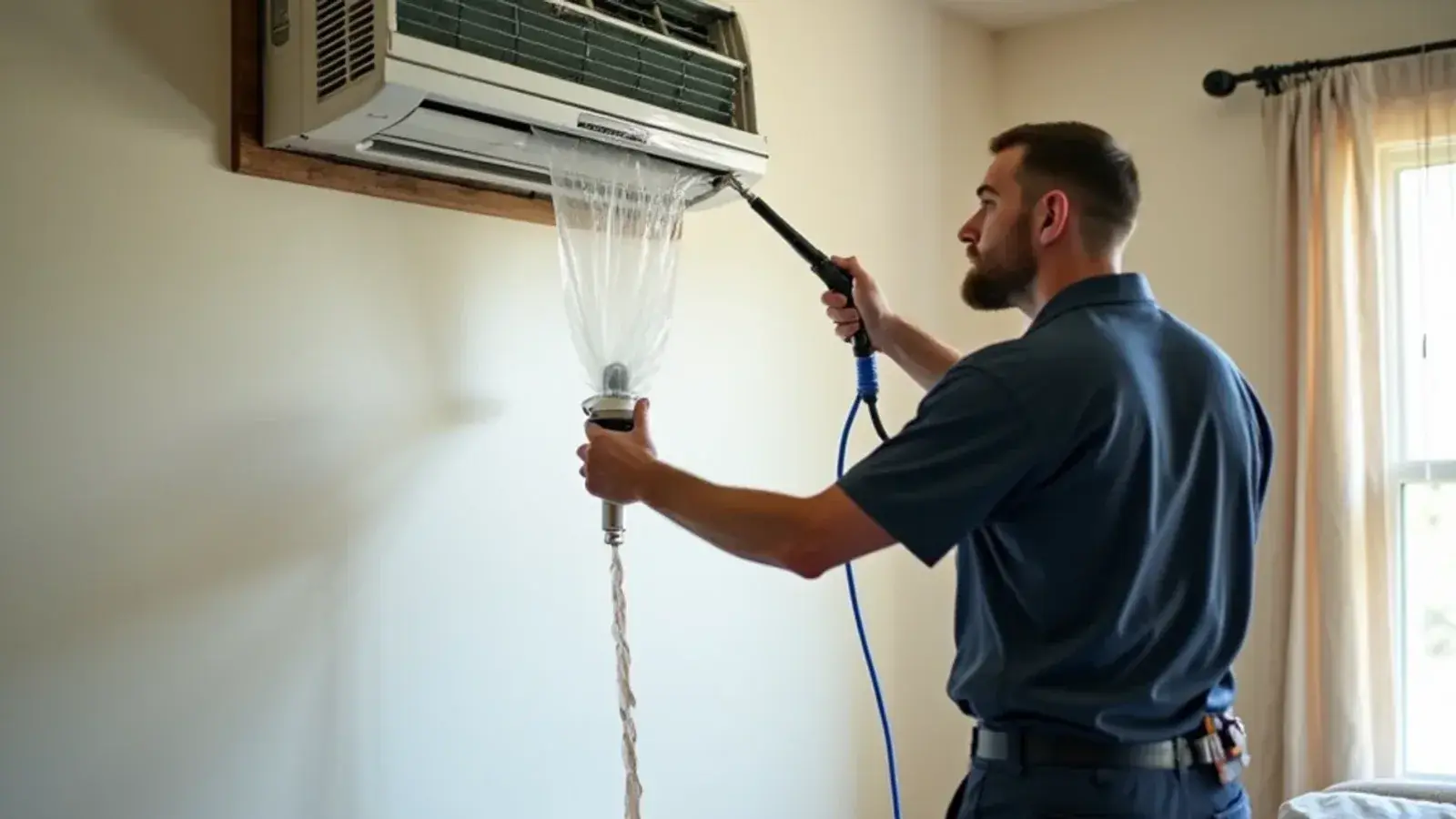
Rinsing the filters is not the same as cleaning a mini-split. Behind those filters sit a coil, a blower wheel and a drain pan that stay damp for most of the day, and in a Rio Grande City summer that is exactly where dust, mold and slime settle. Our mini-split cleaning service opens each head down to those hidden parts, washes every one, and finishes with a rinse of the outdoor unit.
The goal is simple: a unit that smells clean, moves full airflow and stops dripping. Many people find us searching for limpieza de minisplit after a musty smell shows up, and a deep clean is usually the fix.
Why isn't a filter rinse enough?
The washable filters catch larger dust. Fine particles still get through, and when they hit the cold, wet coil they stick. Over time a layer builds on the coil fins and on the blower wheel, the long cylinder of curved blades that pushes air out of the head.
That layer does three things. It blocks airflow, so the room cools slowly. It feeds mold and bacteria, which cause the smell. And it slides down into the drain pan, where slime clogs the drain and sends water down your wall.
What a full deep clean covers
A deep clean reaches every surface the air touches, plus the outdoor unit:
- Room protection: power off at the breaker, drop cloths and a rinse bag under the head.
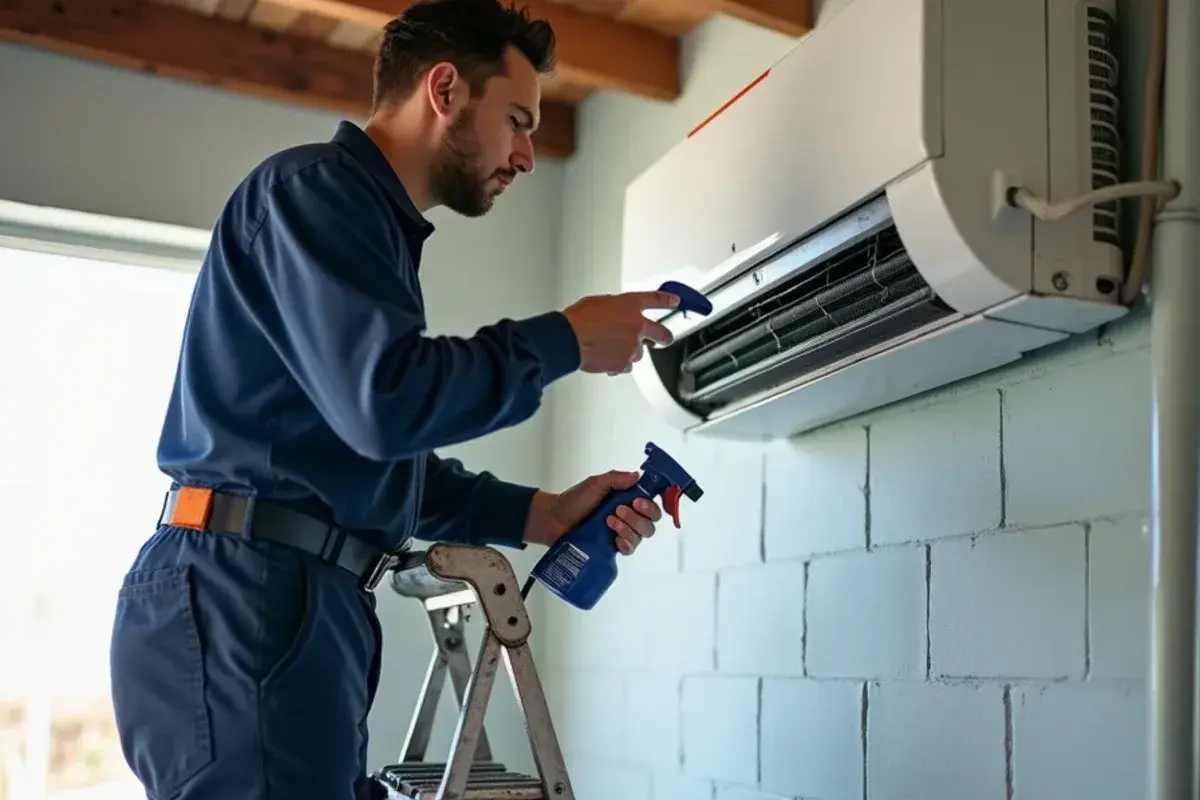
- The indoor coil, washed with a cleaner labeled for indoor coils and rinsed clear.
- The blower wheel, cleaned blade by blade or removed when buildup is heavy.
- The drain pan and line, scrubbed and flushed to the outside.
- Filters, front cover and louvers, washed and dried.
- The outdoor coil, rinsed of dust and plant debris, followed by a test run.
Signs a head is overdue
- A sour or musty smell for the first few minutes after the unit starts.
- Black specks on the louvers, or blown onto the wall, bed or floor below.
- Airflow noticeably weaker than when the unit was new.
- Water dripping from the bottom of the head.
- The unit runs longer to reach the same temperature.
- Allergy or asthma symptoms that get worse in the room with the head.
If the unit is also showing an error code or blowing warm air, a cleaning may help, but it could be a separate fault. In that case, see our mini-split repair page.
What happens during a deep clean
Each head goes through the same sequence:
- Shut off power and protect the room.
- Remove the cover, filters and louvers to expose the coil and wheel.
- Wash the coil and blower wheel until the rinse runs clear.
- Clean the drain pan and flush the line.
- Rinse the outdoor unit.
- Reassemble, restore power and test airflow, temperature and drainage.
Here is what each step involves.
Protect the room
Power is switched off at the breaker. Furniture below is covered, a drop cloth goes down, and a cleaning bag is strapped under the head to catch rinse water.
Open the head
The front cover, filters and louvers come off. On some models, the side panels and electrical cover are removed so the coil and blower wheel are fully exposed.
Wash the coil and blower wheel
The coil gets a cleaner made for indoor coils and is rinsed until the water runs clear. The blower wheel is cleaned blade by blade. When buildup is heavy or the model allows, the wheel is removed for a more thorough wash.
Clear the drain
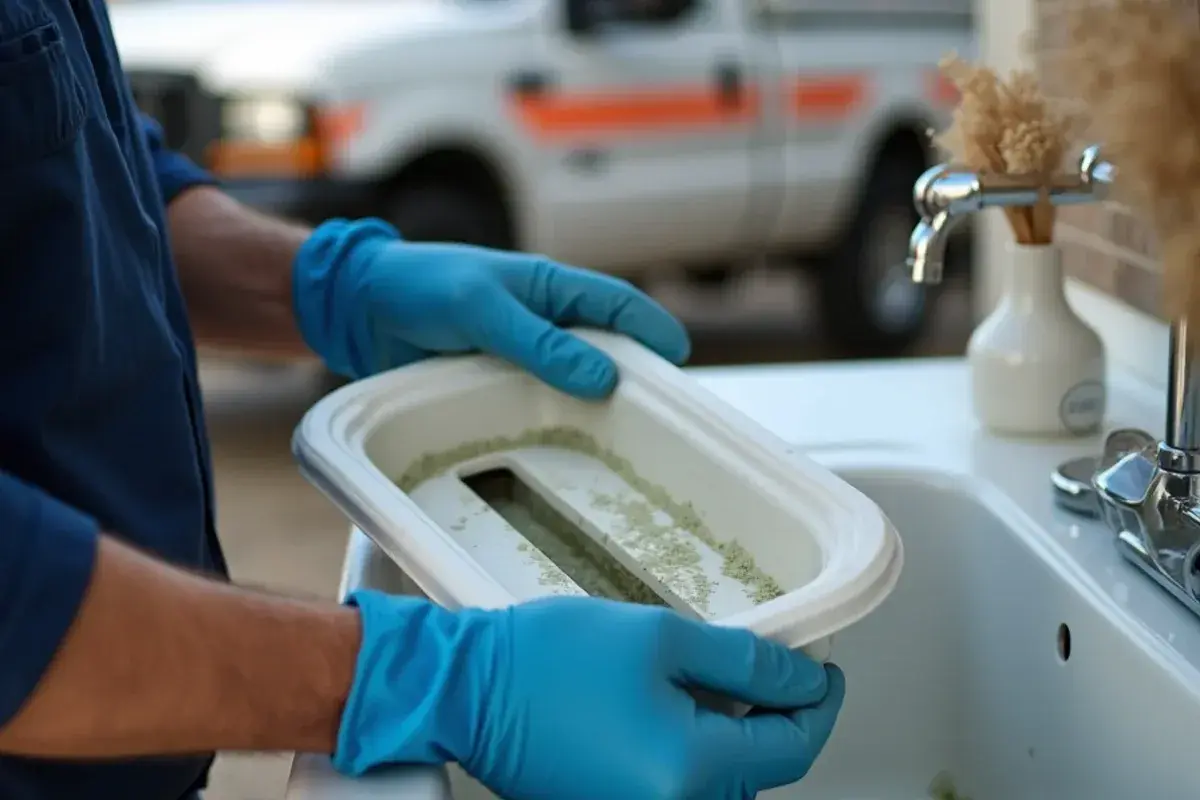
The drain pan is cleaned, or removed and scrubbed, and the drain line is flushed to make sure water reaches the outside.
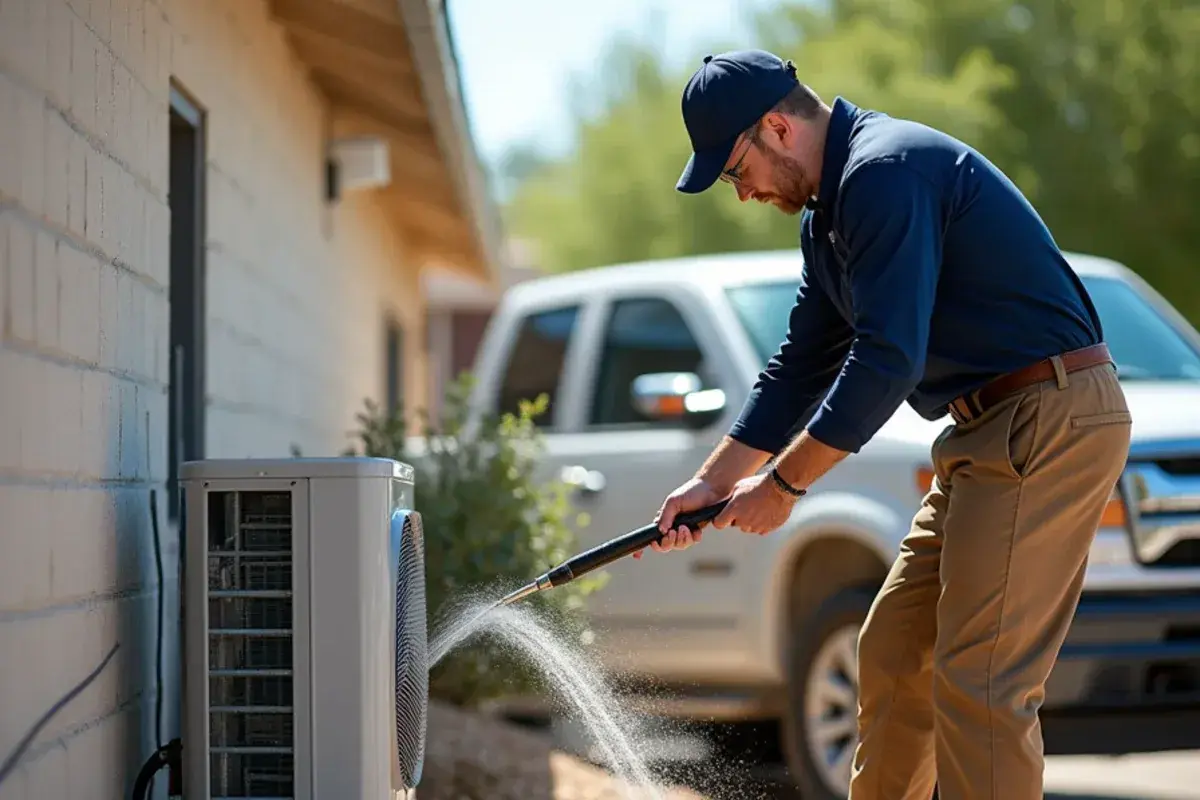
Wash the outdoor unit
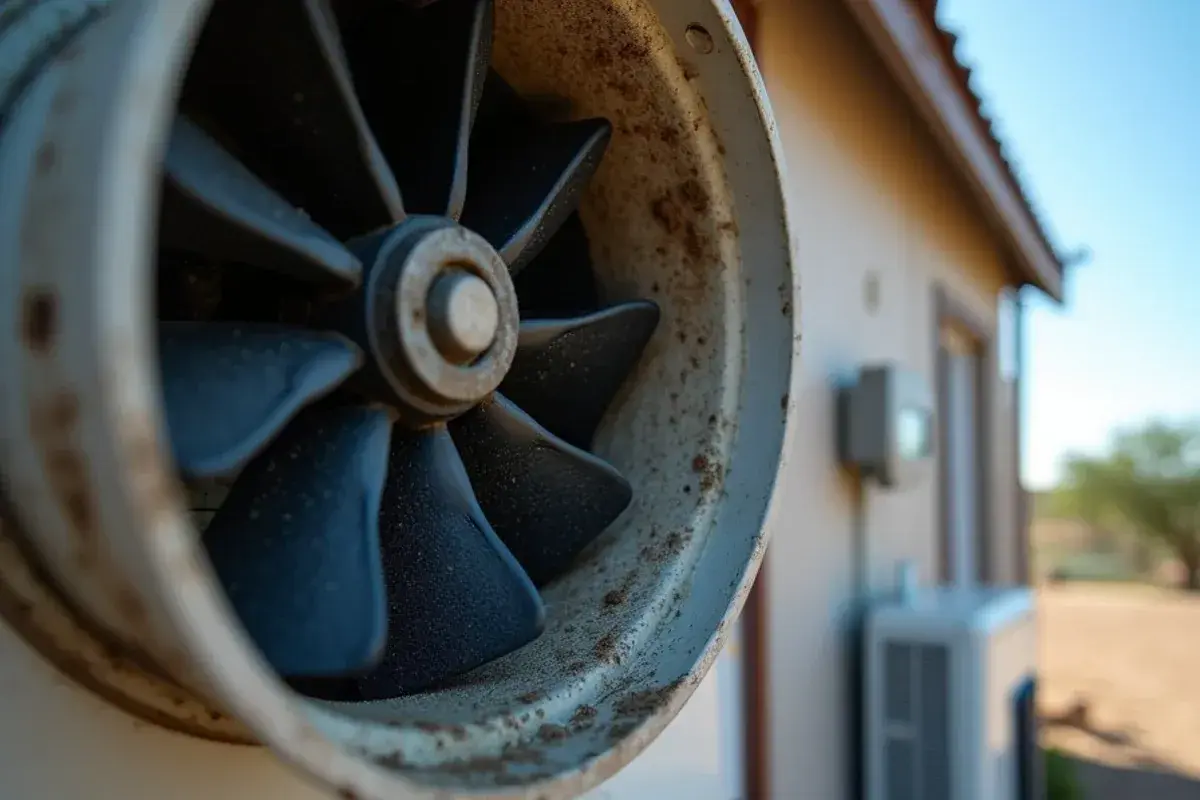
Outside, the condenser coil is rinsed of caliche dust, mesquite leaves and, near the river, cottonwood fluff. Clean outdoor fins help the whole system shed heat. For central systems, the equivalent service is AC coil cleaning.
Reassemble and test
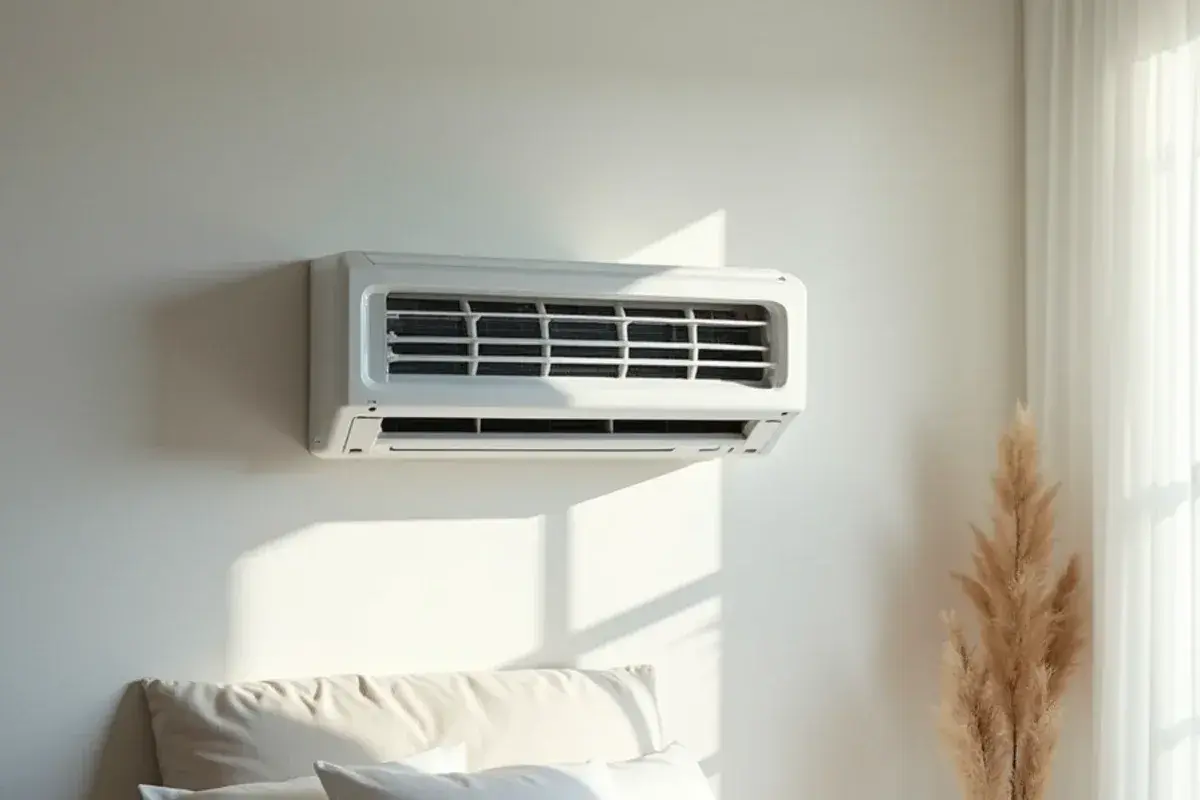
Everything goes back together, the power comes on, and we check airflow, temperature and drainage. The unit is left spotless.
How often each type of room needs it
| How the head is used | Suggested deep clean | Filter rinse |
|---|---|---|
| Bedroom running every night | Every six months | Every two weeks in summer |
| Living room or kitchen | Every six to twelve months | Every two to four weeks |
| Home with pets, smokers or a dirt road nearby | Every six months | Every two weeks |
| Guest room or occasional use | Once a year | Monthly in season |
Between cleanings, running the fan or dry mode for a few minutes after cooling helps the coil dry out. Some models have a self-clean setting that does this for you.
Cost factors for a mini-split cleaning
We quote cleanings by the head, after you tell us what you have. What changes the price:
- The number of heads, and whether they are wall-mounted, ceiling cassettes or floor consoles.
- Mounting height and access, such as stairwells, vaulted ceilings or tight corners.
- How heavy the buildup is, and whether the blower wheel has to come out.
- The number and location of outdoor units, such as a roof bracket.
- Whether a condensate pump is part of the drain and needs cleaning too.
- Short line sets on some DIY kits that keep the head tight to the wall and slow disassembly.
Give us the full head count when you call so every unit at the address fits in one trip.
A cleaning does not cover repairs. If we find a failing sensor, a leak or a damaged part, we explain it and quote it separately.
Cleaner labels, mold and refrigerant rules
Use any coil cleaner or disinfectant only as its label directs, and only on the surface it is labeled for; outdoor-coil products can be too harsh for an indoor head, and some are not meant for the room you sleep in. A deep clean removes the growth inside the unit. It is not mold remediation of walls or ceilings, which Texas licenses as a separate trade through the Texas Department of Licensing and Regulation. The same agency licenses A/C contractors, so you can look up anyone you hire on the TDLR website. Cleaning does not open the refrigerant circuit; if a repair does, EPA Section 608 forbids venting the refrigerant.
Booking a mini-split cleaning with 956 Multi Service
Washing out ductless heads is routine for our small Rio Grande City crew. The company has been at it since July 2024, and every one of its 41 Google reviews carries a 5.0. Cleaning appointments fill our Monday-through-Saturday hours, 8 AM to 7 PM, never Sundays, and a gap in the schedule sometimes allows a same-day visit. Cash, American Express, Discover, Visa and MasterCard are all accepted, and financing is available if the cleaning turns up a larger repair.
Google reviews that mention work like mini-split cleaning
5.0 out of 5 from 41 Google reviews
“A top-notch service for mini-split cleaning! They truly take their time to leave each unit spotless. I've been a customer for quite some time, and they consistently exceed my expectations. My air conditioners always work much better after their visit. Completely satisfied!”
“Have used them twice for mini split maintenance and cleaning. Super communicative and does good work. They’re my go-to people for mini split services now 👍🏼”
“Excellent service for mini-split repair and cleaning. Very attentive and friendly. 100% recommended.”
Still wondering how often, how long or how many heads?
How often should a mini-split be deep cleaned in South Texas?
For most homes, once a year is a good baseline, best done in spring. Heads that run every night in a bedroom, cool a kitchen, or serve a home with pets, smokers or a dirt road out front often need it every six months. Between deep cleanings, rinse the washable filters every few weeks during the hottest months.
Why does my mini-split smell musty when it starts?
The indoor coil and blower wheel stay damp for hours while the unit cools. Dust that slips past the filter sticks to those wet surfaces, and mold and bacteria grow on it, especially in the drain pan and the blower wheel. When the fan starts, it pushes that smell into the room. Rinsing filters will not fix it; the coil, wheel and pan need a real cleaning.
What is included in a mini-split deep clean?
We protect the wall and floor, remove the cover, filters and louvers, and strap a cleaning bag under the head. The coil is treated with cleaner and rinsed, the blower wheel and drain pan are scrubbed, the drain line is flushed, and the filters and covers are washed. Outside, the condenser coil is rinsed. Then the unit is reassembled and tested for cooling and proper drainage.
Can you clean several heads in one visit?
Yes. Homes with three, four or more heads are common, and cleaning them all in one trip is the most practical way to do it. Tell us how many heads you have, which rooms they are in and whether any are mounted high on a stairwell or vaulted wall, so we set aside the right amount of time.
Can I clean my mini-split myself?
Partly. Rinsing the washable filters every few weeks and wiping the louvers is safe and worth doing. Spraying the coil yourself is riskier: the control board sits beside it, rinse water has to be caught in a bag, and the blower wheel and drain pan stay dirty. Switch the unit off at the breaker before touching anything inside the head.
Still have a question about mini-split cleaning? Ask us directly.
Call (213) 423-7827Where we handle mini-split cleaning
- Mini-Split Cleaning in South Alamo, TXDamp air in the low river country grows mold on indoor coils and blower wheels quickly.
- Mini-Split Cleaning in Granjeno, TXHomes this close to the Rio Grande keep heads wet for long hours, which feeds slime in drain pans.
- Mini-Split Cleaning in Los Ebanos, TXRiver humidity and long cooling seasons make sour startup smells a common reason to call.
- Mini-Split Cleaning in Fronton, TXHeads in river-edge homes on FM 650 benefit from a spring clean before the humid months.
- Mini-Split Cleaning in La Puerta, TXHomes and roadside businesses along US-83 pick up traffic dust on outdoor units and filters.
- Mini-Split Cleaning in Las Lomas, TXCaliche dust from the hills coats the outdoor coil, so the condenser rinse matters as much as the head.
- Mini-Split Cleaning in Escobares, TXMini-splits that replaced window units run every night, so their first deep clean comes due fast.
- Mini-Split Cleaning in Mikes, TXIn compact manufactured homes, one head often cools most of the house and collects dust quickly.
- Mini-Split Cleaning in East Alto Bonito, TXOpen, sun-beaten homes run heads for long hours, which builds up the blower wheel faster.