
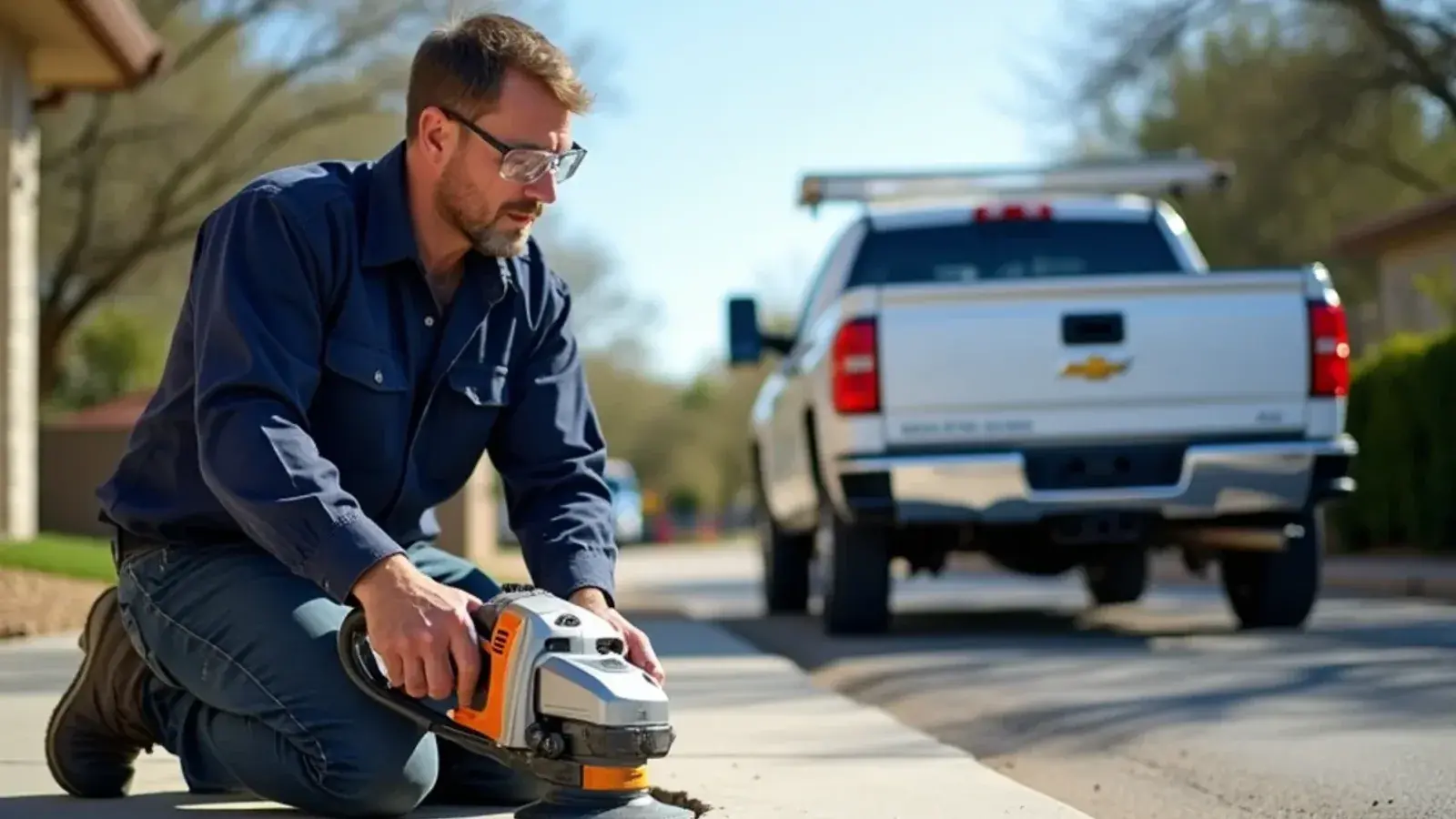
Concrete does not crack for no reason. The ground under it moved, water got where it should not, or the slab was asked to carry more than it was built for. Concrete repair in Rio Grande City starts with that question, because sealing a crack over a base that is still washing out only buys a season.
We look at the crack, the slab around it and the yard around the slab. Then we tell you plainly whether it can be fixed in place or whether a section should come out. Most of the time the answer is somewhere in between.
Repairs we take on include:
- Driveway, sidewalk and patio cracks, routed and sealed.
- Spalled, flaking or chipped surfaces patched with bonding mortar.
- Porch steps, nosings and landings rebuilt or reset.
- Sunken or broken panels leveled or cut out and replaced.
- Drainage corrections that stop water from undermining the slab again.
What the damage is telling you
Different kinds of damage point to different causes. A quick read of yours helps set expectations before we even arrive.
| What you see | What it usually means | How urgent |
|---|---|---|
| Thin hairline cracks spread across the surface | Shrinkage as the concrete dried, often from a hot-weather pour | Low, seal to keep water out |
| One straight crack across a walk or drive | The slab cracked where it needed a joint | Low to moderate |
| Crack with one side higher than the other | Settling or soil heave under one panel | Moderate, and a trip hazard |
| Flaking, pitted or dusty surface | Surface dried too fast or was overworked when poured | Low, cosmetic unless spreading |
| Broken step corners or loose treads | Impact, freeze damage from storms like Uri, or weak original edges | Moderate, safety issue |
| Patio or walk tilting toward the house | Base washed out or soil shrinking under one side | Higher, water may reach the foundation |
If cracks run through the house foundation itself, show a wide gap at doors and windows, or keep growing month to month, that is a structural question. We will tell you so and suggest having a structural engineer look before any cosmetic work.
Why do driveways and walks break up on Valley soil?
The ground here works against flatwork in several ways at once. Clay pockets swell after a soaking rain and pull back during drought, so a slab rides up and down over the years. Caliche varies within a few feet, leaving hard spots and soft spots under the same panel. Heavy rain like Hurricane Hanna brought in 2020 can wash fine soil out from under the edges.
Then there is how the concrete was placed. A slab poured on loose fill, without enough control joints, or in full afternoon sun is more likely to crack early. Driveways that started as walk-thickness slabs crack under pickups and trailers. Mesquite roots can lift a sidewalk panel near a tree.
How we decide between patching, leveling and replacing
The repair visit follows the same order every time:
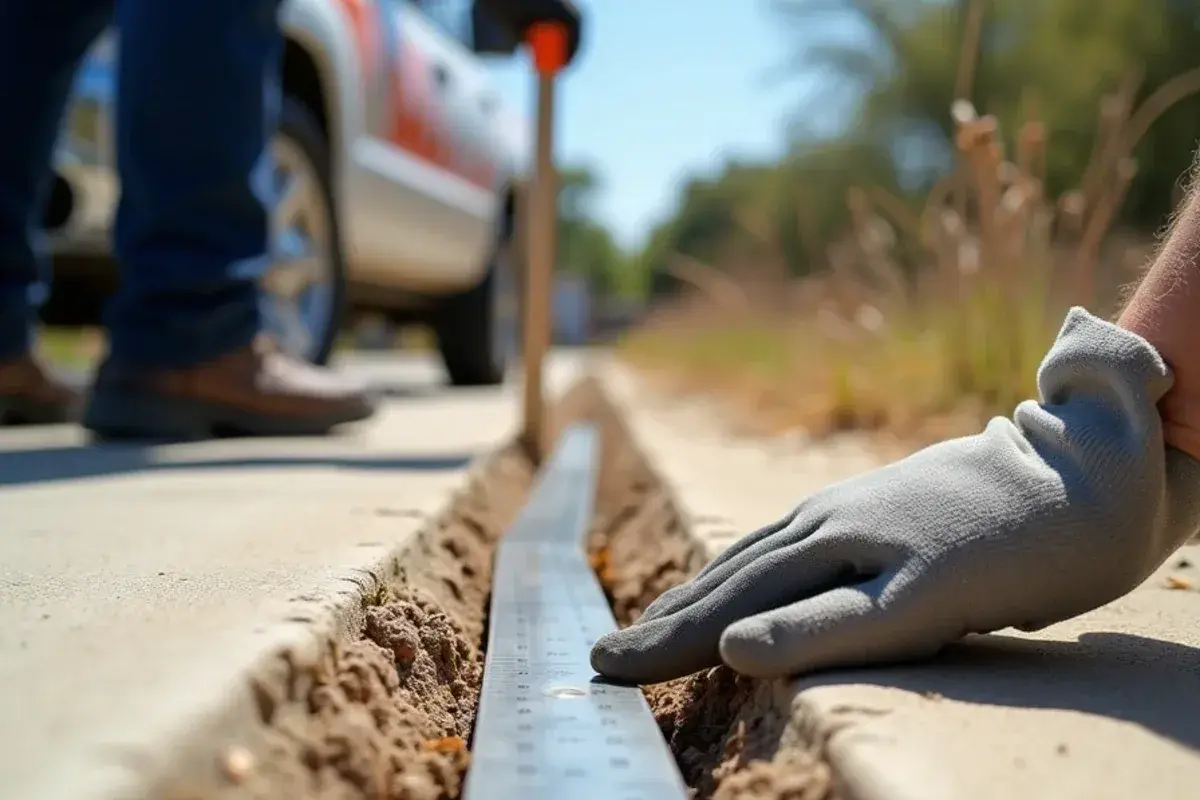
- Measure: crack width, length and any offset between panels.
- Test for movement: mark the crack ends and check for hollow-sounding spots under the slab.
- Trace the water: downspouts, AC condensate, sprinklers and low spots that pond after rain.
- Recommend: seal, patch, level or replace, with the reason for each.
- Prep and repair: grind, clean, saw-cut or form as the method requires.
- Cure and follow-up: how long to stay off it and what to fix around it so the damage does not return.
Seal or patch in place
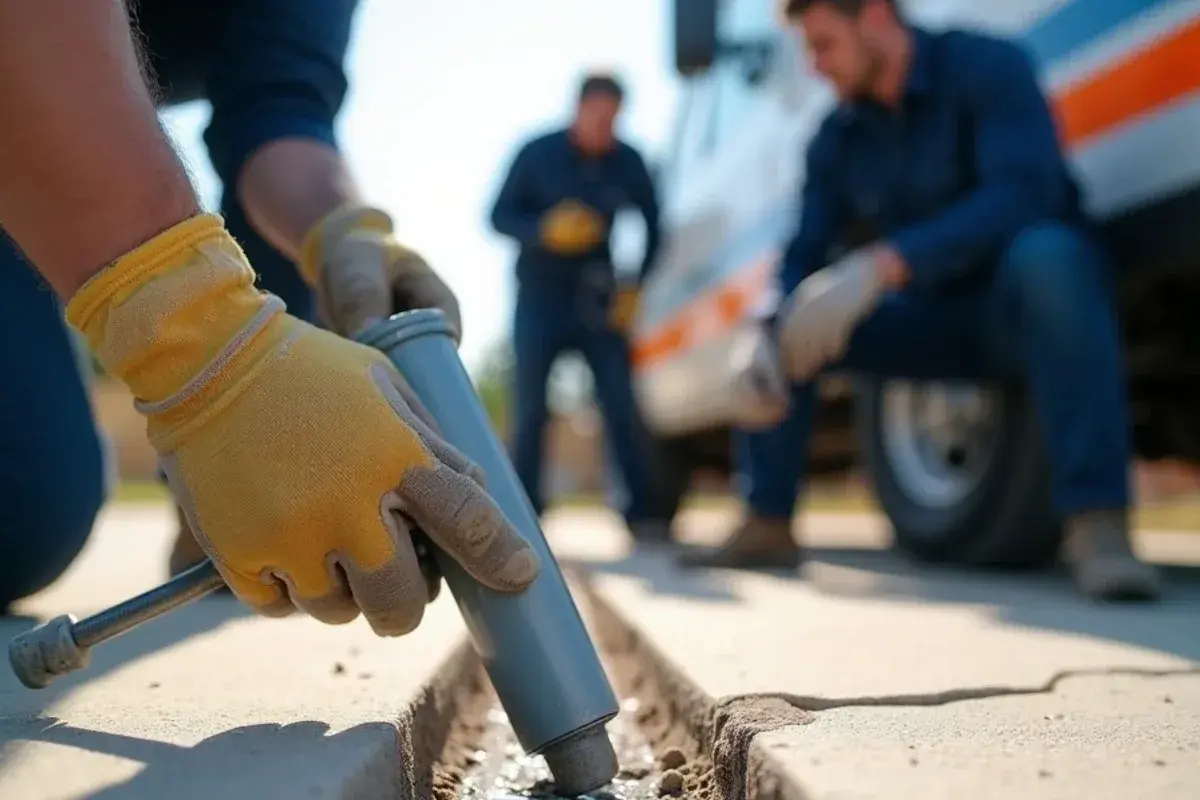
Cracks get routed, cleaned and filled with a flexible sealant that moves with the slab and keeps water out of the base. Spalled spots and chipped edges get a bonding repair mortar. This is the quickest and least disruptive option, though repaired cracks will still show.
Rebuild steps and edges
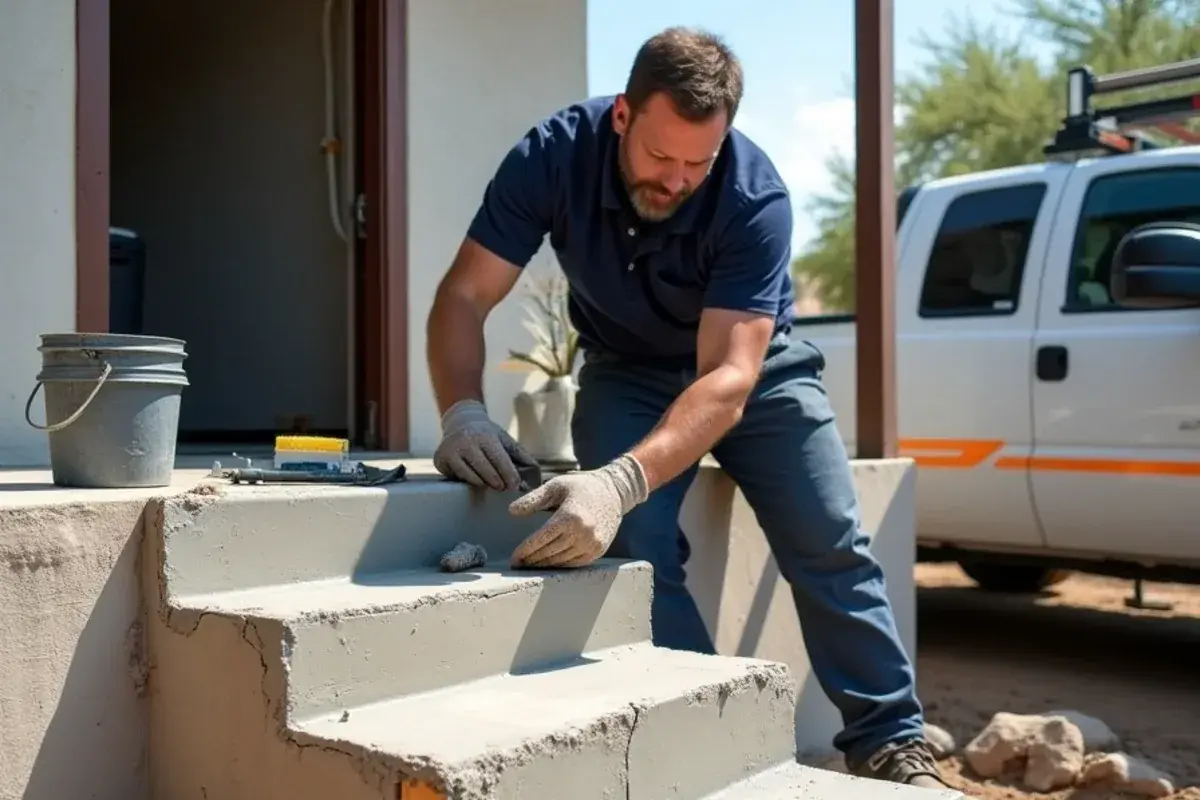
Porch steps with broken corners get forms clamped in place and fresh repair mortar packed in so the nosing is square again. Loose treads are reset on a fresh bed.
Level a sunken section
When a panel has dropped but is still in one piece, it can sometimes be lifted back toward level and the void under it filled. It only works on intact slabs, and we will tell you when the panel is too broken for it. The two common lifting methods trade off differently: a cement slurry (mudjacking) is cheaper material but heavier and needs larger holes, while polyurethane foam uses small ports and sets quickly at a higher material cost.
Cut out and replace
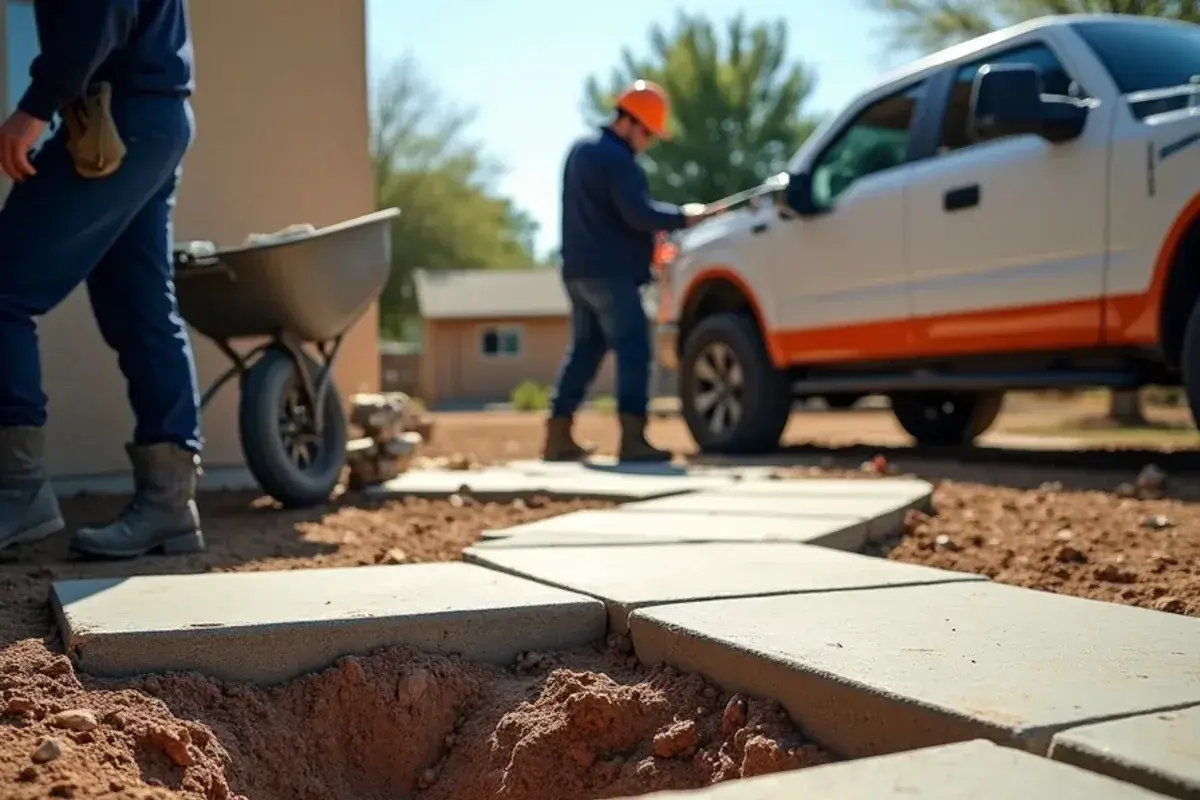
When a section is shattered or badly sunk, we saw-cut along clean lines, break it out, rebuild and compact the base, and pour a new panel doweled to its neighbors. New concrete will be a different shade at first and usually blends over time.
Resurface a worn but sound slab
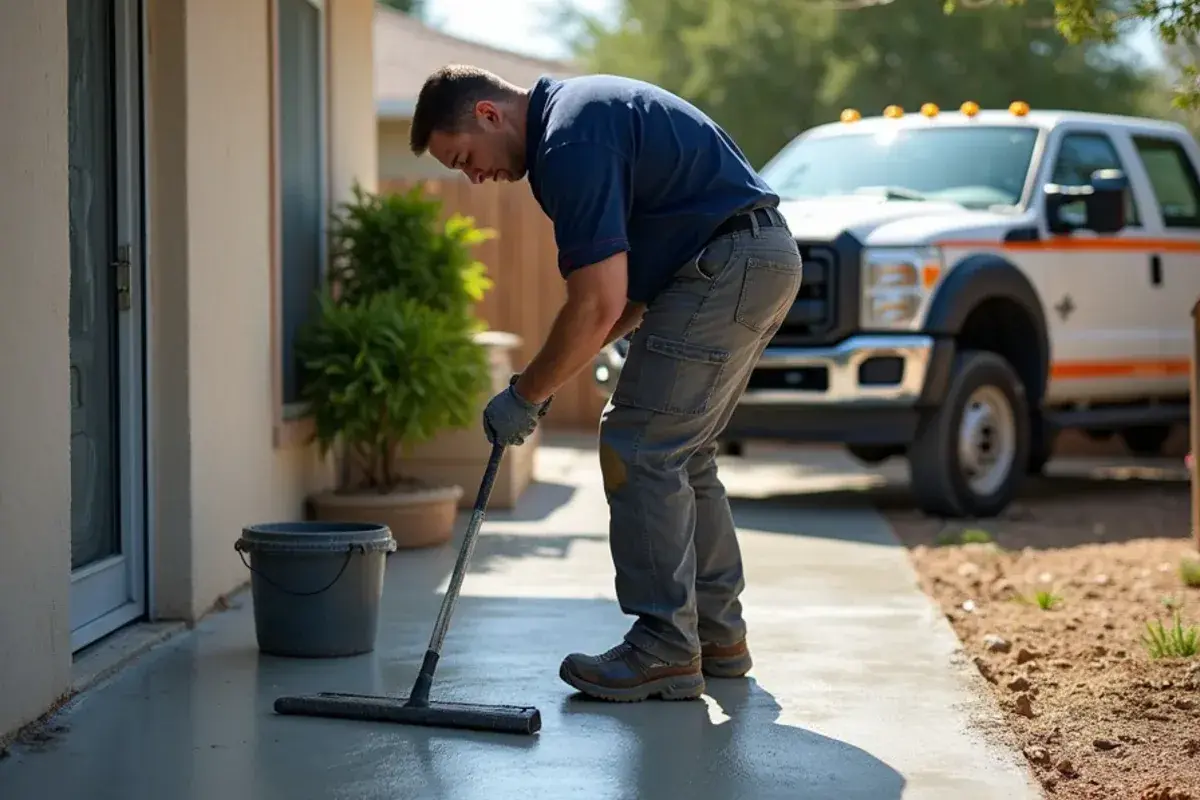
A thin cement overlay renews a flaking patio or garage floor. It needs a solid, stable slab underneath, so it is a finish fix and never a cure for movement.
What affects the cost of a concrete fix
We price repairs after seeing them, and these are the things that move the estimate:
- How many cracks or sections are involved and how long or wide they are.
- Whether old concrete must be cut, broken out and hauled away.
- Base repair, such as replacing washed-out soil before a new pour.
- Forms and detail work on steps, which take more hand labor than flat panels.
- How closely you want the finish and texture to match the old concrete.
- Drainage corrections, like regrading or extending a downspout so the problem does not return.
- Access for equipment and the distance to your property.
Sidewalks along the street can fall within public right-of-way. Before one is replaced, ask the City of Rio Grande City, or the county if you live outside city limits, what rules apply.
Keeping repaired concrete in one piece
Water is the main thing to control. Point downspouts and AC condensate lines away from slabs, fill low spots that hold puddles, and keep joints and cracks sealed so rain does not reach the base. Keep heavy trucks off sidewalks and patios that were never built for them, and trim roots before they lift a panel.
If your outdoor AC unit sits on a pad that is cracked or tipping, the fix is a little different, because the equipment has to be handled carefully. Our AC condenser pad work covers that, and for new flatwork see our main concrete installation page. We repair driveways, walks and steps in Las Lomas, Escobares, La Puerta and around Rio Grande City.
Right-of-way, permits and engineer rules for concrete repairs
Most backyard repairs need no paperwork, but street-facing work can. A walk along the street may sit in public right-of-way; the city decides that inside its limits and Starr County outside them, so ask before a panel is replaced. Where a driveway apron meets a state highway such as US-83 or an FM road, TxDOT requires an access driveway permit (Form 1058) before an existing driveway is modified in its right of way.
Cutting out a section and rebuilding the base is digging, and Texas811 says the excavator must call 811 at least two business days ahead. When cracks run into the house foundation, a licensed professional engineer should assess it; the Texas Board of Professional Engineers and Land Surveyors lets you confirm a licence online.
Why call 956 Multi Service for a concrete fix
We are a Rio Grande City crew that started in July 2024, and our Google profile holds a 5.0 rating from 41 reviews. The same people handle AC pads, painting and handyman work, so a cracked step and a leaning condenser can share one visit.
Calls for a broken step get answered six days a week, 8 AM until 7 PM, never on Sunday. Small patches are often finished the day we come out when the schedule allows. Cash and the four major cards work, and a larger replacement can be financed.
Google reviews that mention work like concrete repair
5.0 out of 5 from 41 Google reviews
“Great and dependable Service .Did my grandmothers concrete pad .Great professional Service !”
“After my mr. Cool Mini split ac went out nd Mr. Jesus Cantu was notified for Assistance, he suggested and advised on a confort AC mini split 2 ton Unit to cool off my living Quarters. Awesome results , Quick installation and proficient professional job . Very efficient and professional your man . Would recommend to Rio Grande Vally Whole..heartedly. don't fight the heat notify Jesus Cantu.”
“Very great customer service! Talked to them over the phone to explain my A/C situation I was having, and they knew what the problem was right away! Came to fix the problem in a timely manner! Recently I purchased a new unit and they went for an installation the same day! Highly recommended!”
Which concrete repairs are worth doing, and when is it time to replace?
Can cracked concrete be repaired or does it need replacing?
Most cracks can be repaired if the slab around them is still solid and level. Hairline and narrow cracks get cleaned and sealed, chipped edges and spalled spots get patched, and worn surfaces can be resurfaced. Replacement makes sense when a panel has broken into pieces, dropped well below its neighbors, or sits on a washed-out base. Often only one section needs to go, not the whole driveway.
Why does concrete crack in Starr County's clay and caliche soils?
Clay soils swell when they soak up rain and shrink as they dry out, so the ground under a slab rises and falls through the year. Caliche can be rock-hard in one spot and loose a few feet away, which leaves the slab unevenly supported. Add slabs poured without enough base work or joints, plus fast drying in summer heat, and cracks follow. Good drainage slows all of it down.
Do you repair concrete steps and porches?
Yes. We rebuild broken step corners and nosings with forms and repair mortar, patch flaking treads, and reset or replace steps that have pulled away from the porch slab. If a porch slab has sunk or tilted toward the house, we check the base and drainage first, because a patch on a slab that is still moving will not last. Uneven step heights are a trip hazard worth fixing early.
How wide does a crack have to be before it is a problem?
Width matters less than movement. A hairline crack that stays the same is mostly cosmetic, while a crack you can slip a coin into, or one with one edge sitting higher, needs attention. Federal accessibility standards treat a vertical lip over a quarter inch as a trip edge. Pencil a mark at each end of the crack and check it again after the next heavy rain.
How long does a sealed driveway crack last?
Several years when the crack is routed, cleaned and filled with a flexible sealant; far less when filler is smeared over the top. In Starr County the sealant takes heat, sun and slab movement every season, so check sealed cracks each spring and touch up any that pulled loose before summer storms.
Still have a question about concrete repair? Ask us directly.
Call (213) 423-7827Where we handle concrete repair
- Concrete Repair in Starr CountyClay pockets and uneven caliche under thin topsoil keep county driveways and walks cracking and settling.
- Concrete Repair in Las Lomas, TXSloped caliche lots send runoff across walks and under patio edges, washing out the base over time.
- Concrete Repair in Escobares, TXDriveway aprons meeting US-83 may need a TxDOT permit before a damaged section is reshaped or replaced.
- Concrete Repair in La Puerta, TXHomes beside roadside businesses on US-83 have walks and approaches that take steady truck traffic.
- Concrete Repair in El Refugio, TXLower ground toward the river holds water against slab edges, so drainage fixes go with most repairs.
- Concrete Repair in El Chaparral, TXMesquite and huisache roots crowd yards here and can lift sidewalk panels near the trees.
- Concrete Repair in Garceño, TXOlder ranch-style homes often have original steps and walks with worn edges and settled panels.
- Concrete Repair in La Grulla, TXOlder frame houses in the irrigated farmland often have porches and walks that tilted with the soil.
- Concrete Repair in Los Ebanos, TXRiver-bottom homes see flood-season moisture that softens the ground under patios and steps.
- Concrete Repair in Sullivan City, TXClose enough on US-83 to pair a broken step or walk repair with other nearby work.