

Most homes run the air conditioner for a big part of the year here, which means the same air passes through your AC system over and over. If it is dusty, damp or musty, the system spreads that through every room. Improving indoor air quality in Rio Grande City usually starts at the equipment: the filter, the coil, the return ducts and how long the system runs.
We look at air quality from the HVAC side. That means finding why dust, pollen or moisture is getting in or hanging around, then fixing it with the right mix of filtration, purification and humidity control. Two of those upgrades have their own pages: whole-home air purifiers and UV lights and whole-home dehumidifiers.
When an air quality check makes sense
People usually call about calidad del aire for one of these reasons:
- A film of dust is back on furniture within a few days of cleaning.
- Allergy symptoms are worse inside than outside, especially when pollen is heavy.
- A musty or "wet sock" smell comes out of the vents when the AC starts.
- The house feels sticky even though the thermostat says it is cool.
- Water beads on supply registers or windows.
- You finished a remodel, had a flood or had pests in the attic or under the home.
Most of those trace back to a few local causes. Caliche dust off unpaved roads and dry yards rides into the house through return leaks. Mesquite, huisache and grass pollen load filters in spring and after rain. Near the river, humid air keeps coils, drain pans and blower wheels wet enough to grow slime. An oversized AC that cools in short bursts leaves moisture behind,, and a fan left "on" blows it back off the wet coil.
What we inspect during an indoor air quality visit
This is a hands-on look at the system and the house, not a lab test. Here is what gets checked and why.
| Item | What we are looking for |
|---|---|
| Indoor humidity and temperature | Readings in more than one room, compared with the EPA's suggested 30 to 50 percent range |
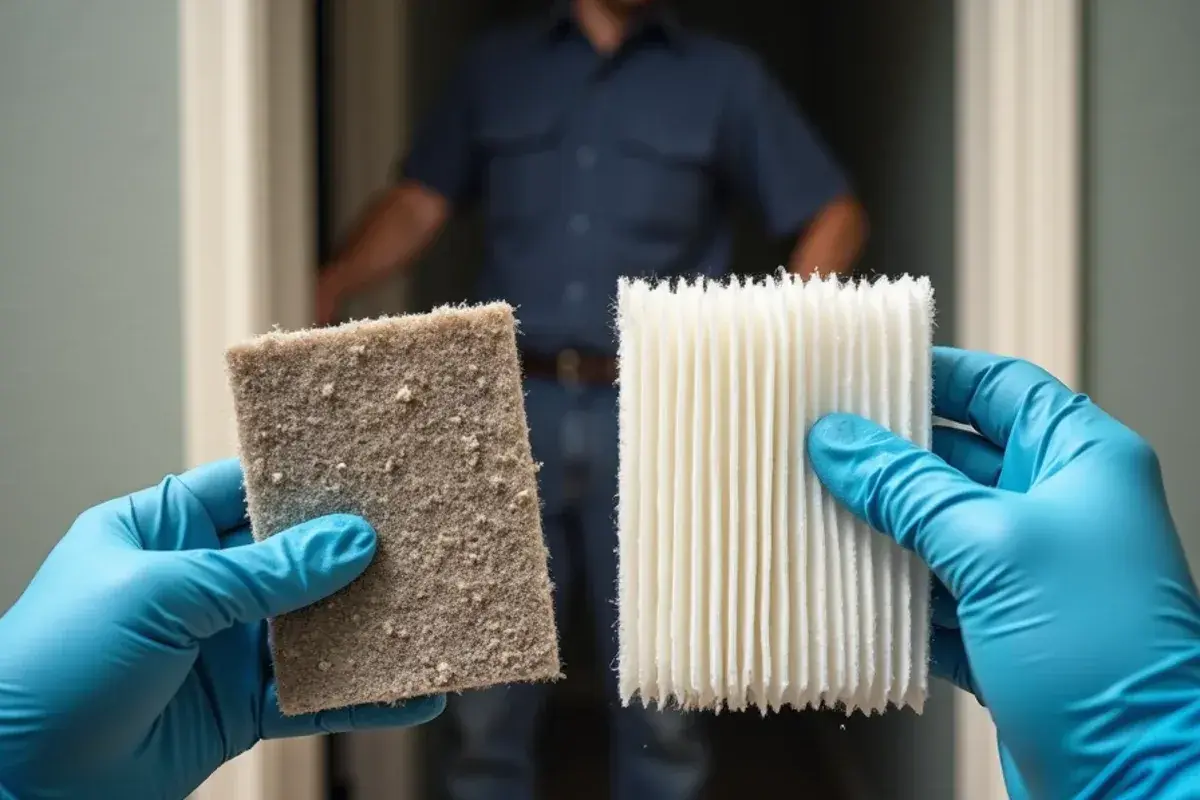
| Filter | Rating, fit, how dirty it is, and air leaking around it |
| Return grille, box and duct | Gaps pulling in attic, wall-cavity or mobile-home belly air |
| Evaporator coil and drain pan | Dirt, standing water, slime or mold growth |
| Blower wheel | Dust packed on the blades, which cuts airflow and spreads debris |
| Supply ducts and registers | Debris, condensation, torn insulation |
| Run time and fan setting | Short cycles and a fan set to "on" that re-wets the air |
How the air quality visit runs
- Hear the complaint: what you notice, which rooms, and when it is worst.
- Take readings of humidity and temperature in more than one room with a hygrometer.
- Check the filter and return for fit, bypass and leaks pulling in attic or belly air.
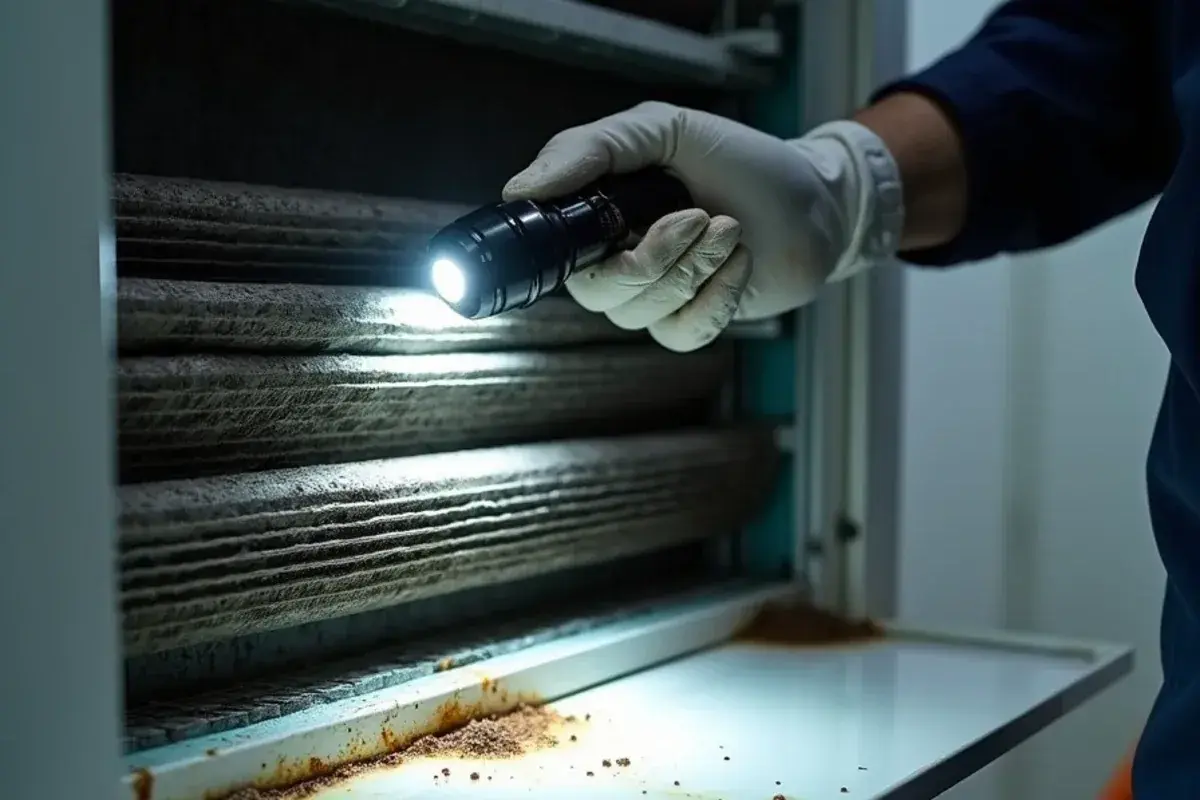
- Open the air handler to look at the coil, drain pan and blower wheel with a flashlight.
- Check ducts, registers and run time, including the thermostat fan setting.
- Walk you through the findings with photos and options ranked for your problem.
The check is usually done in a single visit. You get an explanation of what we found, photos of anything you can't easily see, and a list of options ranked by what will do the most good for the problem you described.
Which fix fits the problem?
HVAC air filtration upgrades
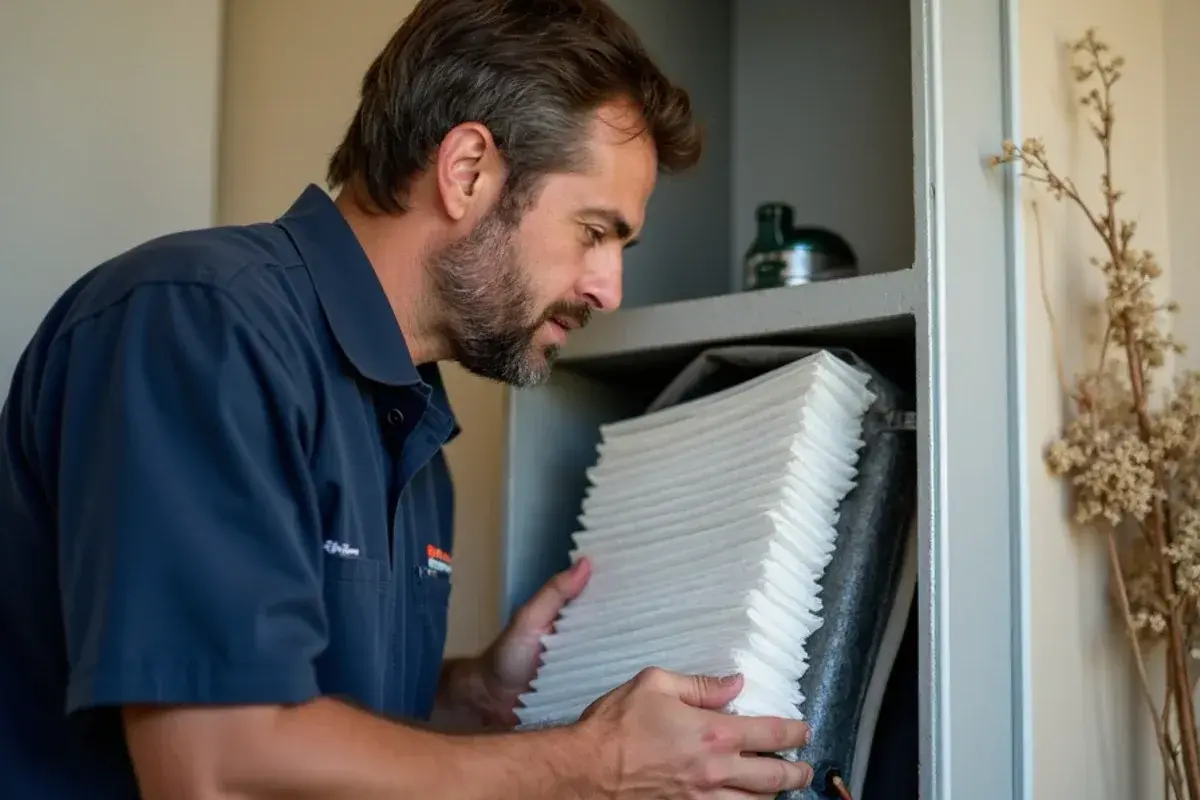
The simplest change is often a better filter that actually fits. Many systems handle a pleated MERV 8 to 11 filter without trouble. Where you want finer filtration for allergies, a media cabinet that holds a thick filter is easier on airflow than forcing a dense one-inch filter into a slot.
Air purifiers and UV light for the HVAC system
In-duct air cleaners and UV lamps aimed at the coil add another layer for people dealing with allergies or recurring coil growth. Details, and what these systems can and can't do, are on the air purifier page.
Humidity control for the whole home
When rooms feel clammy, the answer may be an AC setup change, a different thermostat setting or a ducted dehumidifier. A smart thermostat with humidity readings helps you see what is happening day to day.
Dust control at the source
Caliche dust and attic air leaking into a return duct can overwhelm any filter. Sealing the return side, covered under duct sealing, often cuts household dust more than any gadget. Dirty coils are handled with AC coil cleaning, and ductless systems get the same attention through mini-split cleaning.

When the problem goes beyond the AC system
Some findings are not HVAC work. Mold growing on drywall, framing or insulation needs a mold assessment and remediation; in Texas, mold assessors and remediators are licensed by TDLR, and you can look them up on its website. If you have gas appliances, working carbon monoxide alarms matter more than any filter.
Texas mold rules and other limits on what we do
TDLR's consumer guidance says visible mold under 25 contiguous square feet can usually be cleaned by people who are not licensed, and owners working on their own homes are generally exempt. Larger areas call for a licensed mold assessor and remediator under the state's mold rules (16 TAC Chapter 78). A/C work falls under TDLR's air conditioning licence, searchable the same way. The EPA's approach is source control first, then ventilation, then air cleaning, and that is the order we follow.
Skip the ozone machines
The EPA warns that ozone generators sold as air cleaners can irritate the lungs at levels that do little to clean the air. We do not recommend them for occupied homes.What affects the cost of air quality upgrades
There is no single price for better air, because the fixes are so different. What moves the number:
- Which upgrade: a filter change, a media cabinet, a UV lamp, an air purifier or a dehumidifier.
- Return-side changes needed to fit a filter cabinet or seal leaks.
- Electrical work for UV lamps or dehumidifiers.
- Drain routing for a dehumidifier.
- Attic or closet access around the air handler.
- Ongoing parts, such as replacement filters and UV bulbs, which are worth asking about up front.
Why have 956 Multi Service look before you buy anything
We start with the cheap fixes: filter fit, return leaks, a dirty coil. Local since July 2024, our crew carries a 5.0 Google rating over 41 reviews, and reviewers often say the technician explained the whole process. Phone us between 8 and 7 any day but Sunday. When an install is needed it can sometimes happen the day you call, schedule permitting, and cash, major cards and financing are all accepted.
Indoor Air Quality: pick the service you need
Google reviews that mention work like indoor air quality
5.0 out of 5 from 41 Google reviews
“Both gentlemen arrived punctually and were exceptionally well mannered and explained the whole process. They diligently completed the service I needed and delivered an exceptional job! I will definitely reach out to them again for any future work I may need. Highly recommend!”
Response from the owner: Thank you 💯
“Great service!! They were very responsive and helpful, and they were able to resolve my issue quickly. I would definitely recommend this company to others.”
“Great work, very detailed, clean and efficient job well done. 10/10 would recommend anyone needing minisplit work or any other work around the house.”
Have questions about the air inside your Valley home?
What causes poor indoor air quality in Valley homes?
In this area the usual culprits are fine caliche dust, pollen from mesquite and grasses, and humidity. Leaky return ducts pull attic or crawlspace air into the system, filters get overloaded quickly, and oversized ACs that run in short bursts leave moisture behind. Wet coils and drain pans can grow mold that you smell at the vents. Cooking, cleaning products and closed-up homes add their own share.
Which filter is best for dust and allergies?
For most homes a pleated filter rated around MERV 8 to MERV 13 is the practical range. Higher ratings catch finer particles like pollen and some smoke, but a thin, dense filter can restrict airflow on systems not built for it. A deeper media filter cabinet gives high filtration with less resistance. Fit matters too: air sneaking around a loose filter skips filtration entirely.
Can my AC system help control humidity?
Yes, a correctly sized AC removes moisture every time it runs a full cycle, and the EPA suggests keeping indoor humidity between about 30 and 50 percent. Short cycling, a fan left on instead of auto, a dirty coil or low airflow all reduce moisture removal. When the AC alone cannot keep up, a whole-home dehumidifier connected to the ductwork can take over the drying.
Do you test indoor air quality with lab samples?
No. Our check is an HVAC-side inspection: humidity readings in several rooms, filter fit, return leaks, coil, drain pan and blower condition, and how long the system runs per cycle. If you want mold sampling, a licensed mold assessor is the right call, and allergy triggers are a question for your doctor. We fix the system problems that either inspection turns up.
Still have a question about indoor air quality? Ask us directly.
Call (213) 423-7827Where we handle indoor air quality
- Indoor Air Quality in Las Lomas, TXWind off the Las Lomas caliche hills pushes fine dust through any gap in the return side.
- Indoor Air Quality in Mikes, TXOpen belly wrap under Mikes manufactured homes lets crawlspace air and pests into the duct system.
- Indoor Air Quality in Fronton, TXHumid river air in Fronton keeps drain pans and blower wheels prone to slime and musty odors.
- Indoor Air Quality in South Alamo, TXLow, older South Alamo homes near the levee see mold on coils and duct interiors in wet months.
- Indoor Air Quality in Citrus City, TXOrchards and fields around Citrus City load filters with pollen and dust through the growing season.
- Indoor Air Quality in San Carlos, TXHarvest-time field dust around San Carlos clogs filters fast, so filter fit and rating matter.
- Indoor Air Quality in El Chaparral, TXMesquite and huisache brush around El Chaparral brings heavy pollen loads to filters.
- Indoor Air Quality in Cameron CountyWestern Cameron County's humid resaca country makes drain-line and duct-mold control the first priority.
- Indoor Air Quality in Roma, TXIn Roma's thick-walled older homes, humidity readings come before any purifier talk.