

Refrigerant is not fuel. A healthy air conditioner never uses it up, so when the charge drops there is a hole somewhere. Our AC refrigerant leak repair in Rio Grande City focuses on finding that hole, fixing it and then putting back the right amount of refrigerant, measured by weight. Adding a pound or two every summer without a search is the most expensive way to own an AC.
A leak repair visit with us covers:
- Gauge readings and line temperatures to confirm the charge is actually low
- Airflow checks first, so a dirty filter or frozen coil is not mistaken for a leak
- A leak search with an electronic detector, bubble solution and, when needed, nitrogen
- The repair itself, from a valve core to a brazed joint or a new coil
- A deep vacuum and a recharge weighed in to the data plate
Is your AC low on refrigerant, or is it something else?
Watch for these signs together:
- The system runs much longer than it used to and the house still feels warm.
- Frost or ice forms on the larger copper line outside or on the indoor coil.
- You hear hissing or a gurgle near the lines after the unit shuts off.
- An oily film or stain shows up at a joint, valve or coil.
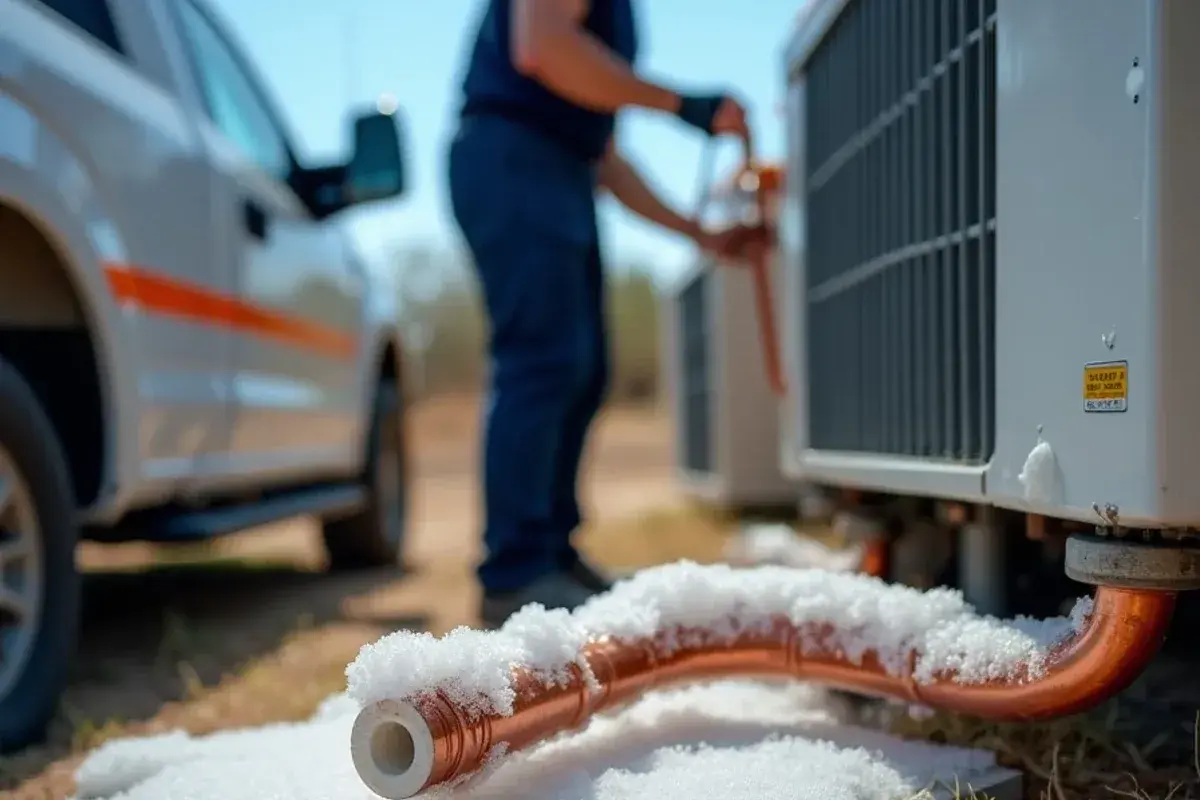
Dirty filters, a blocked indoor coil or a weak blower can produce ice too, so we check airflow before blaming refrigerant. If the coil is frozen, turn the system to fan-only or off and let it thaw. Running it frozen can send liquid back to the compressor.
Where refrigerant leaks start in Valley systems
Leaks come from a handful of predictable places:
- Indoor evaporator coils. Copper coils can develop tiny pinholes from a type of corrosion fed by household chemical vapors. These leaks are slow and hard to find.
- Service valves and valve cores. The small valves where gauges connect can seep if the core or cap wears.
- Flare fittings on mini-splits. Ductless systems join lines with flared connections. A rushed flare, or one tightened without a torque wrench on a DIY install, is a common leak point.
- Rubbing and vibration. Line sets that touch a block wall, a roof edge or each other wear through over the years.
- Yard work. Exposed lines near the ground get nicked by trimmers, and insulation that has been chewed or sun-rotted leaves copper exposed.
- Outdoor coils. Corroded fins and tubes on older condensers develop pinholes.
Freon leak detection, step by step
- Read the system first. Gauges plus line temperatures tell us how far off the charge is and whether the symptoms point to a leak or something else entirely.
- Search with the right tool. An electronic detector finds the general area quickly. Leak solution brushed onto a suspect joint then pinpoints it with bubbles.
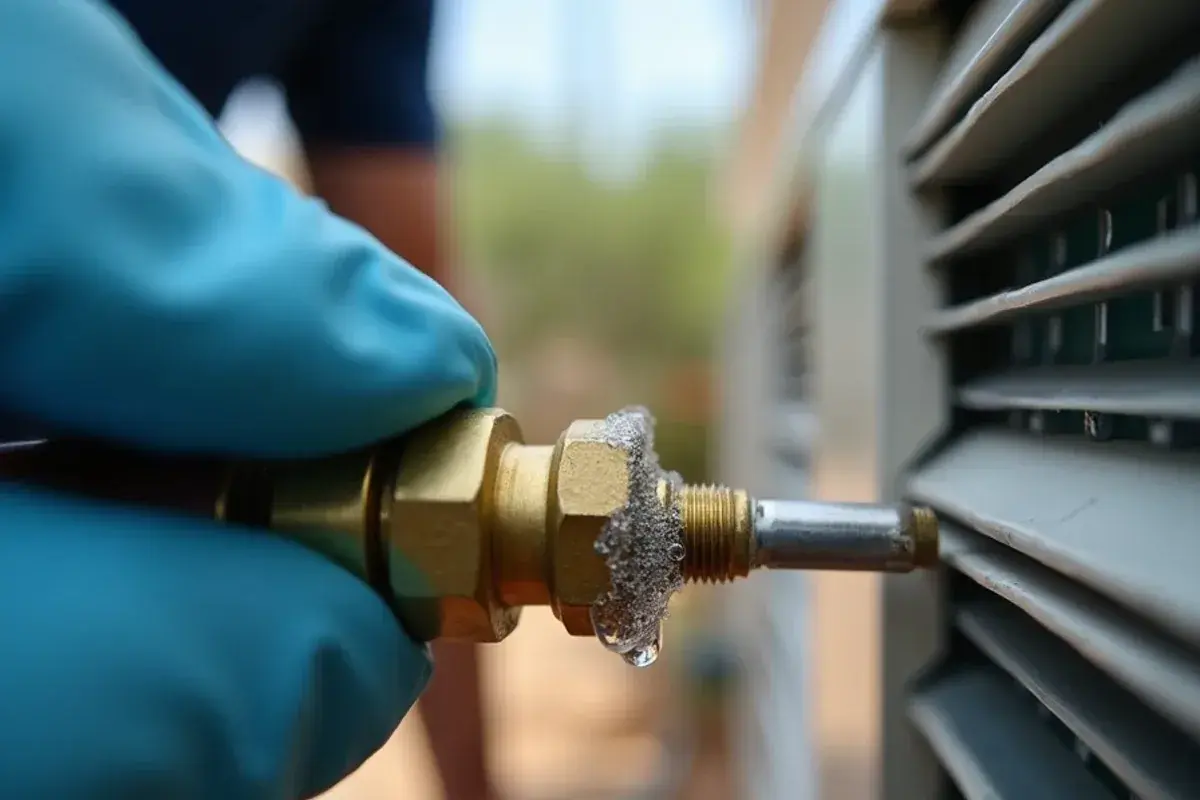
UV dye is another option for slow, intermittent leaks, but it needs time to circulate and a second visit, and some equipment makers discourage additives. We use it only when the other methods come up empty.
- Prove it with nitrogen. For stubborn leaks, or after a repair, we recover the refrigerant, pressurize the system with dry nitrogen and watch whether the pressure holds. Isolating sections shows whether the leak is indoors or out.
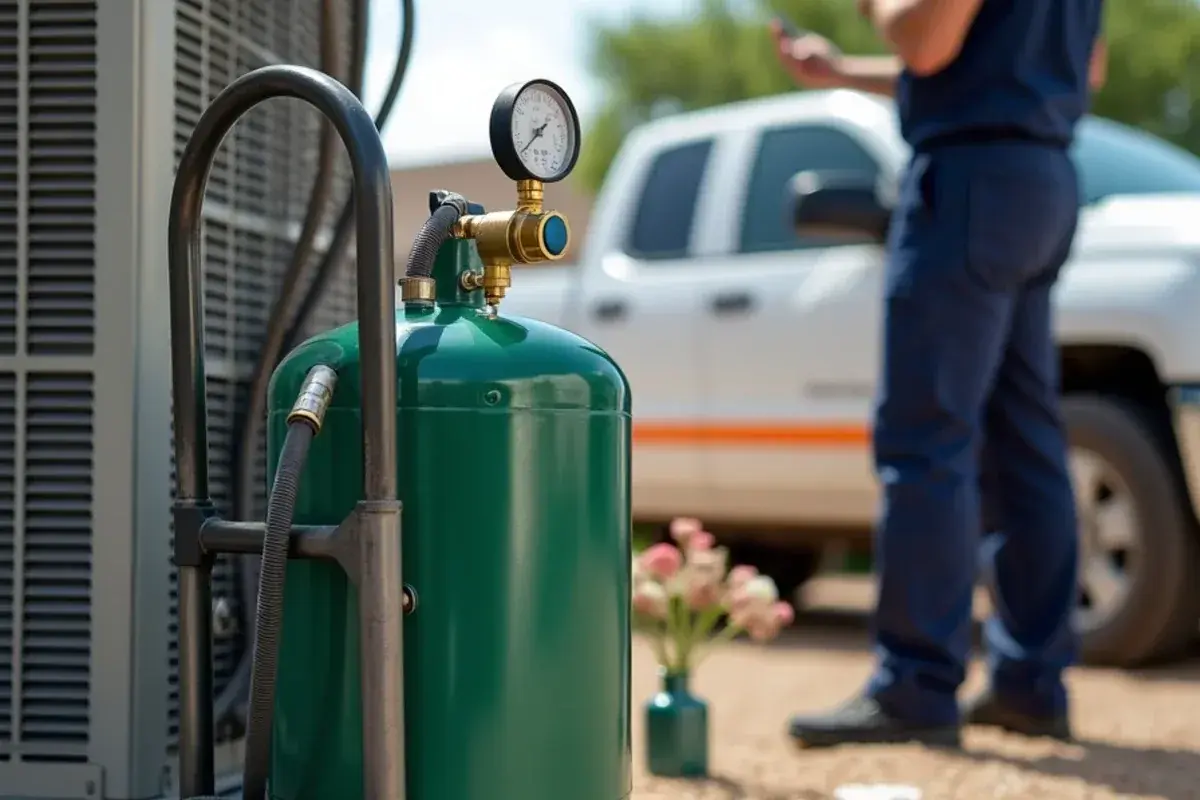
- Show you the leak and the choices. You see the bubbles, the reading or the corroded spot, and hear the repair and replacement options in the table below before any work starts.
- Repair, vacuum and recharge. The fix goes in, the lines are evacuated and the charge is weighed in, as described after the table.
- Recheck the repair. With the system running, the repaired joint gets tested again and the readings are written down, so a future technician can compare them.
Repair the leak or replace the part?
| Leak location | Typical fix | Trade-off |
|---|---|---|
| Valve core or cap | Replace the core or cap | Quick, often done in the same visit |
| Flare or brazed joint | Re-flare or re-braze | Reliable if the rest of the system is sound |
| Damaged line section | Replace that section of line | More labor; may need wall or attic access |
| Evaporator coil pinholes | Braze one pinhole, or replace the coil | Patches on corroded coils often fail again |
| Outdoor coil pinholes | Replace the coil or the condenser | Can approach the cost of new equipment |
| Major leak on an aging R-22 system | Replace the system | Ends the cycle of buying scarce refrigerant |
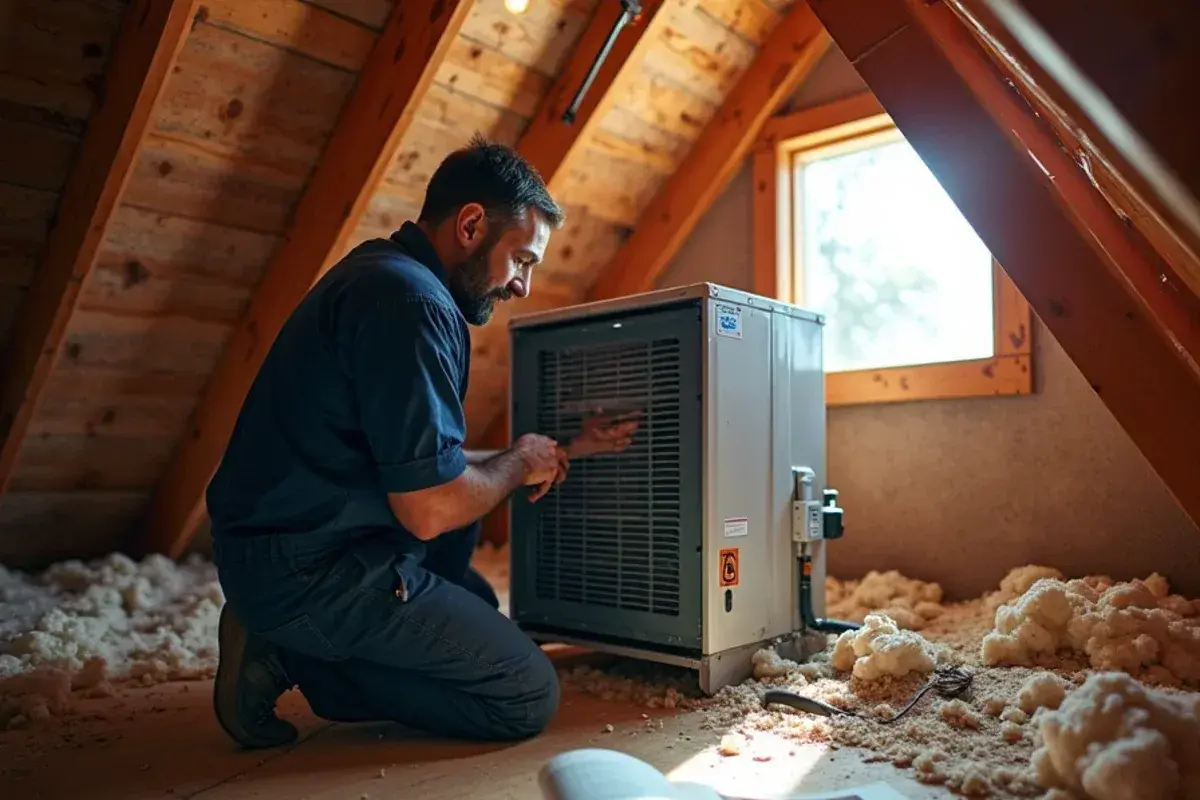
After any repair, a vacuum pump evacuates the lines until a micron gauge shows the air and moisture are gone. Then refrigerant is weighed in to the manufacturer's specified charge and we confirm superheat or subcooling with the system running.
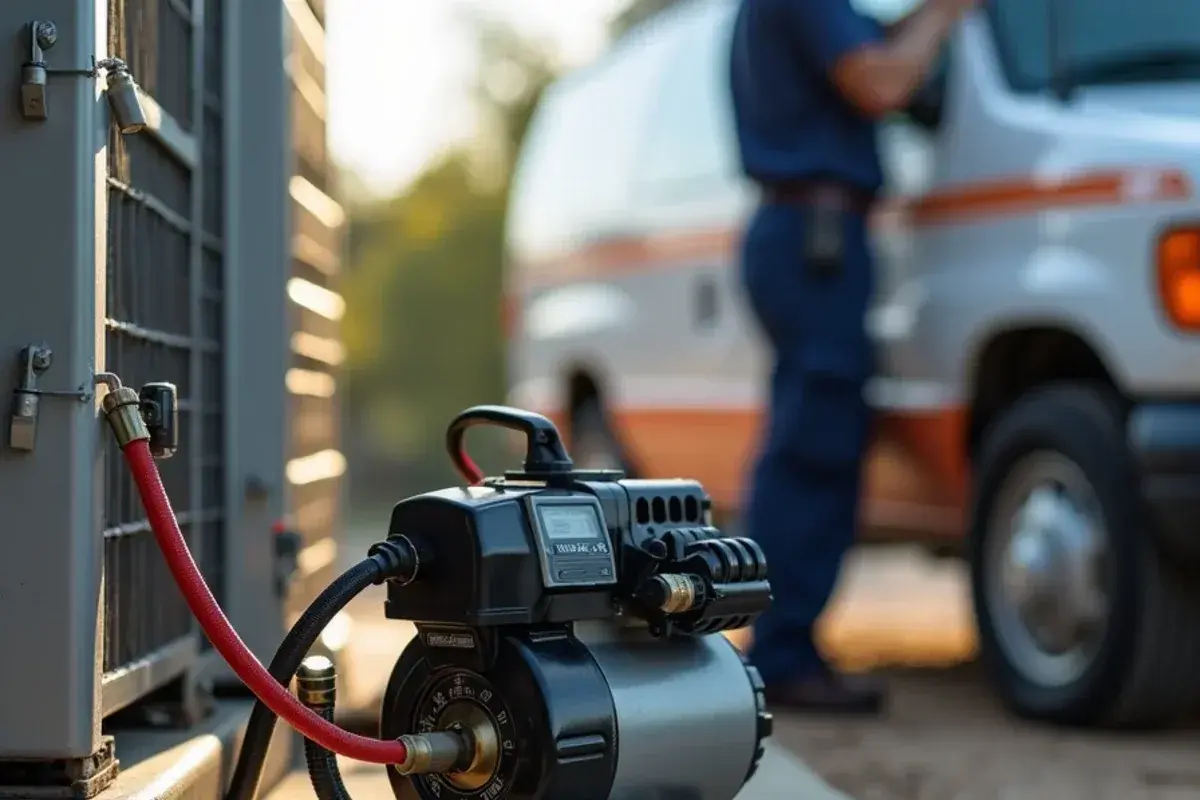
R-22, R-410A and R-454B: what your refrigerant type means
Look at the data plate on the outdoor unit; it names the refrigerant.
- R-22. Common in systems from roughly the early 2000s and before. U.S. production ended in 2020, so recharges rely on reclaimed supply and cost more each year. Leak repair on R-22 deserves a hard look at replacement.
- R-410A. The standard in most homes for many years and still serviceable. Parts and refrigerant remain available for existing systems.
- R-454B and R-32. Starting in 2025, new residential systems began shifting to these lower-impact refrigerants. They are classed as mildly flammable and require equipment and service practices designed for them.
Refrigerants are not interchangeable. Mixing types or topping off with the wrong one damages the system and makes future repairs harder.
EPA Section 608 and Texas licensing rules for leak work
Federal rules under Section 608 of the Clean Air Act prohibit knowingly venting refrigerant and require anyone who buys or handles it for service to hold Section 608 certification. Before an old coil comes out, its charge goes into a recovery cylinder, never into the yard. Ask any contractor about it, and be wary of anyone offering to "just add freon" from an unmarked can. In Texas, the contractor doing the work must also hold an air conditioning licence from TDLR, which you can check on the agency's public search.
What changes the cost of a leak repair and recharge
- The refrigerant type and how much the system holds
- Where the leak is: an outdoor valve versus an attic coil or a line inside a wall
- How long the search takes and whether a nitrogen test is needed
- Whether a replacement coil is in stock or must be ordered
- Whether the manufacturer's warranty still covers the coil or condenser
- Access in a Rio Grande City home: a summer attic, a line set buried in a block wall, or a manufactured-home closet
- Line length, since a long run to a shop or casita holds more refrigerant to weigh back in
- Whether a replacement coil must be matched to the outdoor unit so the system keeps its rated efficiency
On an R-22 system, a large recharge can cost more than the repair itself, so we price both first.
When a leak repair is not worth it, we say so. Our AC replacement page explains what moving to a new system involves, and the broader AC repair page covers other reasons a system cools poorly. Ductless owners can read about mini-split repair, where flare leaks are a frequent cause of weak cooling.
Why call 956 Multi Service about a leak
We would rather find one leak than sell you refrigerant every summer. All 41 Google reviews on our profile rate us 5.0, many for work explained step by step. We are a small Rio Grande City crew, open since July 2024, taking calls Monday to Saturday from 8 AM until 7 PM. A valve core or a flare leak is often fixed the same day when the schedule allows; an ordered coil takes longer, and we say so up front. On newer equipment we ask the manufacturer whether the coil is still covered before you buy one. Cash, cards and financing on replacements are all accepted.
Google reviews that mention work like refrigerant leak repair
5.0 out of 5 from 41 Google reviews
“Very great customer service! Talked to them over the phone to explain my A/C situation I was having, and they knew what the problem was right away! Came to fix the problem in a timely manner! Recently I purchased a new unit and they went for an installation the same day! Highly recommended!”
“The repair was done quick and professionally there is no longer any problem with my mini split if any problem would occur again I will most definitely call 956 Multi Service !”
“Great service!! They were very responsive and helpful, and they were able to resolve my issue quickly. I would definitely recommend this company to others.”
Questions about freon leaks and recharges in Rio Grande City?
How can I tell if my AC is low on refrigerant?
Low refrigerant shows up as long run times with weak cooling, ice on the bigger copper line or the indoor coil, a hissing or bubbling sound near the lines, and sometimes an oily spot at a joint. None of those prove a leak on their own, because a dirty filter or a blocked coil can look similar. Gauge readings and line temperatures confirm it.
Can you still recharge an older R-22 system in Rio Grande City?
Yes, R-22 systems can still be serviced, but production of R-22 ended in the United States in 2020, so only reclaimed and stockpiled supply is left and it costs more each year. We recommend finding and fixing the leak before adding any. If the leak is in a major component, it is usually time to compare a repair against a replacement system.
Is it better to repair a leaking coil or replace it?
A single pinhole or a leaking joint on an otherwise sound coil can sometimes be brazed. Coils with corrosion spread across many tubes tend to leak again somewhere else, so replacing the coil is the more reliable fix. Age, refrigerant type and manufacturer warranty coverage on the coil all factor into which choice makes sense.
How long does leak detection take?
A leak at a service valve or flare fitting may turn up within minutes. Slow leaks hidden inside an evaporator coil, buried in a wall or only active when the system is hot take longer, and sometimes need a nitrogen pressure test or a second visit. We tell you what we found and what the next step is as we go.
Is there a law that says my home AC leak has to be fixed?
No. EPA's mandatory leak-repair deadlines apply to systems holding 50 pounds or more of refrigerant, far more than a house unit carries. What federal rules do require is that refrigerant is never knowingly vented and is handled by certified technicians. For a home in Starr County, fixing the leak is your call, but every top-off without a repair is refrigerant you pay for twice.
Still have a question about refrigerant leak repair? Ask us directly.
Call (213) 423-7827Where we handle refrigerant leak repair
- Refrigerant Leak Repair in Garceño, TXOlder ranch-style homes here still run R-22, where every recharge draws on shrinking reclaimed supply.
- Refrigerant Leak Repair in Las Lomas, TXCondensers on the windy caliche hills vibrate and collect grit, wearing line sets where they touch.
- Refrigerant Leak Repair in La Grulla, TXAttic air handlers in older frame homes hide evaporator coil pinholes that take careful searching.
- Refrigerant Leak Repair in Roma, TXMini-splits on thick historic walls are joined with flare fittings, a frequent slow-leak point.
- Refrigerant Leak Repair in Escobares, TXNew mini-splits replacing window units need flares torqued right, or the charge creeps out.
- Refrigerant Leak Repair in Olivia Lopez de Gutierrez, TXLong line runs on larger rural lots mean more joints and a bigger charge to search and weigh in.
- Refrigerant Leak Repair in West Alto Bonito, TXOwner-built homes adding mini-splits room by room often carry DIY flare connections worth testing.
- Refrigerant Leak Repair in Mikes, TXLines running under manufactured homes get nicked or chewed, exposing copper to damage.
- Refrigerant Leak Repair in Starr CountyAcross the county, a system that needs a top-off every summer is the clearest sign of a leak.