
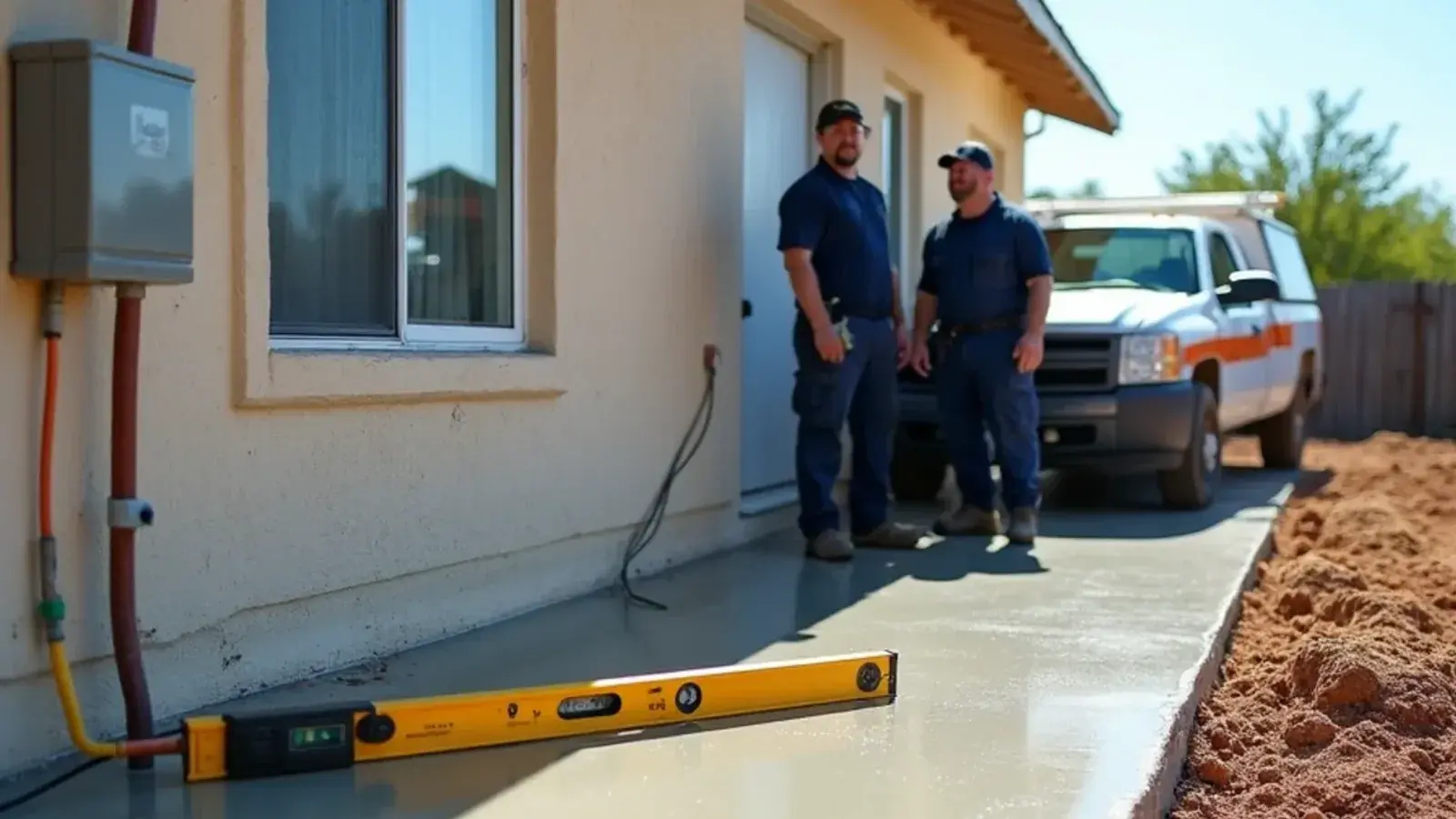
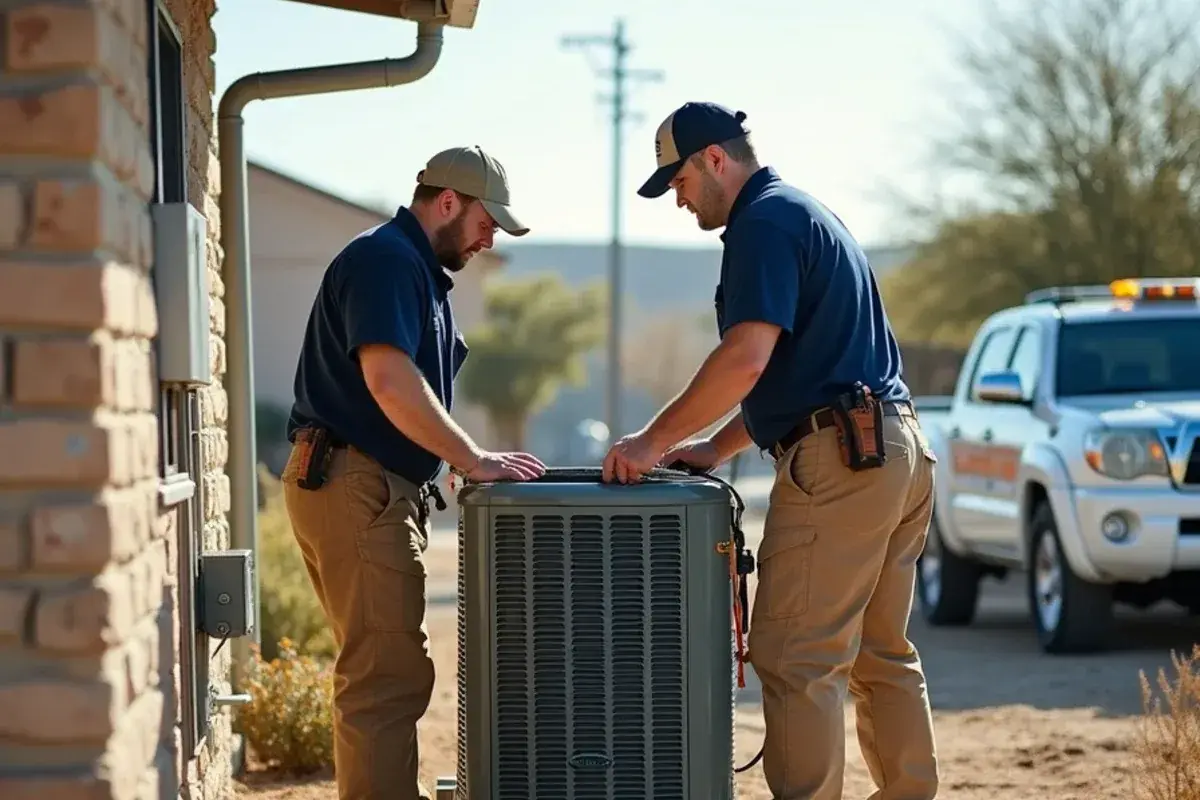
An outdoor air conditioner weighs more than most people expect, and it sits on the same shifting ground as everything else in the yard. When the base under it settles, cracks or floods, the equipment pays for it. We pour AC condenser pads in Rio Grande City with the unit in mind, because our crew also installs, repairs and services the systems that sit on them.
That combination matters on pad day. Moving a condenser off its base, protecting the line set and getting it back on level is HVAC work as much as concrete work, and we handle both.
A pad job from us covers:
- Shutting down and moving the condenser safely, lines connected whenever possible.
- Removing the old pad, blocks or sunken composite base.
- Digging out soft soil and compacting a new base, raised where water collects.
- Forming, reinforcing and pouring a level pad sized to the unit.
- Resetting, leveling and securing the unit, then test-running the system.
Signs your condenser needs a new base
You do not need a level to spot most pad problems. Look at the unit from a few steps back and check for these:
- The cabinet leans, or the pad is visibly lower on one corner.
- Copper lines are kinked, stretched tight or pulled away from the wall.
- The pad is cracked through, broken at a corner or undercut by erosion.
- Water stands around the unit after rain, or mud has splashed onto the coil.
- Fire ant mounds or brush are growing against the pad edge.
- The unit is sitting on stacked blocks, bare dirt or an old pad too small for a newer, larger condenser.
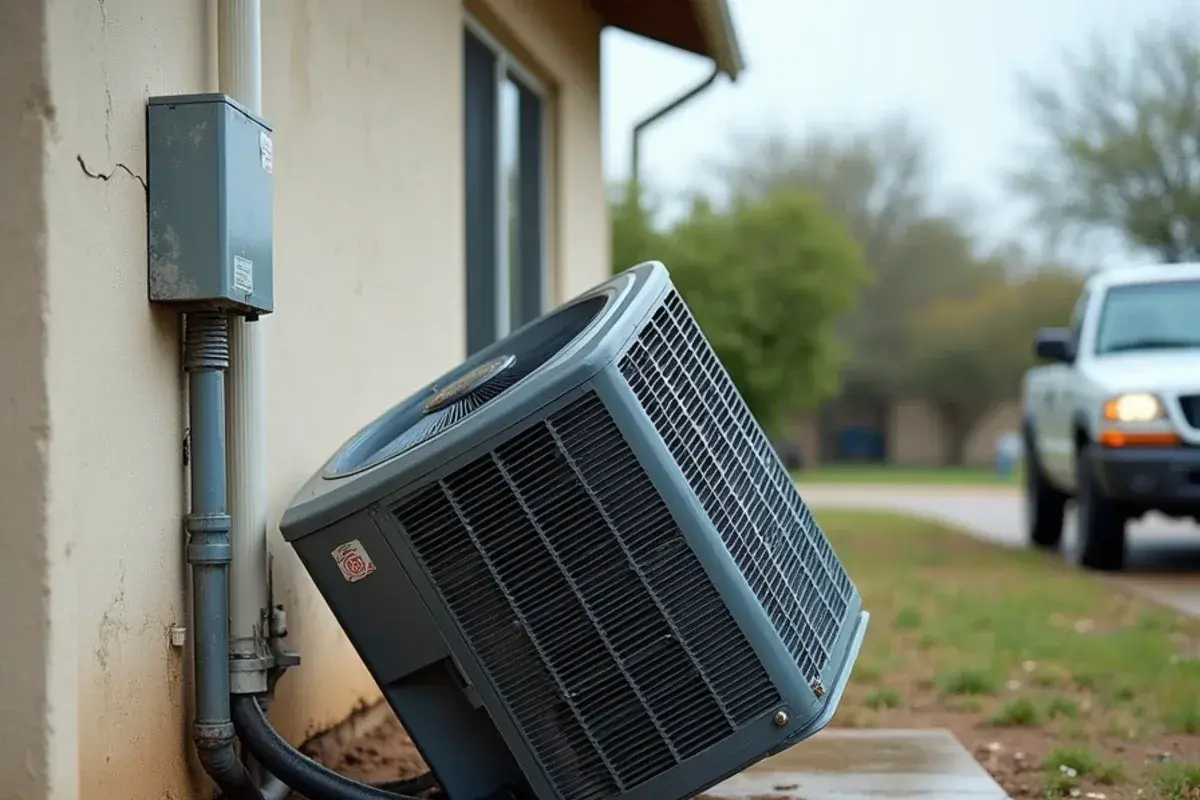
Any one of those is worth a look. A leaning unit with stretched lines is the most urgent, since the joints at the service valves are where strain turns into a leak.
Concrete AC pad or composite pad?
Both have a place. The choice depends on the ground, the unit and how much water the spot sees.
| Pad type | Good for | Watch out for |
|---|---|---|
| Poured concrete pad | Heavy condensers, generators, low or wet spots, raised bases | Needs curing time before the unit goes back on |
| Precast or composite pad | Quick replacements on firm, dry, level ground | Lighter, can shift or sink if the base under it is poor |
| Concrete pad with risers | Mini-splits and units that need drainage room underneath | Risers must be rated for the unit and secured |
| Wall bracket | Some mini-split condensers where yard space is tight | Needs a wall that can carry the weight; vibration can travel indoors |
On caliche and clay ground, a poured pad on a compacted base is usually the longest-lasting choice. Composite pads still work well for a fast swap where the soil is firm.
Sizing an AC unit slab for the unit and the lot
A good equipment pad is a little bigger than the cabinet it holds, with a few inches of concrete showing on every side. Poured pads are commonly around four inches thick, more where the base is soft or the equipment is heavy. The top should be level so the unit drains correctly and the compressor sits as designed, while the ground around it slopes away so rain moves off.
Placement is part of the design. The condenser needs open air on all sides for airflow and service access, and the equipment maker's installation instructions list the minimum clearances. We also leave a clean path for the line set and electrical disconnect, and keep the pad away from roof runoff and dryer vents.
On low lots, the base is built up before the forms go on. Hurricane Hanna's flooding in 2020 showed how fast yards near arroyos and the river can fill, and a raised pad keeps the electrical parts of the condenser above that water.
Mini-split pad options
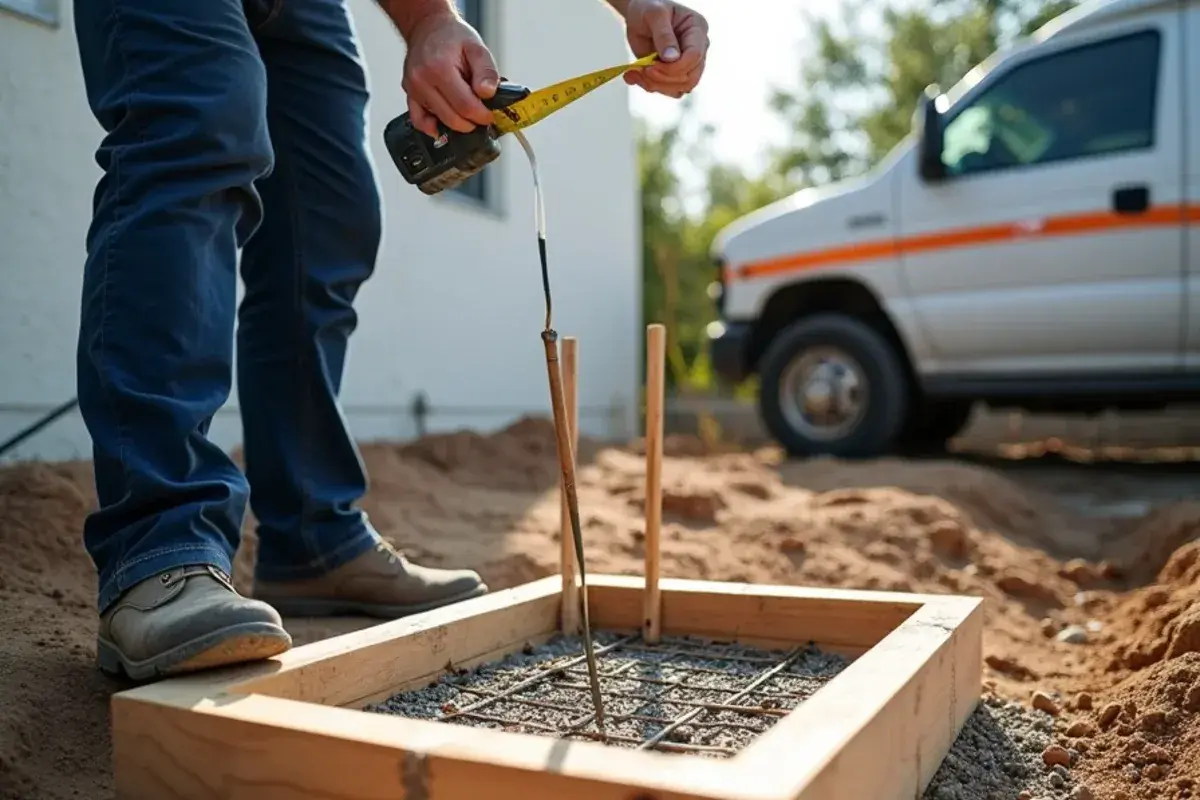
Ductless outdoor units are smaller and lighter, but they still need a stable, level base that keeps them out of standing water. A small poured pad with rubber risers is our usual choice, because it lets defrost and rain water drain from under the unit. If you are adding a system, our mini-split installation crew can plan the pad, wall penetration and line set together.
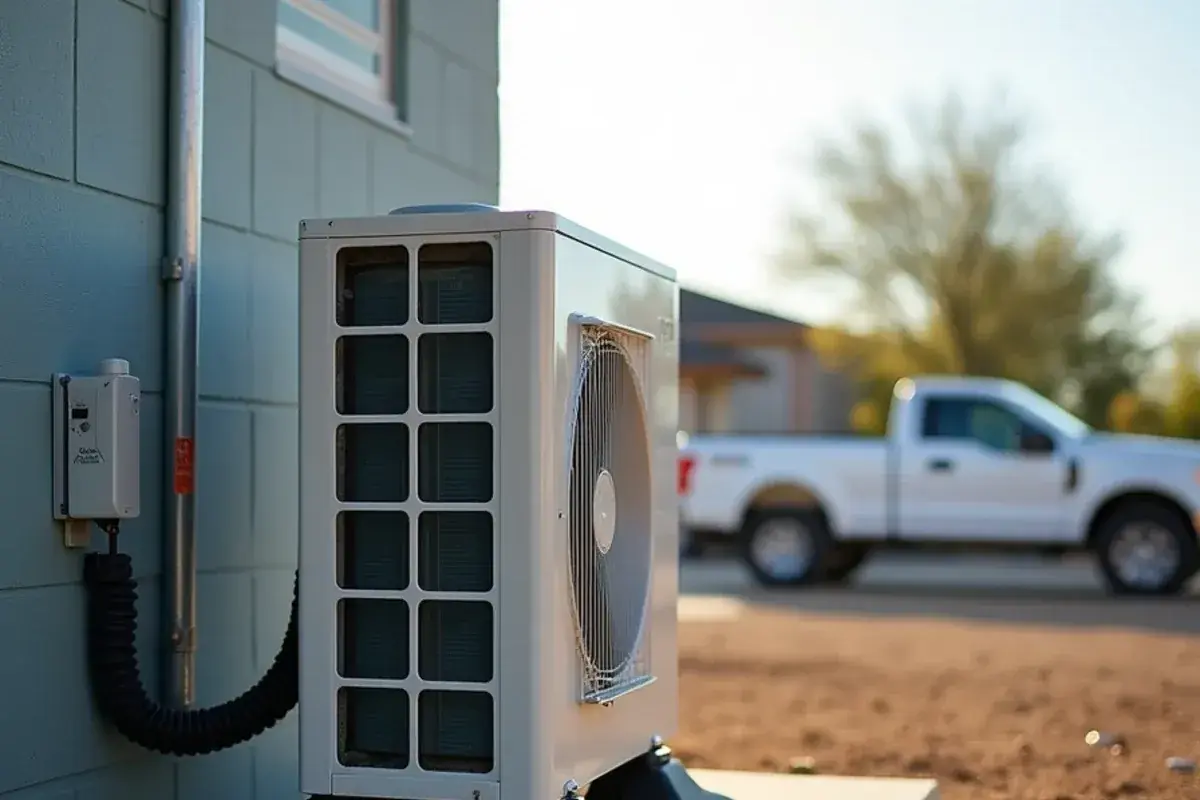
How equipment pad installation works
- Power off and check the lines. We shut off the disconnect and breaker and look at how much slack the line set has.
- Move the unit. In most cases the condenser can be slid or lifted aside while still connected. If the lines must be opened, refrigerant is recovered under EPA Section 608 rules before anything is cut.
- Remove the old base. Broken concrete, blocks or a sunken composite pad come out.
- Build the new base. Soft soil is dug out, base material is added and compacted, and forms are set to height and level.
- Pour and cure. The pad is reinforced, poured, finished and allowed to gain strength.
- Reset and test. The unit goes back on, gets leveled and secured, the lines are checked for strain, and the system is run to confirm normal operation.
AC pad replacement cost factors
We price each pad after seeing the unit and the yard. What moves the estimate:
- Size of the pad and how high it has to be raised.
- Removing the old pad or blocks and hauling them off.
- Whether the condenser can stay connected or the lines need to be opened, recovered and reconnected.
- Line set extension if the unit has to sit in a new spot.
- Number of units, since two pads poured the same day share setup work.
- Access to the side yard and distance to your home.
- Combining the pad with a new system through our AC installation service, which avoids moving the equipment twice.
Once the new pad is in, keep grass, brush and ant mounds off its edges, aim downspouts away from it and glance at the unit after big storms. If it starts to lean again, call early, before the lines are strained. Our concrete work page covers the other slabs and patios we pour across the area.
Codes and flood rules that set pad height
Inside a Texas city, residential work generally follows the International Residential Code, and its mechanical chapter (section M1305.1.4.1 in recent editions) calls for ground-mounted equipment to sit level on a concrete slab or other approved base raised at least 3 inches above the adjoining ground. Check the edition Rio Grande City or your town has adopted.
On a mapped flood-zone lot, FEMA retrofit guidance suggests raising outdoor AC units on platforms to at least a foot above the base flood elevation and anchoring them; the county floodplain administrator can tell you that elevation. Disconnecting, moving and reconnecting a condenser is A/C work licensed by TDLR in Texas, and EPA Section 608 governs any refrigerant recovered if the lines must be opened.
Why homeowners trust 956 Multi Service with the pad and the unit
Most concrete crews will not touch the condenser, and most AC companies will not pour the slab. Ours does both, so nobody waits on a second trade. The company dates to July 2024, is run from Rio Grande City and carries a 5.0 Google rating across 41 reviews.
Pad work is booked by phone, 8 AM to 7 PM, Monday through Saturday. When a leaning unit is also blowing warm, the AC side is often handled the same day if the schedule allows, with the pour set for the next suitable morning. Cash, Visa, MasterCard, Discover and American Express are all accepted.
Google reviews that mention work like ac condenser pads
5.0 out of 5 from 41 Google reviews
“Great and dependable Service .Did my grandmothers concrete pad .Great professional Service !”
“After my mr. Cool Mini split ac went out nd Mr. Jesus Cantu was notified for Assistance, he suggested and advised on a confort AC mini split 2 ton Unit to cool off my living Quarters. Awesome results , Quick installation and proficient professional job . Very efficient and professional your man . Would recommend to Rio Grande Vally Whole..heartedly. don't fight the heat notify Jesus Cantu.”
“Very great customer service! Talked to them over the phone to explain my A/C situation I was having, and they knew what the problem was right away! Came to fix the problem in a timely manner! Recently I purchased a new unit and they went for an installation the same day! Highly recommended!”
What should you know about AC pads before you call?
Why does a sinking AC pad matter?
When the pad tips, the condenser tips with it. That strains the copper lines and their joints, which can lead to refrigerant leaks. A tilted cabinet also drains poorly, holds water around the base and electrical parts, and can make the fan or compressor vibrate harder than designed. On low lots, a pad that has sunk lets rain and runoff reach the unit sooner.
Can you re-level my condenser without replacing it?
Often, yes. If the pad is in one piece and has only settled, we can lift it, rebuild and compact the base underneath, and set it back level. Composite pads can usually be re-bedded the same way. If the concrete is cracked through, undermined or simply too small for the unit, a new poured pad is the better fix. Either way, the condenser itself usually stays connected and gets moved with care.
How high should a pad sit in flood-prone areas?
There is no single number for every lot. The pad should sit above the highest water you have seen in that part of the yard, with some margin, and never in a spot where runoff collects. If your property is in a mapped flood zone, local floodplain rules may set an elevation, so ask your local permit office (Starr County, or Rio Grande City for lots within town) what height it requires. The equipment maker's installation instructions also matter.
How long is the AC off when a pad is replaced?
Usually from the morning the unit is moved until the new pad can carry it again, which depends on the mix and the weather. We schedule pad work for early mornings and milder stretches when we can, and tell you before the pour how long the system will be down, so you can plan a cool room for anyone in the home who cannot handle the heat.
Is it okay for a condenser to sit on concrete blocks?
Not for long. Stacked blocks shift, crack and tip as the caliche or clay under them moves, and they leave the unit unevenly supported. Residential code generally calls for a level slab or other approved base above the surrounding ground, and the equipment maker's instructions say the same. Blocks are a stopgap; a poured or composite pad is the fix.
Still have a question about ac condenser pads? Ask us directly.
Call (213) 423-7827Where we handle ac condenser pads
- AC Condenser Pads in El Refugio, TXLower ground toward the river means condensers here belong on raised pads above standing water.
- AC Condenser Pads in Palmview South, TXLow ground between US-83 and the river calls for raised pads that keep electrical parts dry in the rainy season.
- AC Condenser Pads in Granjeno, TXOlder homes on flood-prone ground by the levee need condenser pads raised well above the yard.
- AC Condenser Pads in Los Ebanos, TXRiver-bottom moisture rusts outdoor units sitting low, so a raised pad buys the cabinet years.
- AC Condenser Pads in Garza-Salinas II, TXClosely spaced lots leave little room for a big condenser, so small poured pads for mini-splits fit best.
- AC Condenser Pads in Garceño, TXOlder ranch-style homes replacing R-22 systems can pour a new pad on the same visit as the new unit.
- AC Condenser Pads in El Chaparral, TXBrush crowding the pad edge and fire ants nesting in condenser panels make clean pad surroundings matter.
- AC Condenser Pads in Las Lomas, TXCaliche hills shed runoff, so pads are set level while the ground around them slopes water away.
- AC Condenser Pads in Starr CountyShifting caliche and clay across the county tip old pads, and mini-split add-ons need their own small bases.
- AC Condenser Pads in Mi Ranchito Estate, TXProperties pairing a mobile home with a newer add-on often need two pads for two cooling setups.