
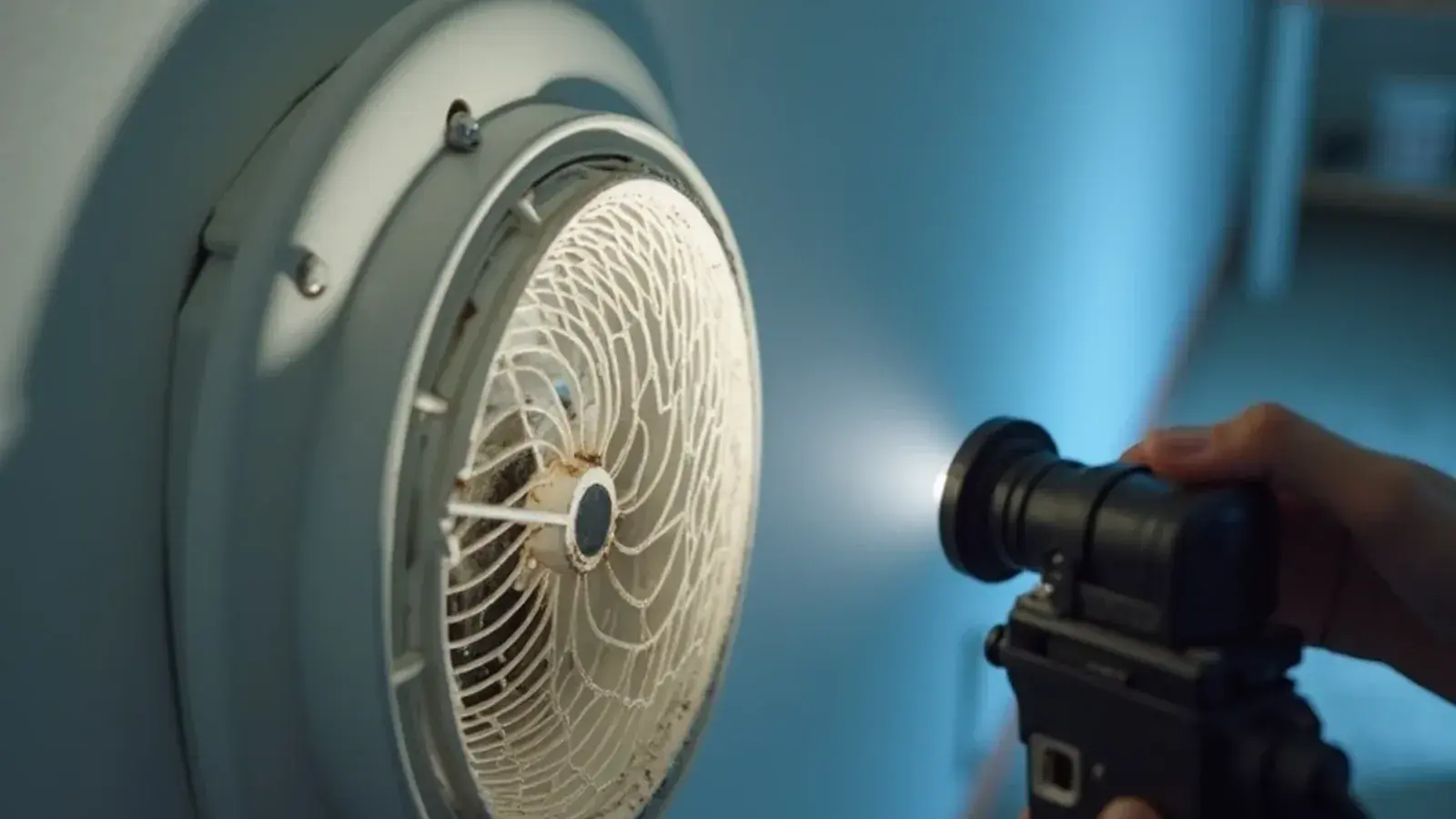
A mini split that smells musty has mold, mildew and bacteria growing on the wet parts inside the head: the evaporator coil, the blower wheel and the drain pan. Rinsing the filters or spraying a freshener will not stop it. The lasting fix is a deep cleaning that scrubs all three and flushes the drain line.
When it kicks on, you are smelling something alive. Those dark, damp surfaces stay wet whenever the unit cools, and every time the fan starts it pushes their odor straight into the room. The smell rarely fixes itself, and in the Rio Grande Valley it tends to get worse each summer.
The good news is that the cause is mechanical and predictable. Once the growth is physically removed from the coil, blower wheel and drain pan, the smell goes with it.
Where the odor is actually coming from
Behind the front panel of a wall-mounted head are three surfaces that stay wet whenever the unit cools:
- The evaporator coil. These thin aluminum fins chill the air and pull moisture out of it. Water beads on them all day.
- The drain pan. Water drips off the coil into this shallow tray and is supposed to flow out the condensate line. Any standing water becomes a breeding ground.
- The blower wheel. This long, cylinder-shaped fan, sometimes called a squirrel cage, sits right after the coil. Damp air and dust stick to its curved blades, and growth builds up in black or gray streaks.
The washable filter in front catches larger dust but cannot stop spores or fine particles. Everything that slips past lands on those wet parts and feeds the growth.
Why Valley humidity makes it worse
Ductless heads in the Valley run long hours for much of the year, so their coils almost never fully dry out. Homes close to the Rio Grande see this even more. In river-edge communities like Fronton, just west of Roma, moist air off the river keeps drain pans and blower wheels damp and slimy.
Lake houses face the same issue in a different form. Part-time houses around Falcon Lake, including the Siesta Shores area of Zapata County, sit closed up for weeks with the air conditioning off or set high. Humidity climbs, the coil and pan never dry, and the first startup of the season releases a wave of stale odor.
A few household habits speed things up too. Setting the head to a very low temperature on fan speed "auto" can leave the coil wet with little airflow. Cooking near a head adds grease that dust clings to. Pets add hair and dander. None of these is a mistake, but they shorten the time between cleanings.
Quick checks before you book a cleaning
Some odors are not mold. Rule these out first:
| Odor | Where it usually comes from | Next step |
|---|---|---|
| Musty, damp, earthy | Growth on coil, pan or blower wheel | Schedule a deep cleaning |
| Sour or "dirty sock" when heat starts | Growth releasing odor as the coil warms | Deep cleaning and filter routine |
| Sewage or rotten egg | Dry plumbing trap or gas issue elsewhere in the house | Check drains; for gas odor, leave and call the gas utility |
| Burning plastic or hot electrical | Overheating motor or wiring | Turn off at the breaker and call |
If it is the musty kind, pop the front cover, pull the filters and shine a flashlight up past the louver. If you see dark specks or streaks on the blower wheel, you have found the source.
What mini-split deep cleaning involves
Rinsing the filters helps airflow but does nothing for growth on the wheel. A proper mini-split deep cleaning works on every wet surface:
Protect the room
The technician powers the unit down at the breaker, covers furniture and hangs a waterproof cleaning bag under the head. The bag funnels rinse water into a bucket so the wall and floor stay dry.
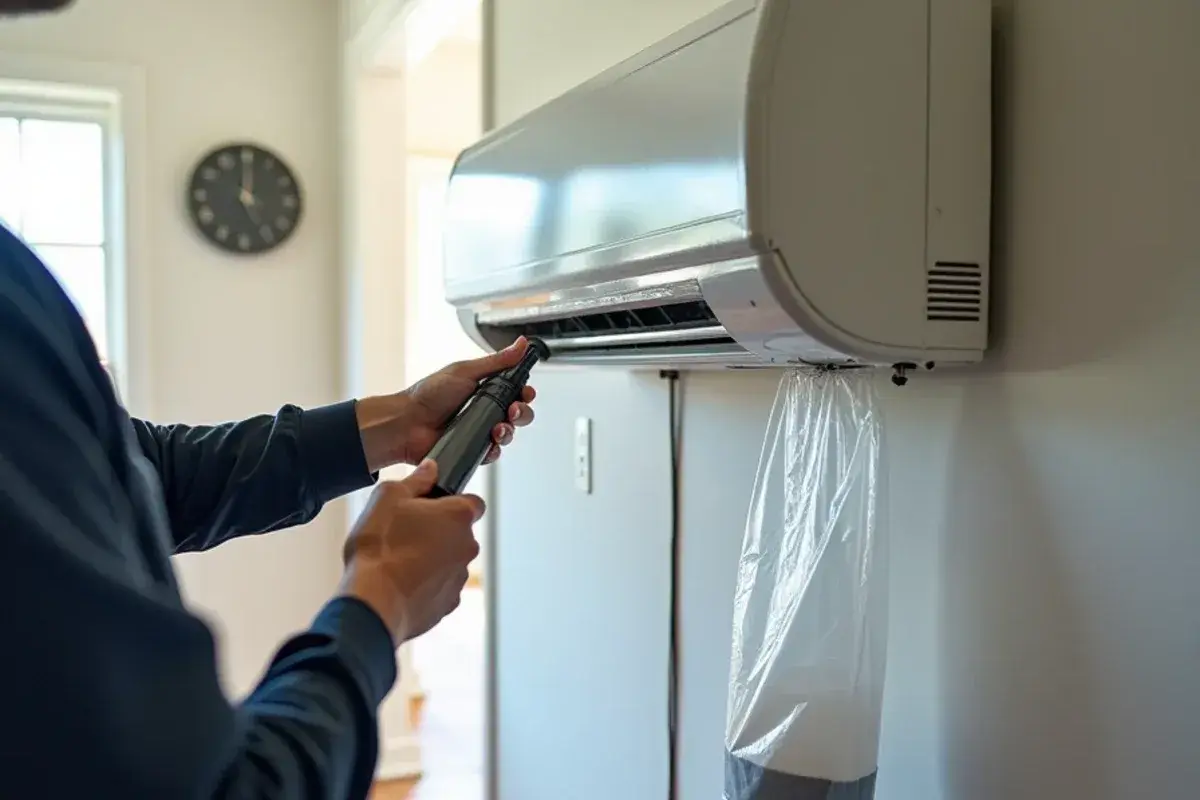
Clean the coil and blower wheel
A no-rinse or rinsable coil cleaner goes on the fins, followed by a low-pressure rinse that will not bend them. Each blade of the blower wheel gets scrubbed, either in place or removed from the head when buildup is heavy. Removing the wheel takes longer but gets it truly clean.

Clear the pan and drain line
The drain pan is scrubbed, and the condensate line is flushed all the way to where it exits outside. A clogged line is a common reason water sits in the pan and sours.

Reassemble and test
Covers, louvers and filters go back on, power is restored, and the unit is run in cooling mode to confirm water drains and the air coming out smells clean.
Skip the garden hose
Do not spray water into a ductless head or try to remove the blower wheel yourself. The control board sits inches from the coil, and water in the wrong place can ruin it. Wheel removal also requires taking apart parts that crack easily.Why some units sour again within weeks: a technician's view
A deep cleaning removes the growth. It does not change why the head stayed wet in the first place. When a freshly cleaned unit smells musty again within a month or two, the cause is usually one of these, and each one is checked differently.
- Standing water in the pan. If the head was hung slightly out of level, or the drain line runs uphill for even a short stretch, water sits in the pan instead of leaving. A level on the head and a look at where the line exits outside answer it quickly.
- A head too large for the room. An oversized unit cools the room in a few minutes, then idles. The coil never runs long enough to wring much water out, so the room stays damp and the coil stays wet between cycles. That is a sizing problem, and no amount of cleaning cures it.
- Fan settings. A very low fan speed, or a fan that stops the instant cooling ends, leaves water on the fins. Many remotes have a dry or self-clean mode that runs the fan after cooling to dry the coil.
- Humid air getting in. Gaps around the wall sleeve, an open attic hatch or a bathroom without an exhaust fan keep feeding moisture into the room. The EPA suggests keeping indoor humidity below 60 percent, and ideally between 30 and 50.
- Sweating line sets. Thin or torn insulation on the copper lines lets them sweat inside the wall or behind a line-hide cover, and that dampness can carry its own odor.
The honest trade-off is with the blower wheel. Cleaning it in place is quicker and is often enough for light buildup. Heavy black streaks between the blades need the wheel taken out, which adds time and takes care, since plastic clips and housings on some models are brittle. Ask which method fits your unit, and why.
As for doing it yourself: pulling the filters and wiping the front cover is safe. Bag kits and sprays sold online reach the coil face but put water close to the control board, which is why we would leave the wheel and pan to a technician.
Keeping the smell from coming back
After a cleaning, a few habits buy you more time:
- Rinse and dry the washable filters every two to four weeks during heavy-use months.
- Run the head in fan-only mode for a while before shutting it off for long periods, so the coil dries.
- Keep the drain line clear and watch for water dripping from the head.
- In closed-up or part-time homes, avoid shutting cooling off entirely in summer; a higher setting keeps humidity from building.
You can learn more about how ductless systems work, and what else they need, on our ductless mini-split page.
When to schedule
If the musty smell shows up every time the head starts, or you can see growth on the wheel, it is time for a deep cleaning rather than another spray can. Plan it before the hottest months, so the unit starts summer clean, and again whenever the odor returns. Getting the growth out is the only lasting fix. Call 956 Multi Service at (213) 423-7827, tell us how many heads you have and how long the smell has been there, and we will set up the cleaning.