

For most Valley homes, the best AC filter is a pleated MERV 8 or MERV 11 in the exact size of the slot, checked monthly and changed every one to three months. Choose MERV 11 for pets or allergies. Save MERV 13 for thick media cabinets or systems a technician has confirmed can handle it.
Picking a rating is a balance between catching dust and letting air through. In Starr County and the farm country of western Hidalgo County, homes pull in road caliche, field dust, pollen and pet hair all year. A filter that is too loose lets that grime reach the indoor coil. A filter that is too tight starves the system of air and can cost you cooling.
Here is how to choose, size and change filters so your system stays clean without working against itself.
What MERV actually measures
MERV stands for Minimum Efficiency Reporting Value. It comes from an ASHRAE testing standard and runs from 1 to 16 for most residential and light commercial filters. The higher the number, the better the filter is at trapping smaller particles.
Higher numbers come with a trade-off: denser media resists airflow more. Every blower is designed to push air against a certain amount of resistance. Add too much and the system moves less air across the coil, which can lower cooling, freeze the coil or strain the blower motor.
MERV ratings compared for Valley homes
| MERV range | Typical filter | What it catches well | Best fit |
|---|---|---|---|
| 1–4 | Flat fiberglass, blue or white | Lint, sand, coarse dust | Protects equipment only; not recommended for most homes |
| 5–8 | Basic pleated | Dust, most pollen, mold spores | Everyday choice for standard systems |
| 9–12 | Mid-grade pleated | Finer dust, pet dander, more pollen | Homes with pets, allergies or dusty roads |
| 13–16 | High-efficiency pleated or media | Smoke, fine particles, some bacteria | Asthma, smoke exposure; best in thick media cabinets |
MERV 8 vs MERV 11 for dusty homes
This is the most common choice homeowners face, and both are reasonable.
MERV 8 is the standard pleated filter. It catches the coarse caliche dust, pollen and lint that would otherwise coat the coil, and it adds little resistance. For a home with no allergy issues and a system of uncertain age, it is a safe default.
MERV 11 traps more fine dust, dander and smaller pollen. It is a good step up for homes with pets, someone with allergies, or a lot of field dust. In a 1-inch size it adds some resistance, so it needs to be changed on time.
Homes surrounded by orchards and fields, like those in Citrus City northwest of Alton, often load filters with pollen in spring and dust at harvest. In San Carlos, west of Elsa, farm-field dust can turn a fresh filter gray within weeks during peak seasons.
Reading filter sizes correctly
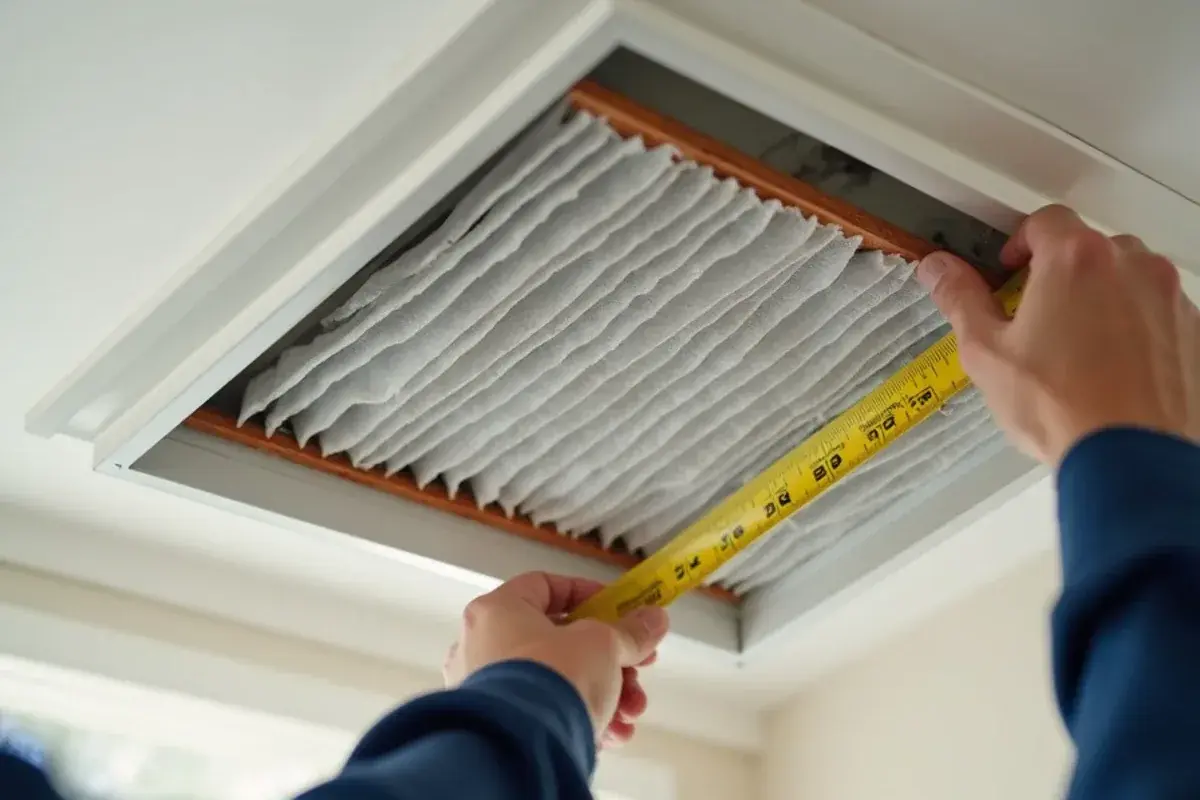
Filters list a nominal size, such as 16x25x1, which is rounded for convenience. The actual size is slightly smaller, usually by about half an inch in length and width, so the filter slides into the slot. Thickness labeled 1 inch is often closer to three-quarters of an inch.
Always match the size printed on the old filter or measure the slot. A filter that is too small leaves gaps, and dusty air simply flows around it. Many homes have more than one return grille, each with its own filter, and some have a filter at the air handler instead of the ceiling.
How often to change your AC filter
Package directions are written for average conditions. Valley homes run their AC longer and pull in more dust, so plan on shorter intervals.
| Filter type | General guidance | In dusty or busy Valley homes |
|---|---|---|
| 1-inch fiberglass | Every 30 days | Check every 2 weeks in summer |
| 1-inch pleated MERV 8–11 | Every 1–3 months | Every month during heavy cooling |
| 2-inch pleated | Every 2–3 months | Every 1–2 months |
| 4- to 5-inch media | Every 6–12 months | Check at 4–6 months |
Pets, construction nearby, a caliche driveway, smoking indoors and open windows all shorten the interval. The simplest rule: slide the filter out once a month and look at it against a bright window. When the pleats block the daylight, replace it.
What happens when a filter is too dirty or too dense
A clogged or overly restrictive filter causes problems that look like bigger failures:
- Weak airflow at the vents and rooms that never get cool
- Ice forming on the indoor coil or refrigerant lines
- Water dripping when that ice melts
- A blower that runs louder or longer than normal
- Higher electric bills from longer run times
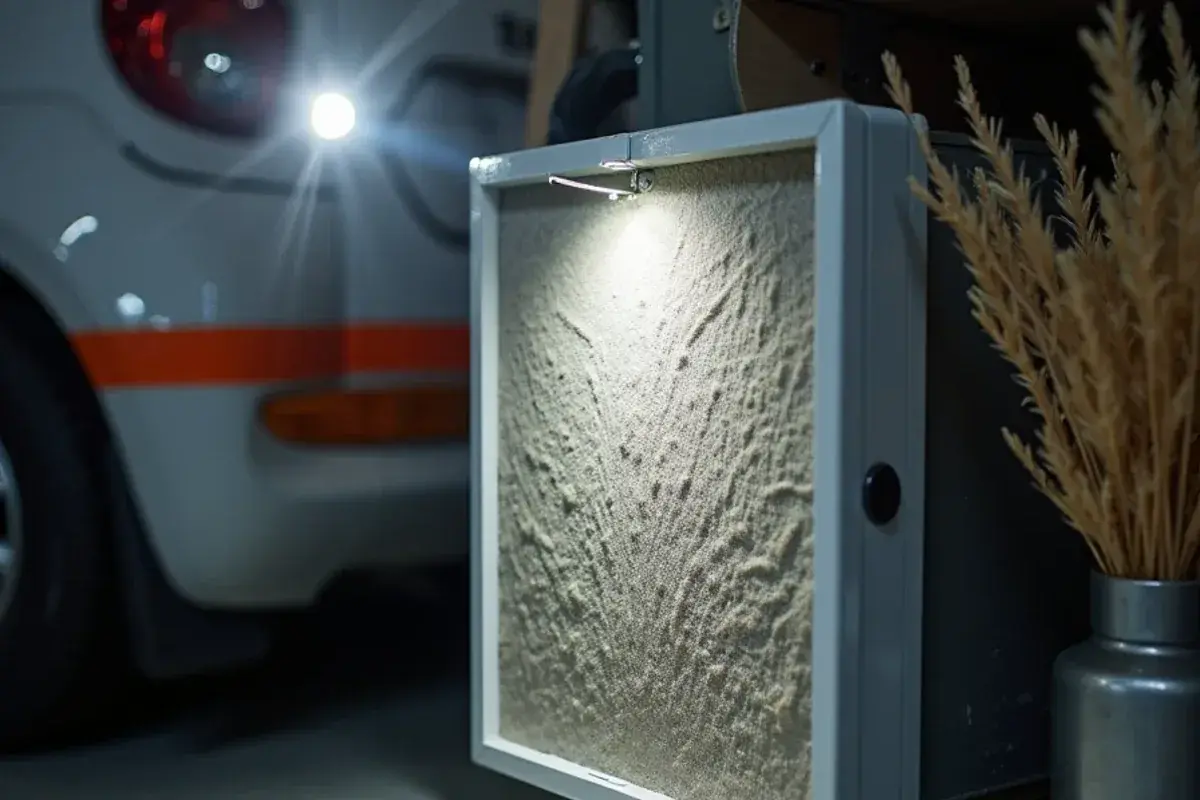
Filters can also bow or collapse under heavy load, letting unfiltered air bypass the edges and coat the coil anyway. If you see a filter that is bent inward, it is overdue.
Can your system handle a denser filter? How a technician checks
The rating printed on the frame tells you what the filter can catch. It does not tell you what your blower can push air through. Those are separate questions, and the second one is answered with a gauge, not a guess.
- Static pressure. A manometer, a gauge that reads very small air pressures, measures the resistance the blower is working against. The air handler's nameplate or manual lists the most it is designed for. Readings above that, with a clean filter in place, mean the ducts or filter are already too tight.
- Pressure drop across the filter. Readings taken before and after the filter show how much of that resistance the filter itself adds. Comparing a MERV 8 and a MERV 13 in the same slot makes the trade-off visible.
- Return grille size. Many homes have one small return grille doing the work of two. Air rushes through it, which makes the filter load faster and adds resistance. A larger grille or a second return can make room for a better filter.
- The type of blower motor. Older single-speed motors simply move less air when the filter is dense, so cooling drops. Newer variable-speed motors speed up to hold airflow, which keeps cooling steady but uses more power and gets louder. Either way, the filter is costing you something.
The honest trade-off: a higher MERV filter cleans the air better, but only as long as the system still moves enough air across the coil. In a dusty Valley house with a small return, a MERV 11 changed on time often does more good than a MERV 13 that clogs in three weeks. Where a household really needs finer filtration, a deeper media cabinet usually solves both problems.
When a filter alone is not enough
Even a good pleated filter only cleans the air that passes through it, and only while the blower runs. For households dealing with asthma, wildfire smoke, heavy allergies or a lot of fine dust, a whole-home air cleaner adds a deeper layer of filtration at the air handler. Our whole-home air purifiers page explains the options, from thick media cabinets to electronic cleaners, and our indoor air quality services cover humidity control and ventilation as well.
A thicker media cabinet is often the best way to use MERV 13 in a home system, because the larger surface area keeps resistance low while catching fine particles.
Choosing your next filter
For most homes, a pleated MERV 8 changed monthly in summer protects the equipment and keeps dust down. Step up to MERV 11 if someone has allergies or you have pets. Save MERV 13 for thicker filters or systems confirmed to handle it. Match the size exactly, check it every month, and your AC will breathe easier through every dusty season. If you want the airflow measured before stepping up a rating, call 956 Multi Service at (213) 423-7827 and tell us the filter size and where the return grille is.