

The best way to prevent an AC drain line clog is boring and cheap: flush the line once a month in cooling season, keep the filter clean, and make sure a float switch is in place to shut the system down before water reaches your ceiling. Together they head off most overflows.
In the Valley, where the air conditioner runs most of the year and summer humidity hangs near the river, this small job matters more than almost anywhere else. Every central AC and mini-split pulls moisture out of the air as it cools. That water drips off the indoor coil into a drain pan and leaves through the condensate line, usually a three-quarter-inch PVC pipe that runs outside or into a plumbing drain. Block that pipe and the water backs up into the pan, then over its edge.
What actually clogs the line
The water itself is clean, but the line is a warm, dark, wet tube, and that is ideal for growth. Algae and bacterial slime build up along the bottom of the pipe and in the trap (the U-shaped bend that stops air from being sucked back up the pipe). Dust that slips past a loose or dirty filter lands on the wet coil, washes into the pan and sticks to the slime. Over a few months the mix thickens into sludge that slows the flow, then stops it.
Other causes include:
- Pipes run with too little slope, so water sits instead of draining.
- Insects or mud daubers nesting in the open outdoor end.
- A crushed or kinked line in the attic or under a mobile home.
- Rust flakes from an aging metal drain pan.

A monthly routine that takes ten minutes
Do this on the same day you check your filter so it becomes habit.
Find the access point
Most systems installed in recent years have a vented tee with a removable cap on the drain line close to the indoor unit. On attic units it is usually on the platform beside the air handler; in hall closets it sits at the side of the cabinet.
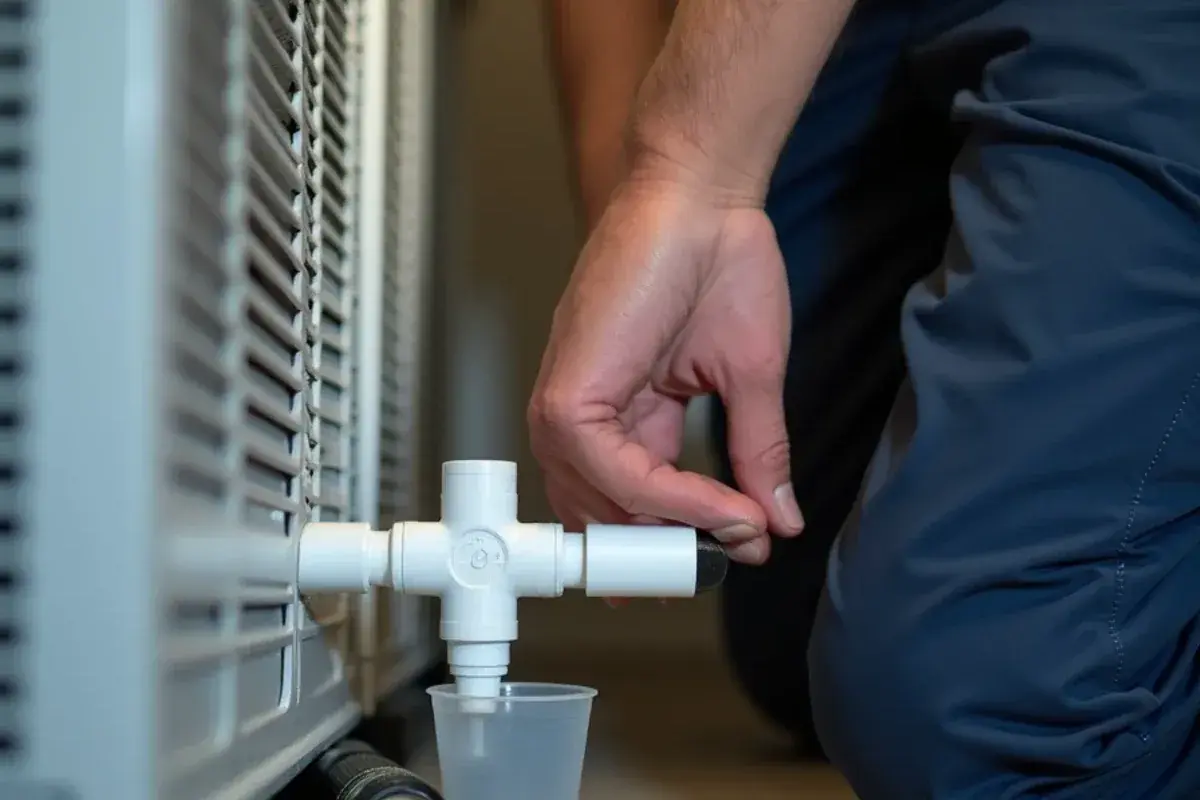
Flush it
- Switch cooling off at the thermostat.
- Remove the cap and look down the tee with a flashlight. Standing water means a partial clog below.
- Slowly pour about a cup of plain white vinegar into the tee. Many homeowners prefer vinegar because it is mild and safe on PVC.
- Wait roughly half an hour, then follow with a cup or two of clean water.
- Go outside and confirm water is coming out of the drain's outdoor end.
- Replace the cap and turn the system back on.
Look at the outdoor end
Keep the outlet clear of soil, mulch and grass clippings. A short piece of screen or a loose-fitting cap with an opening keeps wasps out without blocking flow. If the outlet sits in a low spot that puddles after heavy rain, the water can back up into the pipe.
Float switches and backup pans
Think of a float switch as a water-level cutoff: it senses rising water and kills power to the AC before the pan overflows. It is the single best protection for a home with an attic air handler.
| Device | Where it goes | What it does | Best for |
|---|---|---|---|
| Inline float switch | On the primary drain line near the unit | Shuts off cooling when water backs up in the line | Closet and attic units |
| Pan float switch | In the secondary pan under the unit | Shuts off cooling when water reaches the backup pan | Attic units over finished ceilings |
| Secondary drain line | From the backup pan to an outside spot you can see | Drips somewhere visible as a warning | Attic units; check for drips above a window |
| Condensate pump with safety switch | Beside units with no gravity path | Pumps water up and out, stops the AC if the pump fails | Some closets, add-ons and basements |
If you ever see water dripping from a pipe above a window or eave, that is the secondary drain doing its job. It means the primary line is blocked and needs attention soon.

Valley conditions that make clogs more frequent
Long cooling seasons mean the line is wet almost year-round, so growth never really dies back in winter. Low ground near the river is a factor too. In El Refugio, southeast of Rio Grande City, heavy summer storms can leave outdoor drain outlets sitting in standing water, and silt can wash back into the pipe end. In Los Ebanos, on the Hidalgo County side of the river, small homes in damp river-bottom air push a lot of moisture through their coils, which keeps lines and pans working hard.
Window units being replaced by mini-splits add another wrinkle. Mini-split drain hoses are narrow and often run through the wall with little slope, so they clog faster than a central-system line and are harder to flush. If the head unit itself drips or smells musty, the fix is usually a full mini-split deep cleaning of the coil, blower wheel and drain pan, not just the hose.
When to call instead of DIY
A monthly vinegar flush handles maintenance, not a hard clog. Call a technician when:
- Water keeps standing in the tee after flushing.
- The float switch keeps tripping and shutting the system off.
- There is water on the ceiling, in the closet floor or under the unit.
- The drain pan is rusted through or cracked.
- You smell mold near the air handler.
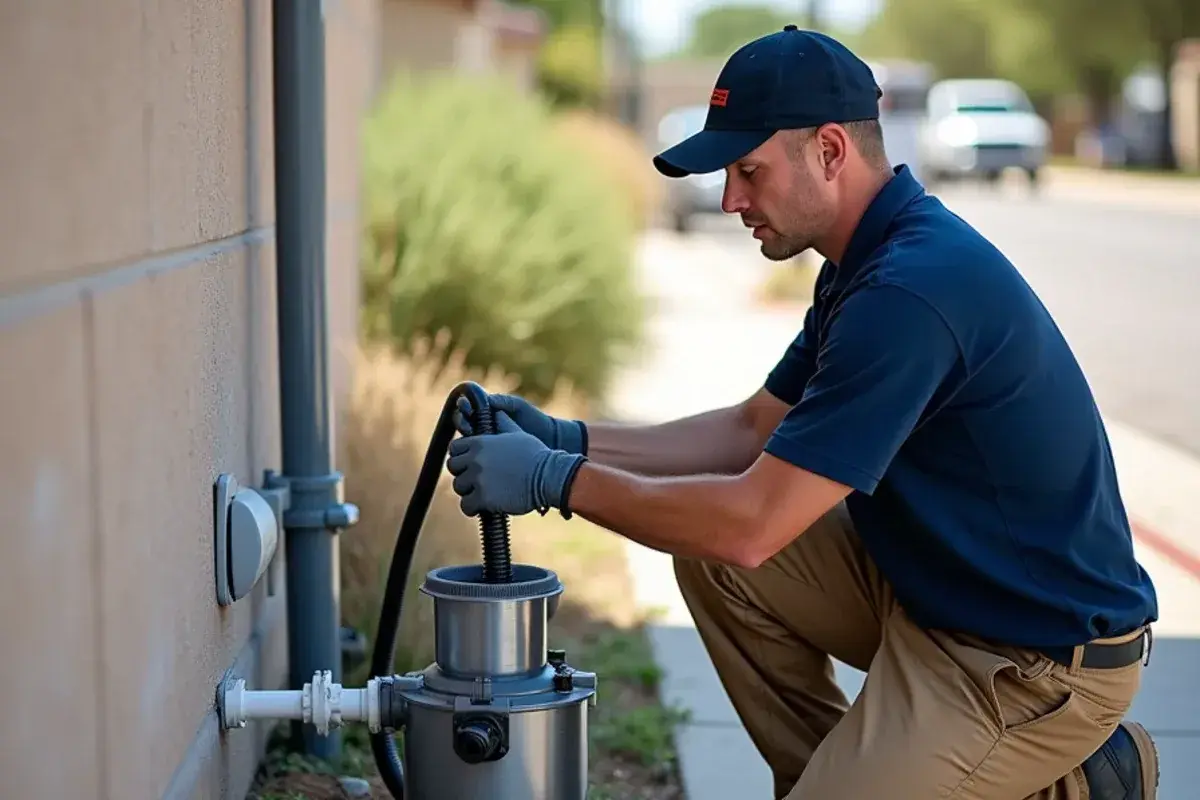
A technician can clear the line with a wet-dry vacuum from the outdoor end, use a pump or nitrogen to push the clog through, re-slope a sagging run, replace a cracked pan and add a float switch if one is missing. When the line is damaged rather than just dirty, our AC drain line and water leak repair covers re-routing and replacing the pipe.
Why some drain lines keep clogging, from the technician's side
When a line clogs every few months even with regular flushing, the problem is usually how the drain was built, not how it was cared for. These are the things worth measuring before anyone clears it a third time.
Slope. The model plumbing and mechanical codes call for condensate lines to fall at least about an eighth of an inch per foot. A level laid on the pipe shows quickly whether a run in the attic sags in the middle. Water that sits in a belly of pipe grows slime faster than water that keeps moving, and no amount of vinegar fixes a pipe that runs uphill.
The trap. On most air handlers the blower pulls air through the coil, so the coil compartment sits under slight suction. A trap of the right depth lets water out while stopping air from being pulled back up the drain. With no trap, or one that is too shallow, the suction can hold water in the pan until it spills over the side, even though the line itself is clear. That looks like a clog and is not one.
The vent and cleanout. A tee placed in the right spot lets the line drain freely and gives you a place to flush. A tee missing its cap, or placed below the trap, can let air in at the wrong point or spit water into the closet.
What is feeding it. A coil shedding dust and a filter that does not seal in its slot send material straight into the pan. Treating the line without cleaning the coil means the sludge comes back.
How it gets cleared. Pulling a clog out from the outdoor end with a wet-dry vacuum is the gentlest method, because the debris leaves the way the water does. Blowing compressed air or nitrogen from inside can work on a stubborn plug, but it can also pop a glued fitting or push sludge into the next joint, so it is done with the line open and watched.
Testing the safety switch. A float switch is only useful if it works. With the system cooling, lifting the float or filling the pan slightly should stop the outdoor unit within a few seconds. The model residential code requires some form of backup protection, whether a secondary pan, an overflow line or a water-level cutoff, wherever a blocked drain would damage the building, and local amendments decide which forms are allowed.
Pair the flush with seasonal maintenance
Monthly flushing keeps the line moving, but the pan and coil also need attention. A regular AC maintenance visit typically includes cleaning the drain pan, clearing the line, testing the float switch and checking that the coil is not shedding dirt into the drain. Cleaning the coil itself removes much of the material that ends up as sludge.
| Task | How often | Who |
|---|---|---|
| Check filter | Monthly in cooling season | Homeowner |
| Vinegar flush of drain tee | Monthly in cooling season | Homeowner |
| Check outdoor drain outlet | Monthly, and after heavy rain | Homeowner |
| Test float switch, clean pan, clear line | At each maintenance visit | Technician |
| Coil cleaning | When maintenance shows dirt buildup | Technician |
Put it on the calendar
Set a monthly reminder for the filter and the drain together, keep the outdoor outlet clear, and confirm your system has a float switch. Those three habits stop most overflows before they start. If water is already showing up somewhere it should not be, shut the system off and get the line cleared before the ceiling or flooring takes the damage. Call 956 Multi Service at (213) 423-7827, tell us where the water is showing up, and we will tell you what to switch off and what the visit will check.