

Your home's humidity is too high if a hygrometer reads above 60 percent, or if the house feels clammy at a normal temperature, closets smell musty, vents sweat and windows fog. The usual fixes are setting the fan to auto, using exhaust fans, servicing the AC and sealing ducts, then adding a whole-home dehumidifier if readings stay high.
High humidity in house air is a common comfort complaint in the Rio Grande Valley, and a misunderstood one. People turn the thermostat lower and lower, but the house still feels damp. That's because cooling and drying are two different jobs, and an air conditioner doesn't always do both well.
What "too humid" really means indoors
Relative humidity (RH) is how much moisture the air holds compared with the most it could hold at that temperature. The U.S. Environmental Protection Agency suggests keeping indoor humidity roughly between 30 and 50 percent, and below 60 percent, to limit mold growth and dust mites.
In the Valley, outdoor humidity regularly runs much higher than that, especially near the river and in low-lying resaca neighborhoods. Your AC is the main thing standing between that outdoor air and your living room.
The simplest way to know where you stand is a digital hygrometer, a small humidity meter sold at hardware stores. Put one in a central room and check it at different times of day for a week.
Signs your home is holding too much moisture
You may not need a meter to know something's off. Common signs:
- The house feels clammy even when the temperature is comfortable.
- A musty smell in closets, bathrooms or the whole house when the AC starts.
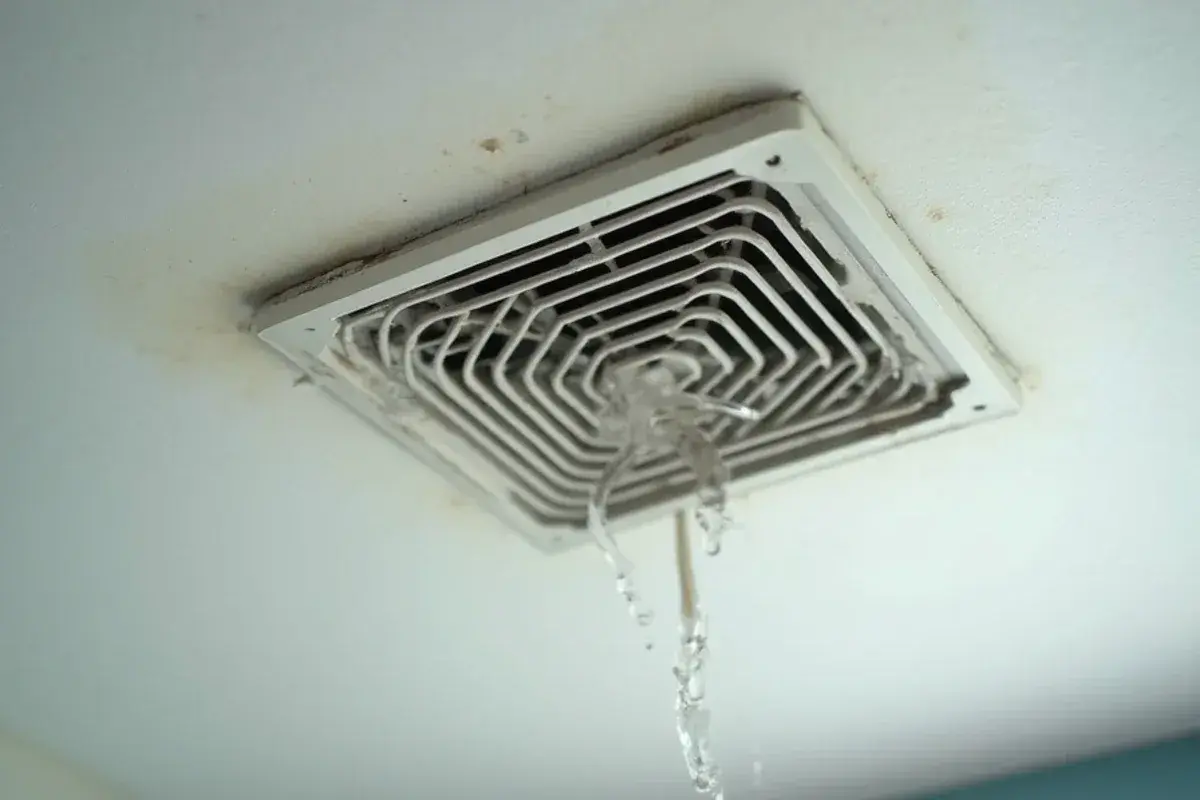
- Sweating vents or water spots on the ceiling around supply registers.
- Condensation on the inside of windows on cooler mornings.
- Mold or mildew on bathroom ceilings, behind furniture on outside walls, or on shoes and leather in closets.
- Warped wood in doors that stick or floors that cup.
- Allergy symptoms that get worse indoors, since dust mites thrive in damp air.
Why your AC is not removing humidity
An AC removes moisture as a side effect of cooling. Warm air passes over the cold indoor coil, water condenses on the coil, and it drains away through the condensate line. For that to work, the coil has to stay cold long enough and the air has to move slowly enough over it. Several things get in the way.
The system is oversized
A unit that's too big for the house cools the air fast, satisfies the thermostat in a few minutes and shuts off. The coil barely gets cold enough to start dripping before the cycle ends. You get cold, damp air. This is one of the most common reasons a house feels humid with AC on.
The fan is set to "on"
With the fan set to run constantly, it keeps blowing across the wet coil after the compressor stops. Some of that moisture evaporates right back into the house. A Florida Solar Energy Center study measured this and found that nearly a fifth of the water condensed during a cooling cycle went back into the room when the fan kept running. Setting the fan to "auto" lets the coil drain between cycles.
Airflow is set too high
Air moving too fast across the coil doesn't give it time to pull out water. Some systems have a dehumidify setting or a lower fan speed option that a technician can enable.
Humid air is getting in
Leaky return ducts in the attic or crawlspace pull outside air into the system. Gaps around old window-unit openings, doors and plumbing also let humid air in. Bathrooms without working exhaust fans and long showers add a lot of moisture.
Dirty coil or low refrigerant
A dirty indoor coil or low refrigerant changes how cold the coil runs and how much water it can remove. A routine check catches both.
Fixes from simplest to biggest
| Fix | What it addresses | Effort |
|---|---|---|
| Set the fan to "auto" | Moisture re-evaporating from the coil | Free, one minute |
| Run bathroom and kitchen exhaust fans | Moisture from showers and cooking | Free if fans work |
| Fix water leaks and drain problems | Hidden moisture sources | Varies |
| Clean the coil, check refrigerant and airflow | AC not drying well | Routine service visit |
| Enable dehumidify mode or lower fan speed | Air moving too fast over the coil | Technician setup |
| Seal leaky return ducts and air gaps | Humid outside air drawn in | Moderate project |
| Install a whole-home dehumidifier | Persistent humidity the AC can't handle alone | Installation project |
| Right-size or upgrade to variable-speed AC | Oversized or single-speed system | Usually at replacement time |
What does a technician measure on a humidity complaint?
"The house feels sticky" is a real complaint, but it needs numbers before anyone recommends equipment. These are the readings that usually point to the cause.
- Temperature and humidity together. Relative humidity alone can mislead, because it changes with temperature. A technician converts the two into a dew point, which shows how much water is actually in the air and whether surfaces like vents and walls will sweat.
- Supply air temperature and the split. The difference between return and supply air shows whether the coil is running cold enough. A coil that runs warm from a dirty surface or low charge cools a little and dries almost nothing.
- Airflow per ton. Residential systems are commonly set near 400 cubic feet per minute of air per ton of cooling. In humid conditions, technicians often slow that to roughly 325 to 350 so the coil runs colder and wrings out more water. Too slow and the coil can freeze, so it is set with a meter, not by feel.
- Cycle length. Watching how long the compressor runs on a hot afternoon tells you a lot. Short cycles of a few minutes, repeated all day, are the signature of an oversized system that never gets the coil fully wet and draining.
- Return leaks and outside air. A return duct leak in the attic or a crawlspace draws in hot, wet air on every cycle, and the AC spends its effort on that air instead of the house.
The honest trade-offs show up once the numbers are in. Slowing the fan helps moisture removal but trims cooling capacity, so it suits systems that have capacity to spare. A whole-home dehumidifier fixes stubborn humidity, but it adds a little heat to the air, uses its own electricity and needs a drain path and room in the attic or closet. If the AC is badly oversized and near the end of its life, the better money may go into a correctly sized variable-speed replacement rather than an add-on.
When a whole home dehumidifier makes sense
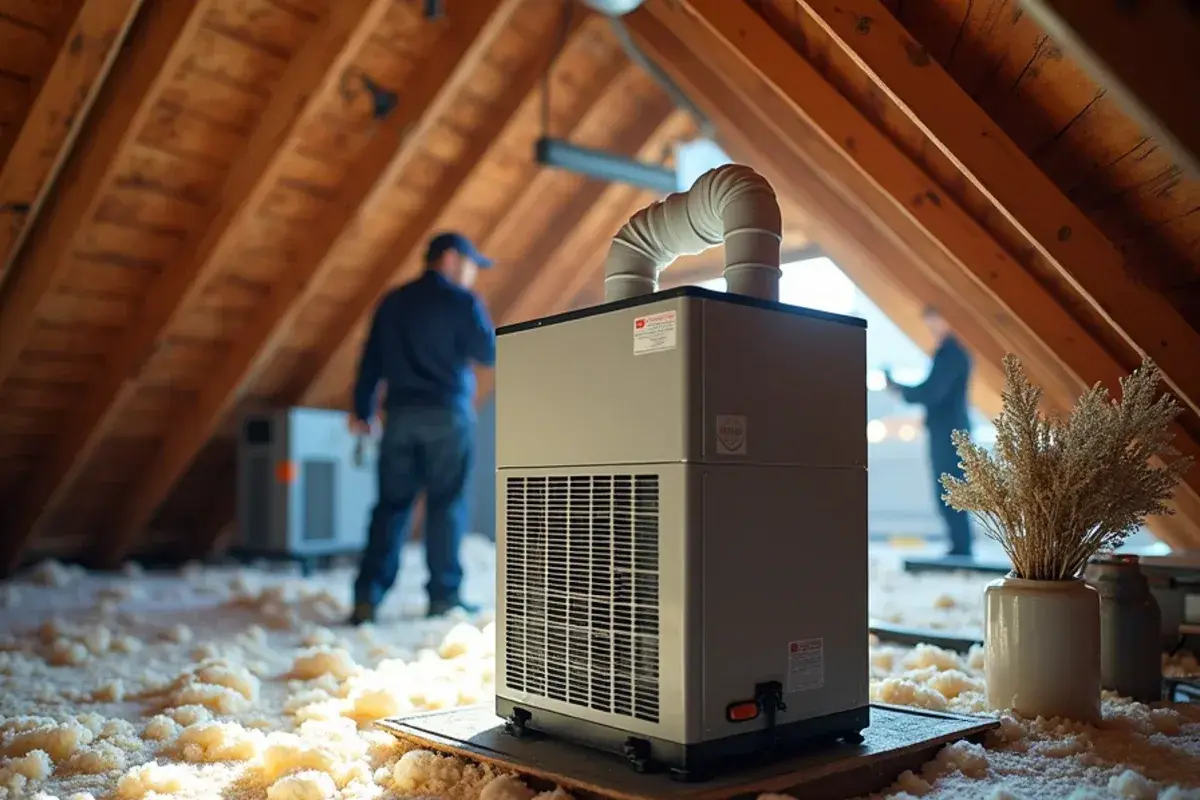
A whole-home dehumidifier is a dedicated unit that connects to your ductwork and pulls moisture out of the air independently of cooling. It runs on its own humidity control, so it can work on mild, damp days when the AC barely runs.
It's worth considering when:
- The house stays above 60 percent humidity even after simpler fixes.
- The AC is oversized but still has years of life left.
- You have recurring mold or musty smells despite good cleaning.
- The home sits in a low, damp area or has a crawlspace or slab that holds moisture.
- Someone in the home has allergies or asthma triggered by dampness.
Our whole-home dehumidifier page explains sizing, placement and how it drains.
Humidity in damp corners of the Valley
Some parts of the Valley deal with this more than others. Older, low-lying homes in South Alamo, toward the river levee, often show mold on coils and blower wheels from steady humidity. Farther east, San Benito and other towns in Cameron County are surrounded by resacas and damp ground where drain lines and duct interiors need regular attention.
Humidity is also tied to everything else in the air you breathe. Our indoor air quality services cover filtration, ventilation and humidity together, since fixing one often helps the others.
A musty smell in the house: start here
If you mainly notice a musty smell, track down where it's strongest. A closet or bathroom points to a local moisture problem. A smell that blows out of every vent when the AC starts points to the system itself, often the coil, drain pan or blower. Both are worth fixing quickly, since mold spreads in damp conditions.
Getting your home back to comfortable
Start with a hygrometer and a week of readings. Switch the fan to auto, use your exhaust fans, and look for leaks or musty spots. If humidity stays above 60 percent, have the AC checked for size, airflow, coil condition and duct leaks. Most homes reach comfortable levels with a combination of those fixes, and a whole-home dehumidifier handles the rest. If the readings stay high, call 956 Multi Service at (213) 423-7827 and share a week of hygrometer numbers; they make it much easier to judge which check to start with.