
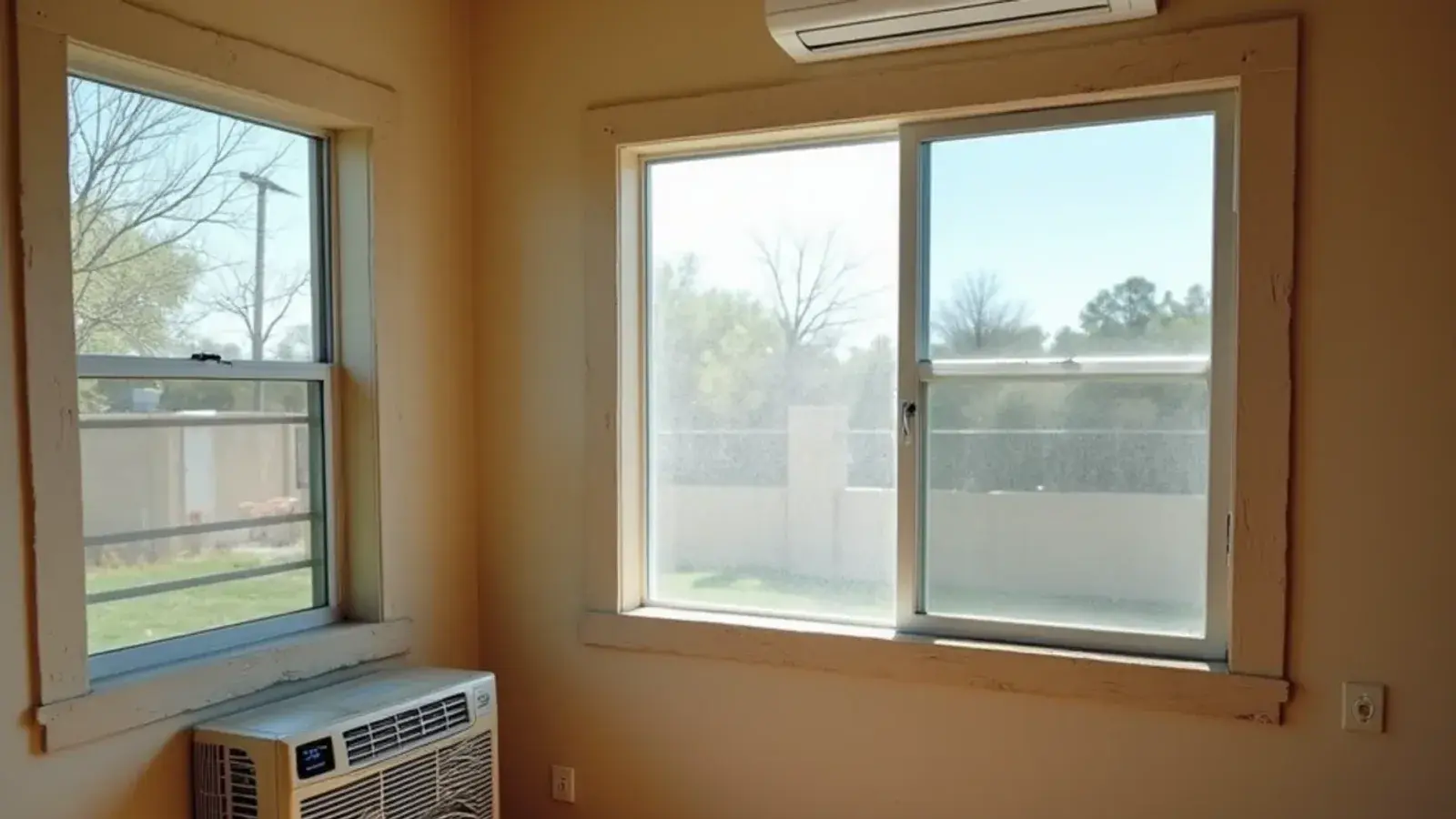
For most Valley homes without ducts, a ductless mini-split beats a window unit: it is quieter, uses less power for the same cooling and gives you the window back. A window unit still makes sense for one room or a short-term fix. Central AC wins where sound ductwork already exists, or where an attic has room to build it.
Choosing between a mini split vs window unit, or deciding whether central air belongs in the picture, comes down to how your house is built and how you live in it. A block home that grew room by room, a single-wide on piers, and a 2000s subdivision house with an attic full of ducts each point toward a different answer. Cost matters, but so do noise, humidity control and whether you want your windows back.
This comparison sticks to what is true across Valley homes. We do not list prices, because they change with equipment and the house, but the relative differences hold steady.
The three systems in one table
| Factor | Window unit | Ductless mini-split | Central AC |
|---|---|---|---|
| Upfront cost | Lowest per room | Moderate per room; rises with each zone | Highest if ducts must be built; moderate as a replacement |
| Running cost | Highest per room cooled | Low; inverter compressors adjust speed | Moderate; depends heavily on duct condition |
| Comfort | Uneven; cold near the unit, warm across the room | Even in each zoned room | Even across the whole house when ducts are sound |
| Humidity control | Weak | Good, with long steady run times | Good when sized correctly |
| Noise indoors | Loud; compressor sits in the room | Very quiet; compressor is outside | Quiet indoors; air noise at vents |
| Security and windows | Blocks a window; easier entry point | Window stays free | Window stays free |
| Lifespan | Shortest | Long with regular cleaning | Long with maintenance |
| Installation | Homeowner can set it in place | Professional install for most models | Professional install, plus permits on new ductwork |
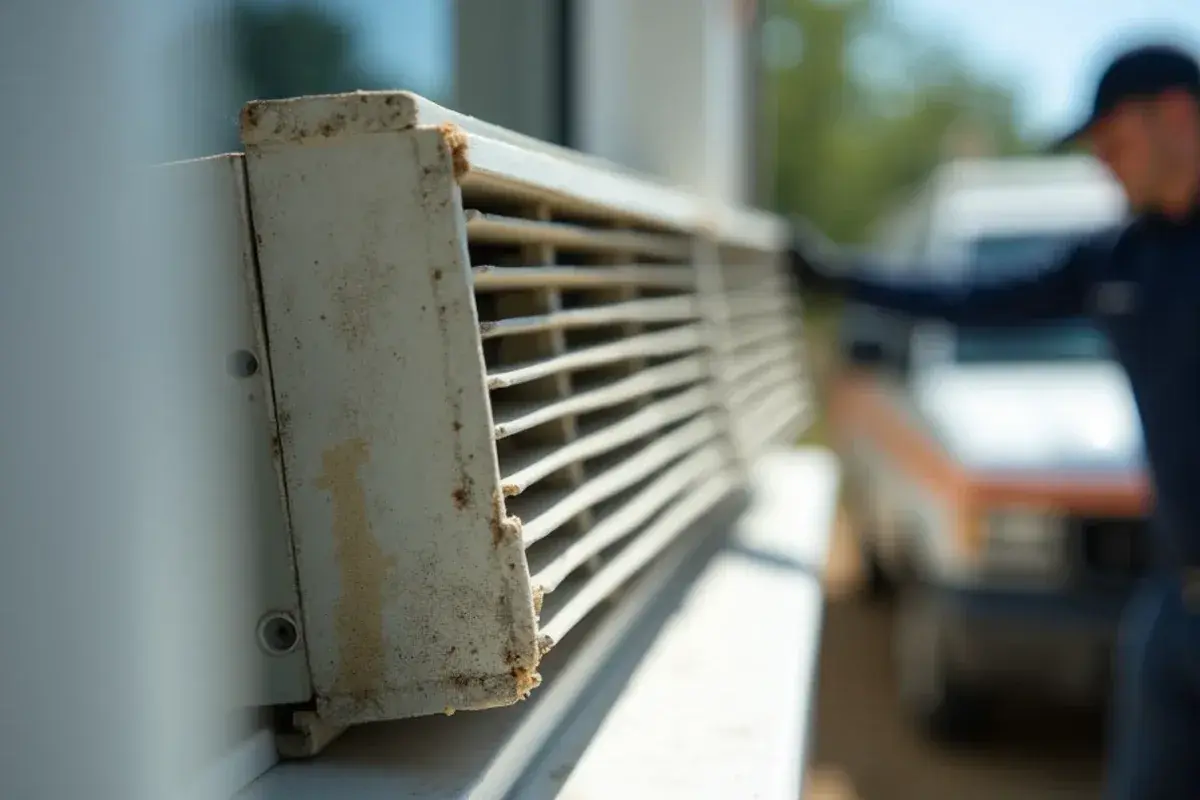
Window units: cheap to buy, expensive to live with
Window units earn their place for a single room, a rental or a short-term fix. You can buy one today and have it running tonight. That is hard to beat when a bedroom is unbearable in July.
The trade-offs show up over time. The compressor sits in the room, so it is loud. Efficiency is lower than modern split systems, which matters when a unit runs from April to October. The side panels leak air and dust, the window is lost, and older units struggle to keep up once outdoor temperatures pass 100°F. Many houses end up with three or four of them, each cooling its own corner.
Ductless mini-splits: the room-by-room upgrade
A mini-split puts the noisy compressor outside and connects it to a quiet head on the wall through a small hole. Most modern units use inverter compressors, which slow down instead of switching fully on and off. That means steady temperatures, better moisture removal and lower power use.
Mini-splits shine in homes without ducts: block houses, additions, converted garages, manufactured homes and older frame houses. In towns like Escobares, where many block homes along US-83 still cool with window units, swapping two or three units for ductless heads is a common and practical upgrade. You can read more on our ductless mini-split page.
The downsides are real but manageable. Each zone adds cost, the heads are visible on the wall, and they need regular filter rinsing and periodic deep cleaning to avoid mold.
Central AC: best where the ducts already work
Central air cools the whole house from one system and hides everything except the vents and thermostat. In homes that already have ductwork in good shape, replacing a tired central system is often the simplest path, and new equipment must meet the 14.3 SEER2 minimum for most split systems sold in Texas.
The weak point is the ductwork itself. Ducts in a South Texas attic sit in air that can be far hotter than outdoors. Leaky or poorly insulated runs throw away cooling before it reaches the rooms. If a home has no ducts at all, building them means opening ceilings and finding attic space, which many Valley homes simply do not have.
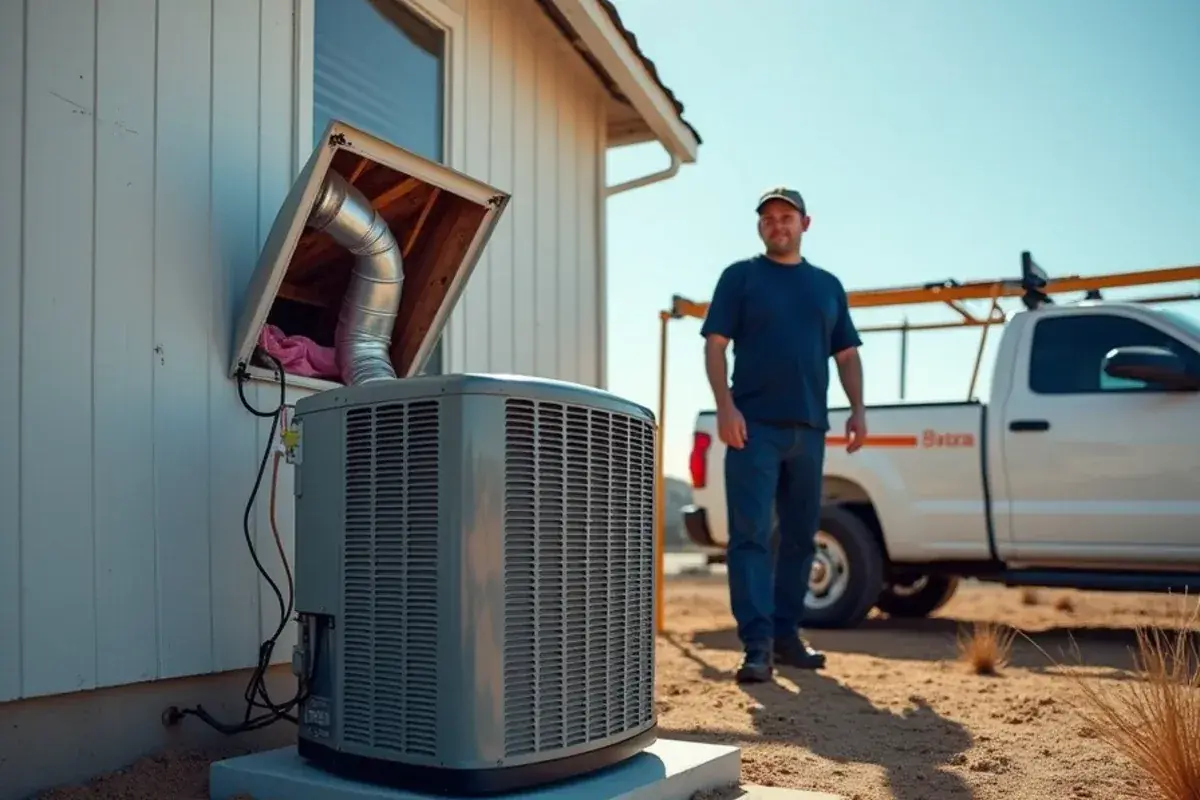
Ductless vs ducted: matching the system to the house
Start with what the house already has, then decide.
No ductwork, rooms added over time
Choose ductless. Each new room can get its own head, and you never have to retrofit ducts through a block wall.
Old ductwork in poor shape
Get the ducts inspected. If they can be sealed and insulated, a new central system may still make sense. If they are crushed, disconnected or undersized, mini-splits can replace the whole system.
Mix of window units and one undersized central system
This is common in long-established neighborhoods. In Lopezville, north of San Juan, older block homes often have exactly this setup. One option is to keep the central system for the main living area and add ductless heads to the rooms it never reached.
Small house, tight budget
A single well-placed mini-split in the main room, plus a window unit in a back bedroom, is a reasonable step toward going fully ductless later.
What a technician checks before recommending one
A good recommendation comes from the house, not from a preference for one type of equipment. These are the checks that usually settle it, and the trade-offs that come with each answer.
- The electrical panel. Most window units plug into an ordinary 120-volt outlet. Mini-splits and central systems usually need a dedicated 240-volt circuit and an outdoor disconnect. A full panel, or an older service to a frame house, can add work to either of those options.
- The ducts, if there are any. Crushed flex duct, joints pulled apart in the attic and runs with no insulation left show up on a flashlight inspection. Comparing the air temperature at the coil with the temperature at the far registers shows how much cooling the ducts lose before it reaches the rooms.
- Room-by-room heat load. West-facing windows, a low ceiling under a hot roof and a kitchen with no exhaust can make one room need twice the capacity of the room beside it. That points toward zoning, whichever system you pick.
- How the rooms connect. One mini-split head cools the room it can see. In an open living and kitchen area, one head can carry a lot. Bedrooms down a hallway with the doors closed will not share that air.
- Heating needs. Most mini-splits are heat pumps, so the same head heats on a cold January morning. Window units with heat strips work, but they draw a lot of power when they do.
An honest trade-off: once a house needs a head in every room, the cost of five or six zones can come close to a new central system with ducts. That is the point where a mixed layout, central air for the main living space and a few heads for the rooms it never reached, is often the better value. Ask for both priced side by side.
Questions to ask before you choose
- Which rooms do you use most during the hottest hours?
- Is there sound ductwork, and how old is it?
- Can your electrical panel take another circuit?
- How much do noise and window space matter to you?
- Are you planning to add rooms in the next few years?
Our AC installation services cover central systems, replacements and mobile-home units, and financing is available if you want to spread out the investment.
Pick the system that fits the house
There is no single winner. Window units buy time, mini-splits suit most ductless Valley homes, and central air fits houses with good ducts. Look at your rooms, your walls and the hours you spend in each space, and the right choice usually becomes obvious. If you want a second opinion on your own house, call 956 Multi Service at (213) 423-7827 and tell us how the home is built and which rooms run hottest.