
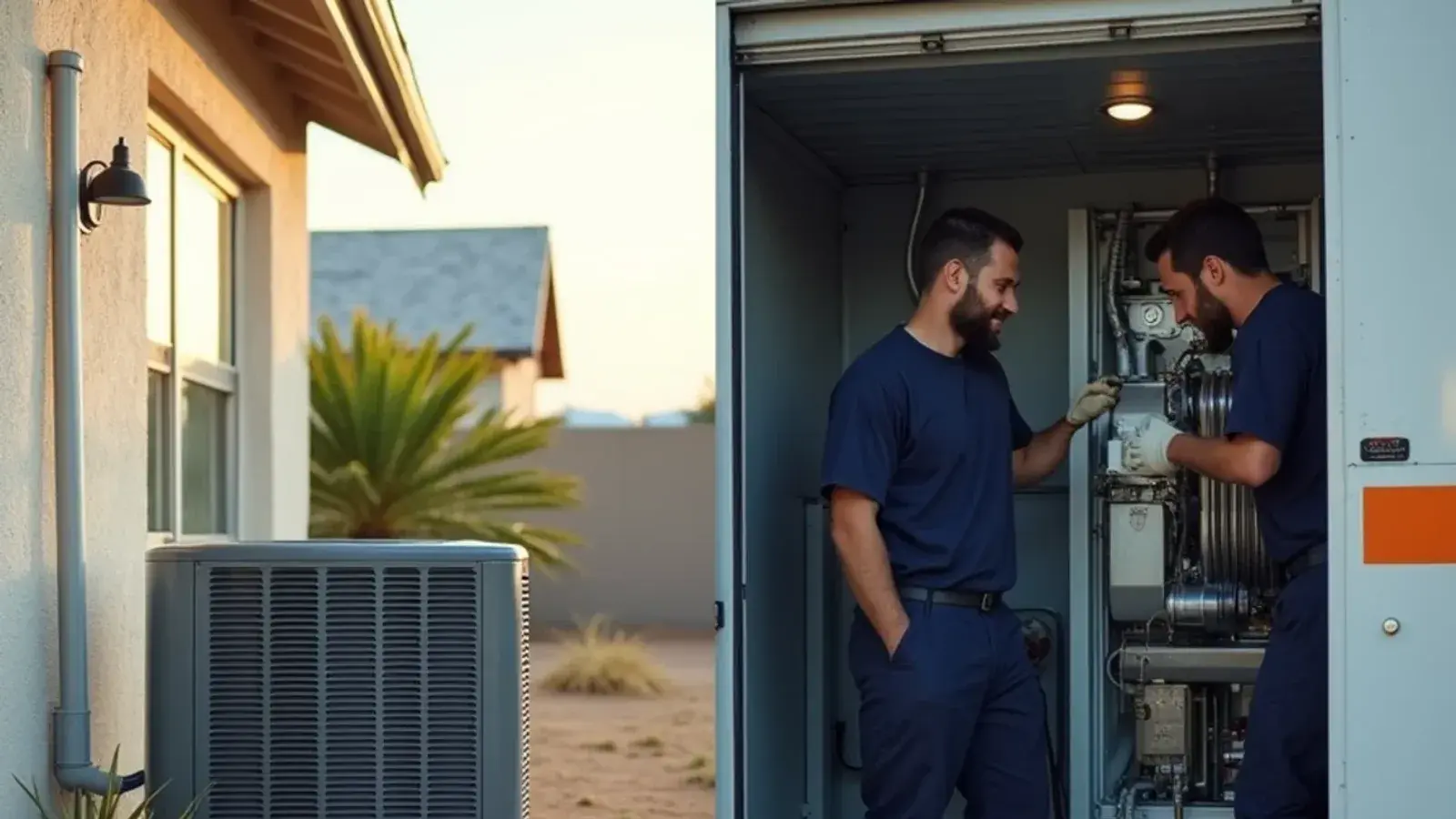
For most Rio Grande Valley homes, a heat pump with small backup heat strips beats heat strips alone. Valley winter nights mostly sit in the 40s and 50s, where a heat pump delivers far more heat per unit of electricity. Strips alone still make sense for a small, tight home that heats only a few nights a year.
Heat pump vs heat strips is the main heating decision for most Valley homes, because gas service isn't available everywhere and most houses already have central air. Either way, your heat runs on electricity. The difference is how much electricity it takes to warm the house, how much each costs to put in, and how each one handles the rare hard freeze.
Two ways to turn electricity into warm air
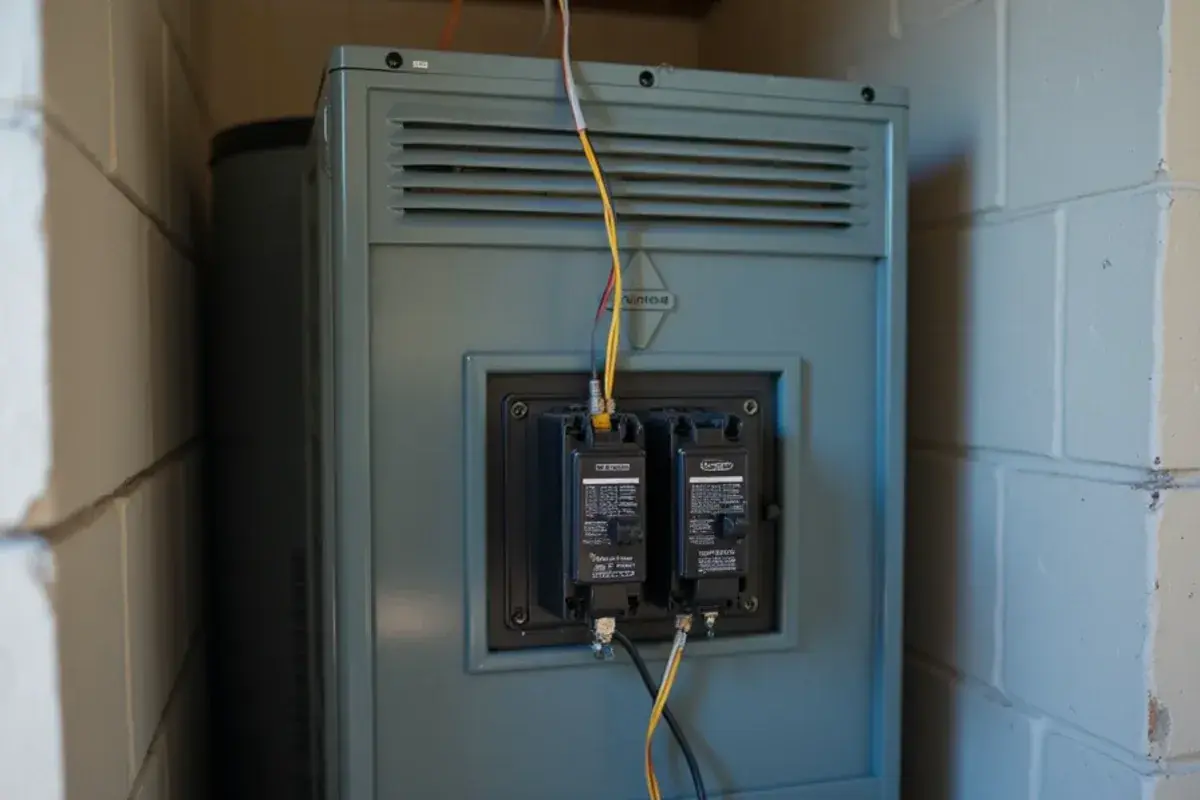
Heat strips (also called an electric furnace or heat kit) are coils of resistance wire inside the air handler. Electricity flows through them, they glow, and the blower pushes air across them. Every watt becomes heat, but only one watt's worth.
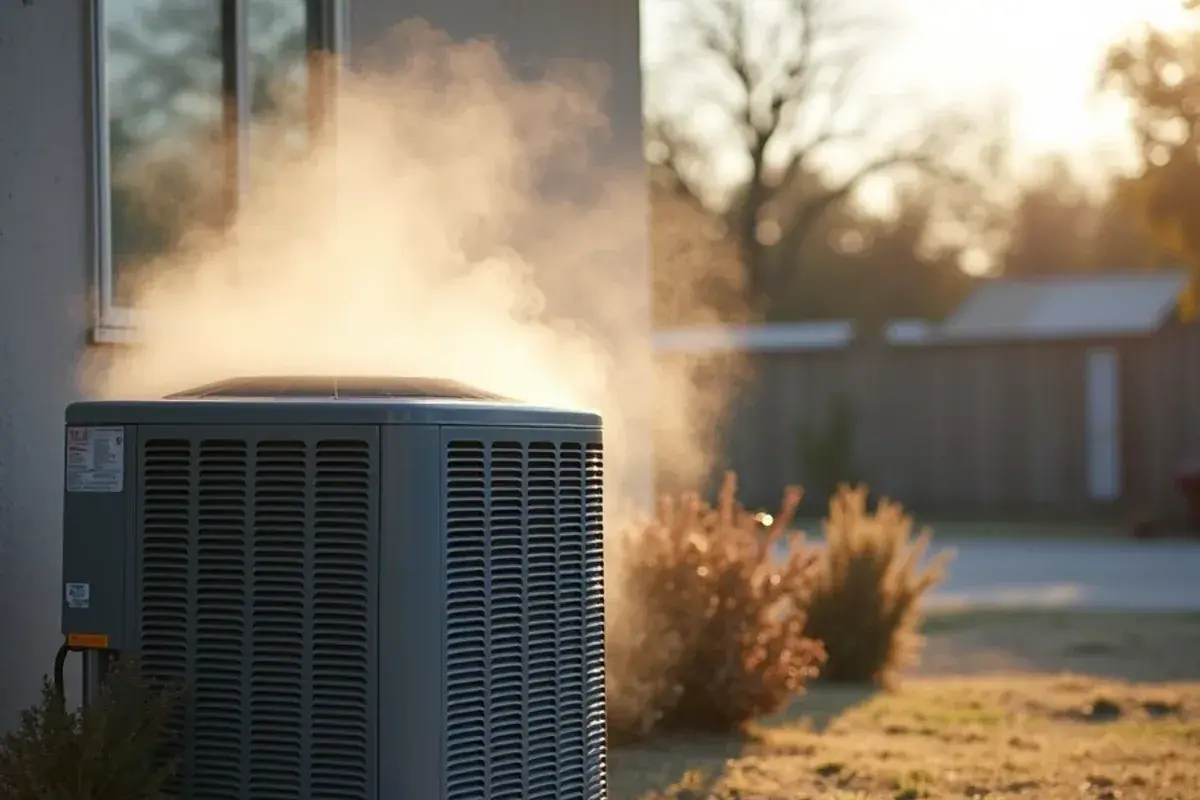
A heat pump is an air conditioner that can run in reverse. In winter it pulls heat out of the outdoor air, even cool air, and moves it indoors. Because it moves heat instead of making it, a heat pump can deliver much more heat than the electricity it uses. The U.S. Department of Energy notes that heat pumps can cut electricity used for heating by roughly half compared with electric resistance heat like strips or baseboards.
Why mild weather favors the heat pump
A heat pump's efficiency depends on outdoor temperature. In the 50s and 40s, which describes most Valley winter nights, it works well. As temperatures drop toward freezing, it moves less heat, defrosts more often, and leans on backup strips. That makes South Texas a friendly climate for heat pumps: most of the heating season happens in the range where they are most efficient.
Side-by-side for a South Texas home
| Factor | Heat strips only | Heat pump with backup strips |
|---|---|---|
| Upfront cost | Low, often added as a kit to the air handler | Higher, since the outdoor unit and indoor coil must be heat pump rated |
| Heat strip cost to run | Highest per hour of heat | Lower most of the winter, rising on the coldest nights |
| Performance in hard freezes | Steady output as long as power is on | Output drops near freezing, strips fill the gap |
| Electrical demand | Large draw, needs heavy wiring and breakers | Smaller draw most of the time, strips sized smaller |
| Equipment complexity | Very simple, few moving parts | More parts, including reversing valve and defrost controls |
| Also cools the house | No, pairs with a separate AC | Yes, the same system cools in summer |
| Efficiency rating to compare | Not rated beyond kilowatts | HSPF2 for heating, SEER2 for cooling |
What drives heat strip cost to run
Strips are rated in kilowatts. A larger kit heats faster but draws more power every minute it runs. What you pay over a winter depends on:
- Kit size and how many stages run. More stages on at once means more power.
- Your home's heat loss. Thin walls, single-pane windows, uninsulated floors and attic gaps all make strips run longer.
- How cold the winter gets. A mild season might mean only a few heating nights, and in that case strips cost little.
- Thermostat habits. Big setbacks followed by big recoveries call on all the stages at once.
- Your utility rate. Check your electric bill for the rate you actually pay per kilowatt-hour.
If your heating season is truly short and your home is tight and small, strips alone can make sense. The more your household relies on heat, the more a heat pump's efficiency matters.
Heat pump efficiency: what to look for
Heat pumps carry two ratings. SEER2 measures cooling efficiency, and HSPF2 measures heating efficiency over a season. A higher HSPF2 means more heat per unit of electricity. Since January 2023, the Department of Energy minimum for a new split-system heat pump has been 14.3 SEER2 and 7.5 HSPF2 nationwide, so any quote you get should meet at least that. Because the same heat pump cools your home through a long Valley summer, its SEER2 rating usually matters more to your yearly bill than HSPF2 does, so weigh both together.
Other features that matter here:
- Variable-speed or two-stage compressors run longer at lower output, which improves comfort and humidity control in summer.
- A smart defrost control starts defrost only when frost actually builds up rather than on a fixed timer.
- Properly sized backup strips that match your home's heat loss, not the largest kit that fits.
Balance point, lockouts and sizing: what a technician weighs
The choice between strips and a heat pump gets made on a spec sheet, but whether it works well gets decided by three numbers a technician works out for your house.
- The heat loss of the home. A load calculation (the industry method is ACCA Manual J) adds up walls, windows, attic insulation, floors and air leaks to find how much heat the house loses on a design cold night. That sets the heat pump size and the backup strip size. A guess from square footage often lands a strip kit far bigger than the home needs.
- The balance point. Every heat pump has an outdoor temperature where its output just matches the house's heat loss. Above it, the heat pump carries the load alone. Below it, the strips help. A leaky house pushes the balance point higher, so the strips run on nights a tighter house would not need them.
- The thermostat lockouts. Many heat pump thermostats have an auxiliary heat lockout, which keeps the strips off above a chosen outdoor temperature, and some have a compressor lockout for very cold nights. Set correctly, they keep the strips from firing on a 55-degree morning just because someone bumped the setting up.
There is a practical electrical side as well. A large heat kit needs heavy wire and its own breakers, and an older panel may not have room for it. Before recommending strips alone, a technician checks the panel, the wire size feeding the air handler and the existing breakers.
The honest trade-off: a heat pump has more parts that can fail, including the reversing valve and defrost controls, and it needs its outdoor coil kept clean. Strips are nearly bulletproof but costly per hour. In a Valley home that heats often, the heat pump's savings usually outweigh the extra service. In a home that heats a few nights a year, they may not.
What about dual fuel?
A dual fuel heat pump pairs an electric heat pump with a gas furnace instead of strips. The heat pump handles mild weather and the furnace takes over when it gets cold. It is a strong option in colder states. In the Valley, it only makes sense where a home already has natural gas service and a gas furnace worth keeping. For most homes, a heat pump with modest backup strips fills the same role without gas lines.
Which homes tend to fit which option?
- Replacing an aging central AC? That is the natural moment to choose a heat pump, since you are buying a new outdoor unit anyway. Our heat pump page explains sizing and what gets tested.
- AC is newer and in good shape? Keeping it and making sure the existing strips are healthy may be the practical choice for now.
- Manufactured homes and room additions often do well with a ductless mini-split heat pump, which heats and cools without ducts.
- Homes with a working gas furnace may keep it, with a heat pump added later for dual fuel.
For new equipment either way, a heating installation visit starts with a load calculation for your house, not a guess based on square footage.
Best heating for South Texas, by area
The same logic holds across the Valley. In winter-resident communities like Alamo, heat pumps are common in park models and manufactured homes. Farther east, homes around Harlingen and the rest of Cameron County sit in more humid resaca country, where the cooling and dehumidifying side of a heat pump earns its keep most of the year.
Making the call
If your heat runs only a few nights a year and your AC has plenty of life left, healthy heat strips are a reasonable, low-cost answer. If your AC is near replacement, you heat often, or you want lower winter bills, a heat pump with properly sized backup strips is usually the better long-term fit for a Valley home. Either way, ask for a load calculation and a look at your electrical panel before deciding. To talk through your house and the system you have now, call 956 Multi Service at (213) 423-7827.