
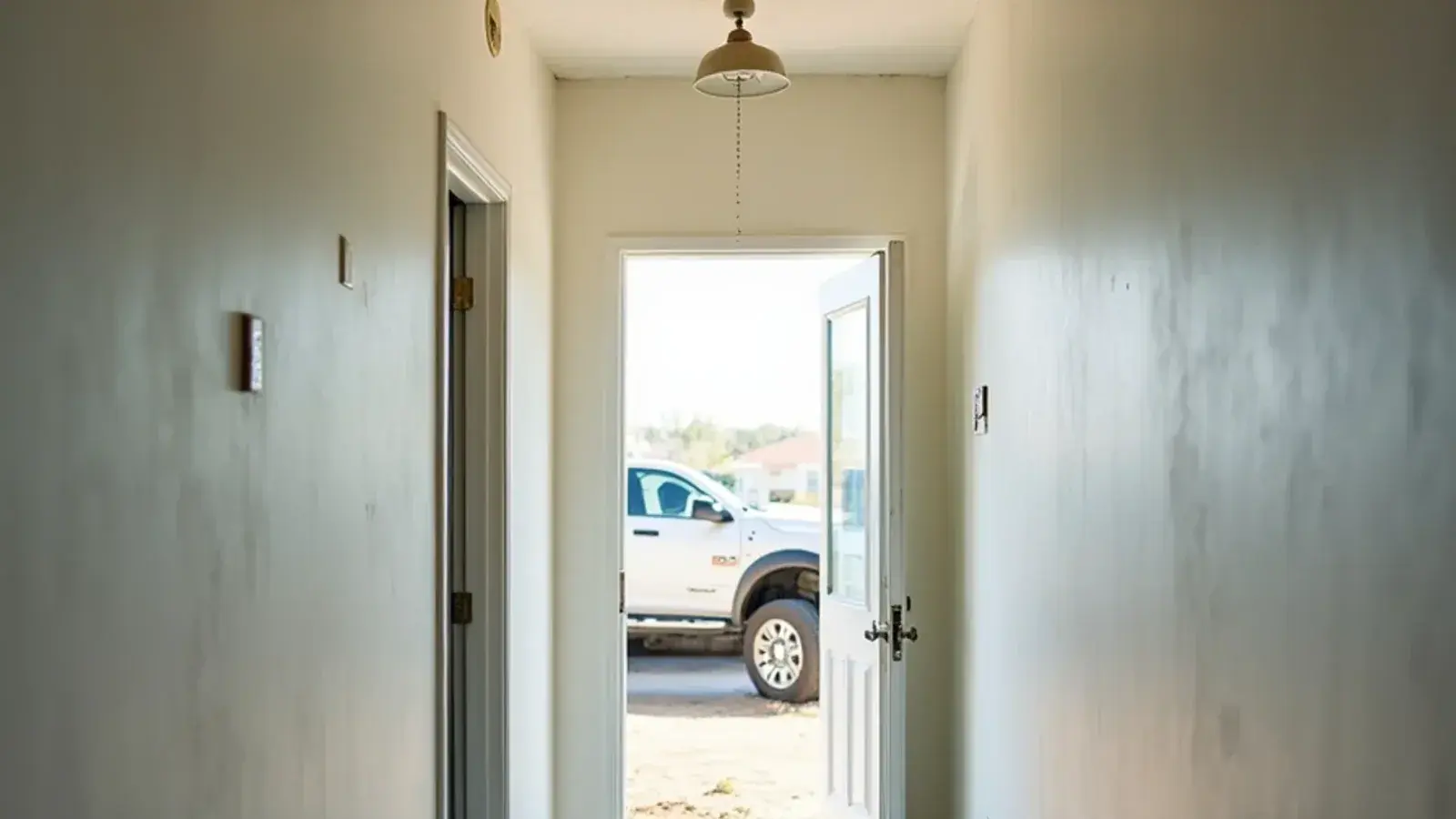
If water from your AC is reaching a ceiling, floor, wiring or light fixture, shut the cooling off at the thermostat and catch the drip. A small trickle landing in a pan or outdoors can usually run until service. Then find the source: a clogged condensate drain, a full backup pan, a frozen coil or a cracked pan.
If you searched "AC leaking water what to do" with a bucket already under the drip, start here. The water itself is normal: an air conditioner wrings moisture from the air inside your home, and on a humid Valley summer day a central system can produce a surprising amount of it. What is not normal is that water going anywhere other than the drain. That means the drain path is blocked, overflowing or leaking, or the coil is icing and melting faster than the drain can carry it away.
Shut it off or keep it running?
Use this rule: if water is touching drywall, flooring, wiring or a light fixture, turn the cooling off at the thermostat. You can leave the fan on Auto. Stopping the cooling stops new condensate from forming, which gives you time to clean up and find the cause.
There is one exception. If you see ice on the indoor coil or the copper line, set the system mode to Off while running the blower by itself. Moving air over the ice melts it faster, and a frozen system should not run in cooling mode anyway.
If a small trickle is landing in a pan or outside the house, the system can usually keep running while you schedule service.
Water and electricity
If water is dripping near a light fixture, ceiling fan or outlet, switch off that circuit at the breaker before you go near it. Do not stand in water to work on any electrical equipment.Limit the damage in the first hour
- Catch the water. Buckets, towels and a plastic sheet under the drip protect the floor.
- Relieve a sagging ceiling. If drywall is bulging with water, a small hole poked with a screwdriver at the lowest point, over a bucket and with the light circuit off, lets the water out in a controlled way instead of letting the ceiling give way.
- Move belongings. Electronics, rugs and furniture should come out of the wet area.
- Photograph the damage before cleanup if you think you may need it for insurance.
- Dry it within a day or two. EPA guidance says mold usually will not grow if wet materials are dried within 24 to 48 hours. Run fans, pull up wet rugs and padding, and run a dehumidifier or the AC itself once the leak is fixed.
Where the water is coming from
A clogged condensate drain
This is the most common cause by far. The condensate drain, a PVC line carrying water away from your indoor coil to the outside or to a sink drain, gets a slimy plug of algae, dust and mold. In humid stretches near the river, that growth comes back quickly. Water backs up into the primary pan and overflows.
A full secondary pan or a tripped float switch
Attic units usually sit in a second, shallow pan as backup. If you find water in that pan, the main drain has already failed. Many systems also have a float switch that shuts the AC off when water rises; if your AC stopped cooling and there is water in the pan, the switch may be doing its job.
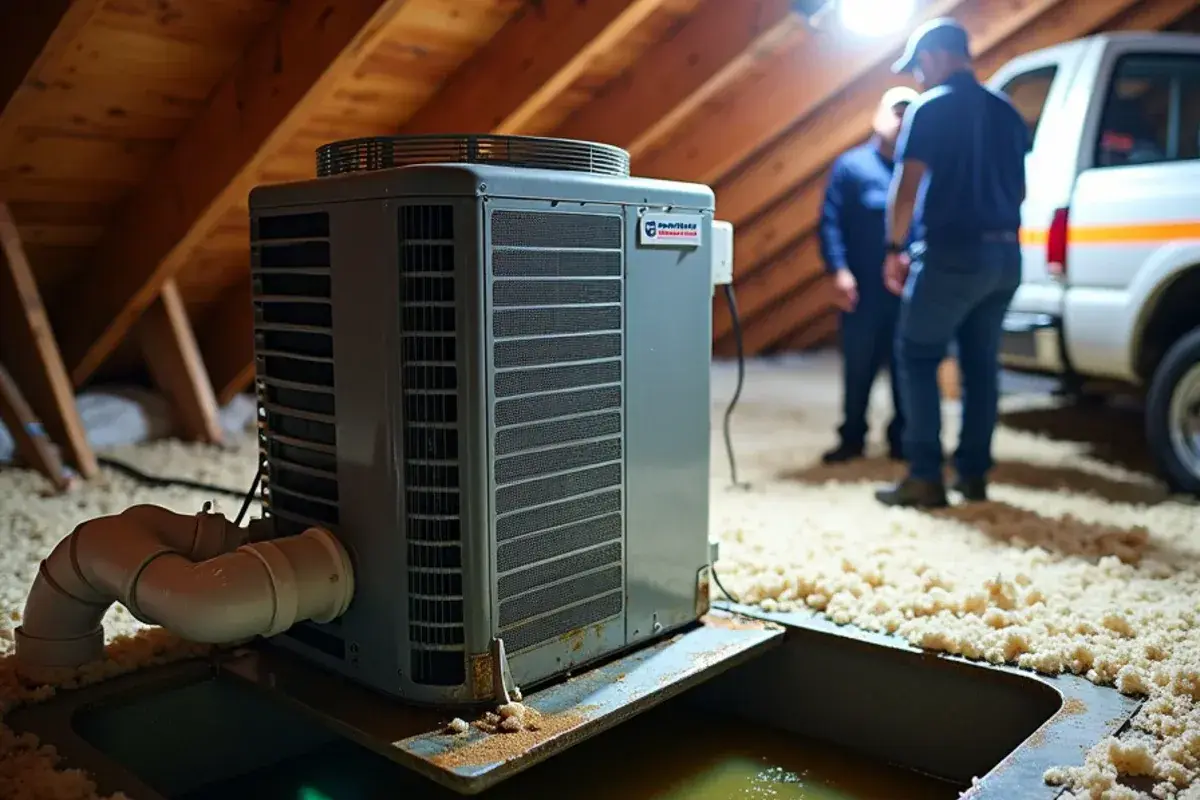
A frozen evaporator coil
A dirty filter, blocked return or low refrigerant can let the coil drop below freezing. Ice builds, then melts all at once when the system cycles off, overwhelming the pan. If you see frost on the copper line outside, suspect this.
A cracked pan or a loose fitting
Older metal pans rust through, and plastic ones crack. A PVC joint near the air handler can also separate. These leak steadily even when the drain is clear.
A failed condensate pump
Some indoor units sit where water cannot drain by gravity and use a small pump. When the pump fails, its reservoir overflows.
Clearing a clogged drain yourself
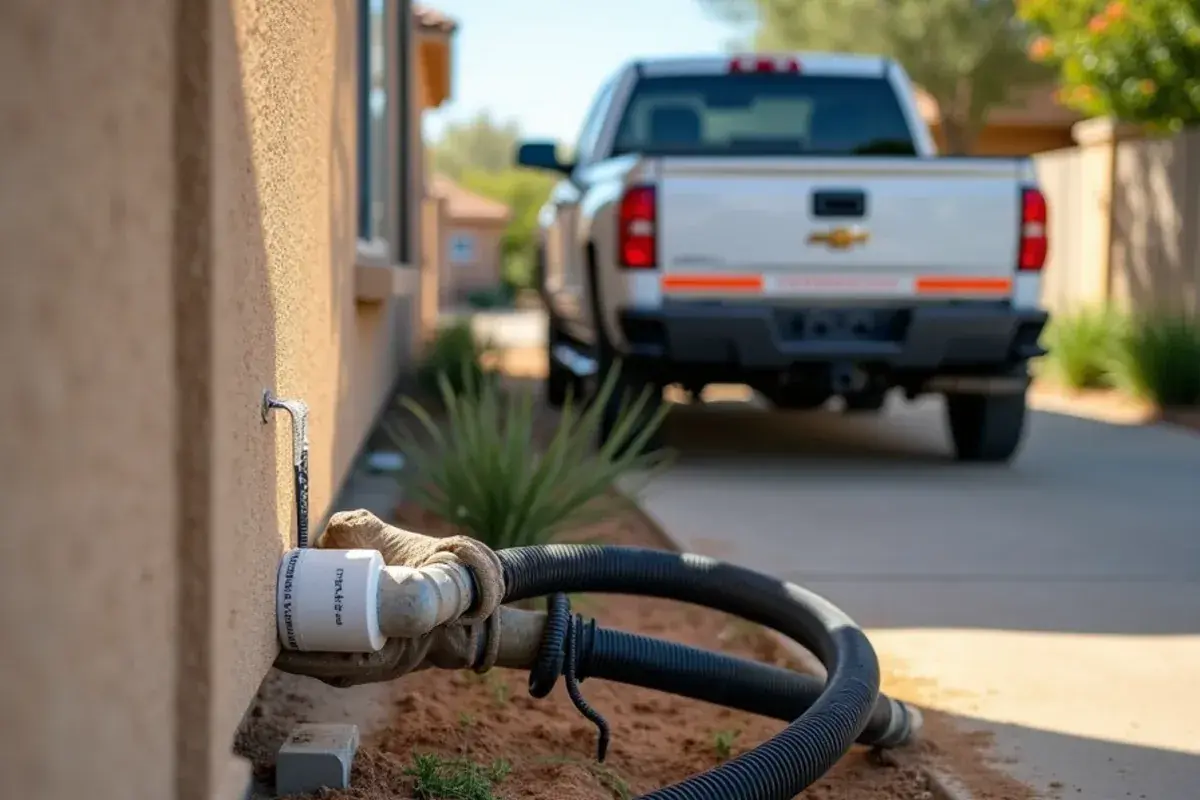
If you can reach the outdoor end of the drain line, a wet-dry vacuum can often pull the clog out:
- Turn the cooling off.
- Find where the PVC drain exits outside, usually near the outdoor unit or the foundation.
- Seal the vacuum hose to the end with a rag or tape and run it for a minute or two.
- Check the vacuum canister for slime and water.
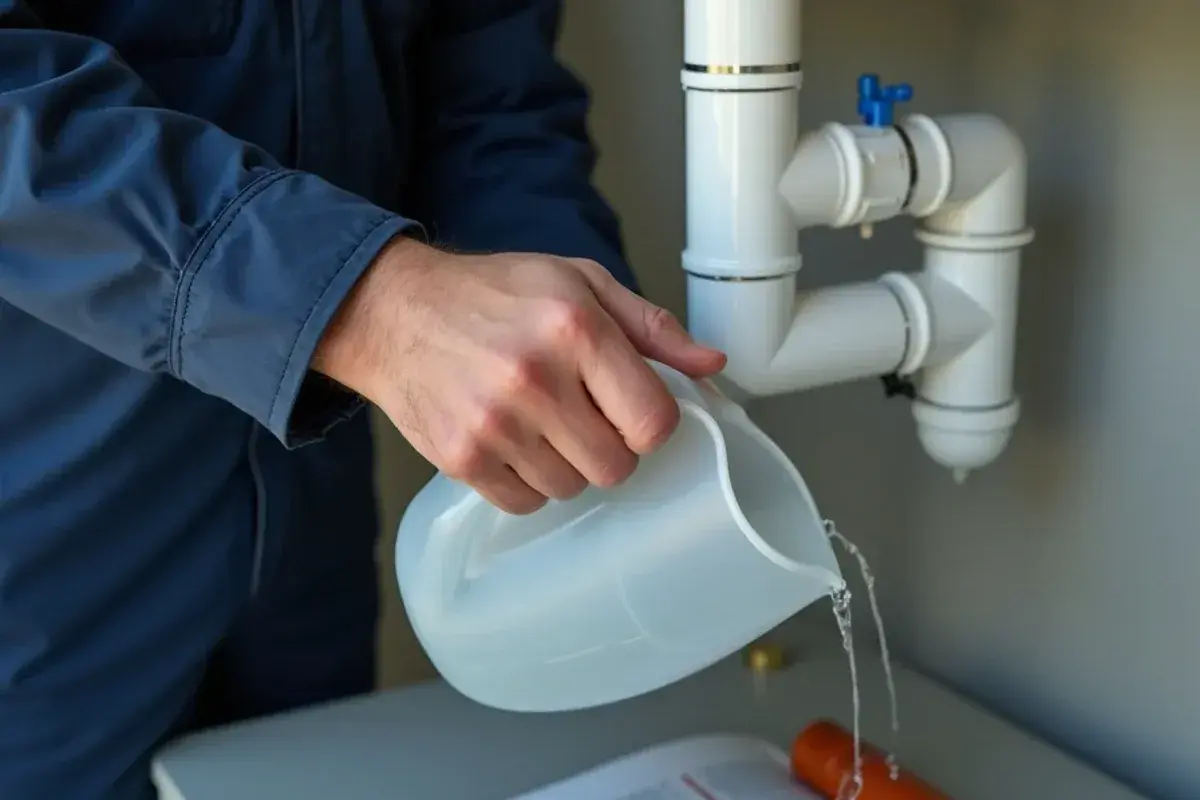
- At the indoor end, pour a cup of water into the cleanout tee and confirm it flows freely outside.
If water does not flow, or the pan stays full, the clog may be deeper or the line may be sagging. That is when a technician should take over.
Mini-splits leak for their own reasons
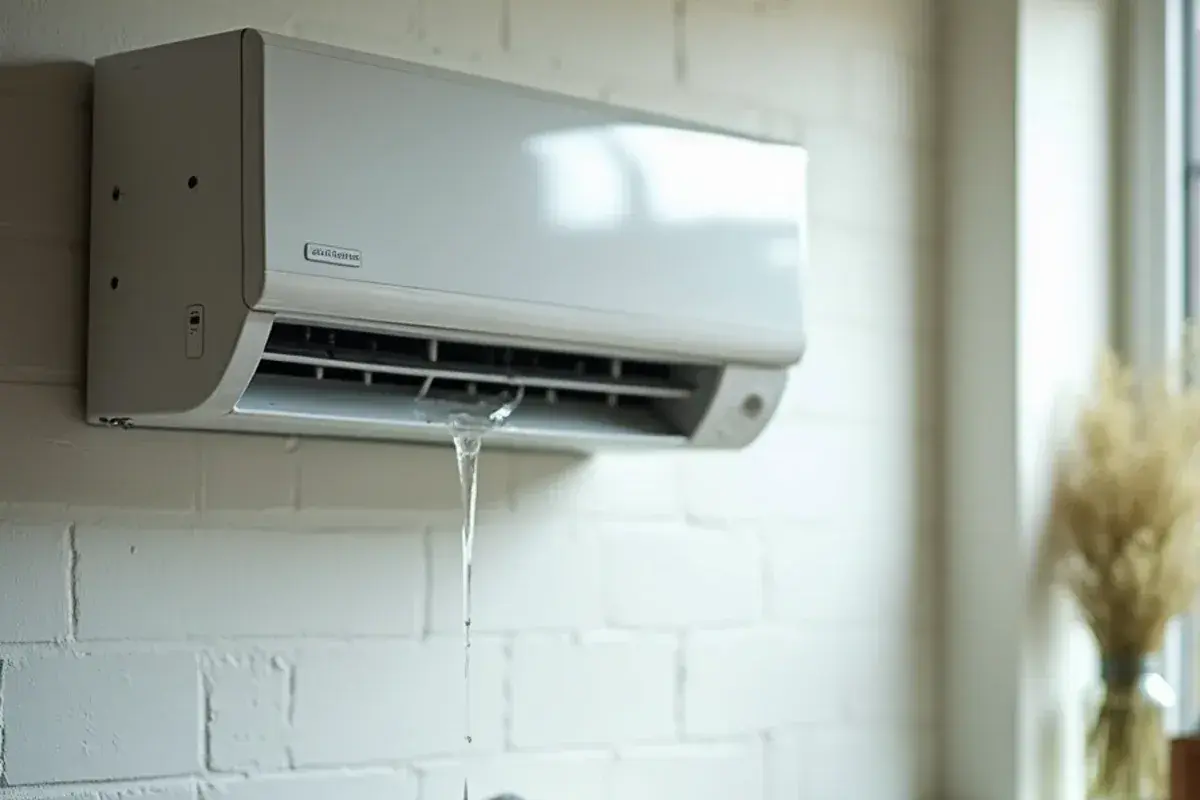
A ductless indoor unit has a small drain hose that leaves through the same wall opening as the refrigerant tubing. Leaks usually come from:
- A clogged or kinked drain hose
- A unit that was mounted slightly tilted, so water runs to the wrong end of the tray
- Slime and dirt on the coil and blower wheel, which throws water out of the front of the unit
- A failed condensate pump, if the unit uses one
Mini-splits mounted on exterior block walls in humid homes tend to collect growth on the blower wheel, and a mini-split deep cleaning often solves both the leak and the musty smell.
Quick diagnosis guide
| Where you see water | Most likely cause | Do this |
|---|---|---|
| Ceiling below an attic unit | Main drain clogged, secondary pan full | Cooling off, catch water, call |
| Floor around a closet air handler | Drain clogged or pan cracked | Cooling off, vacuum the drain, call if it persists |
| Ice on copper lines, puddle indoors | Frozen coil melting | Fan On, cooling Off, change filter, call |
| Dripping from a wall mini-split | Clogged drain hose, dirty blower wheel, tilt | Turn off, book cleaning or repair |
| Water near a condensate pump | Pump failed or tubing blocked | Unplug pump, call |
| Damp spot outside by foundation | Normal drain outlet | Nothing, unless the area floods |
Leaks that are not a clogged drain: a technician's checklist
Most leaks are drain clogs, but a technician who clears the line and leaves without checking the rest will often be back. When the drain flows fine and water still shows up, these are the places worth checking next.
- A missing or dry trap. Many air handlers pull air through the coil, which creates suction in the drain pan. Without a proper trap in the drain line, that suction holds water in the pan instead of letting it flow out, and it spills over the edge even with a clear pipe.
- Sweating ducts and vent boots. A ceiling stain right beside a supply vent, far from the air handler, is often condensation on a poorly insulated duct or boot in a hot, humid attic. No drain work will fix it; the duct needs sealing and insulation.
- Bare suction line. The larger copper line carries cold refrigerant. Where its foam insulation has cracked or fallen off, it drips onto whatever sits below.
- The secondary drain outlet. Some systems route the backup pan to a pipe that ends above a window or eave. Water dripping there is a warning that the main drain has already failed.
- Low refrigerant. Refrigerant itself is not water, but a low charge lets the coil freeze and then flood the pan as it melts. Low charge means a leak to find before anything is added.
Trade-offs to know about
A float switch that cuts the cooling when the pan fills means a warm house instead of a wet ceiling, which most homeowners prefer once they have had both. Replacing a rusted pan under an attic unit can mean lifting the air handler, so it is worth checking the pan while other work is already being done. A failing condensate pump can be swapped quickly, but if the line can be rerouted to drain by gravity, that removes a part that will eventually fail again.
When a professional repair is the better call
A technician can flush and clear the line properly, check the slope so water does not pool in a sagging run, test the float switch, inspect the pan for cracks and look at the coil for ice or dirt. AC drain line repair can also mean adding a cleanout or replacing a section of pipe that was run without enough fall. If the coil was frozen, the visit may turn into a broader AC repair to find the airflow or refrigerant problem behind it.
Humid river communities see these calls often. In Fronton, just west of Roma along the Rio Grande, moist river air keeps drain lines and mini-split blower wheels prone to slime. Out toward the coast, San Benito's old resaca channels and the wider Cameron County lowlands share that damp air, so drain-line upkeep becomes a regular part of owning an AC there; those longer trips are scheduled by appointment.
Keeping water where it belongs
Change filters on time, pour water through the cleanout every month or two during peak summer, and have the drain flushed during routine maintenance. If your system has no float switch, ask about adding one. A few minutes of attention to the drain prevents most ceiling stains, and the cooling stays on when you need it most. If water is already coming through, keep the cooling off and call (213) 423-7827. Describe the room with the drip and whether the system is central or ductless, and we can point out what to look at before the visit.