
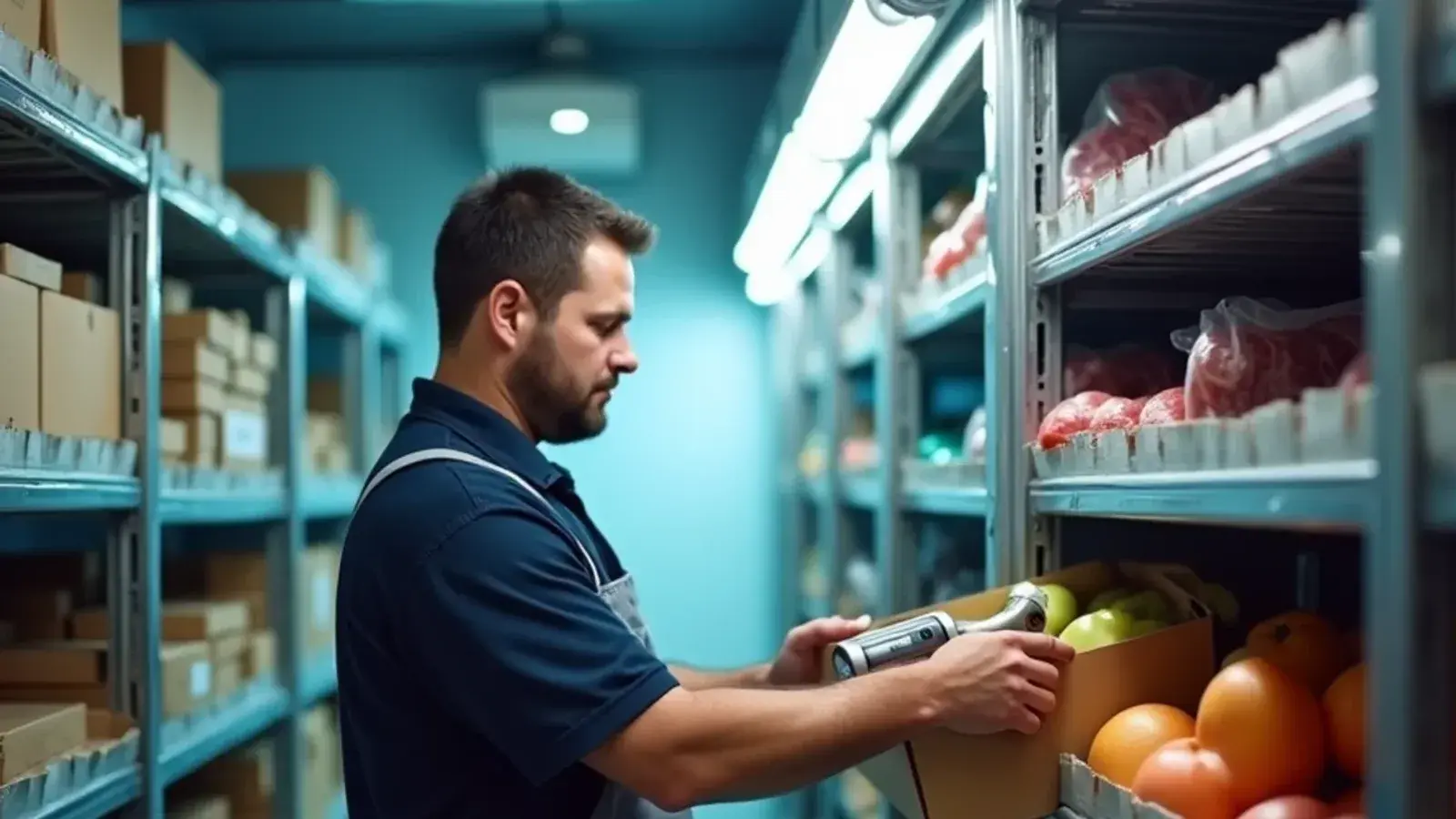
When a walk-in cooler is not cooling, keep the door shut, probe the product rather than trusting the wall dial, and log readings every 30 minutes. Check the breakers once, the controller setting, the door gasket, ice on the evaporator and a dirty outdoor coil. If the box keeps climbing toward 41°F, move the most perishable stock and call.
Every minute the door stands open costs you cold you cannot easily get back. Whether you run a produce or meat cooler at a store, a kitchen walk-in at a restaurant, or a CoolBot deer room on a ranch, the first hour follows the same logic: hold the cold you still have, find out how warm the product really is, check the simple causes, and line up repair help with good information in hand.
The first ten minutes: hold the cold
Before you troubleshoot anything, stop the heat from getting in.
- Keep the door shut. Tell staff or family not to open it unless they are moving product out. Every opening dumps cold air across the floor.
- Check the door seal and strip curtain. A torn gasket, a door that does not latch, or a curtain pulled aside can be the whole problem.
- Do not add warm product. Hold new deliveries or freshly harvested game somewhere else until the box is stable.
- Look at the evaporator fans. If the fans inside the box are running, cold air is still circulating; if they are stopped, note that for the technician.
Measure, don't guess
The dial on the wall shows air temperature, and air warms much faster than a full case of product. Use a calibrated probe thermometer to check the product itself in a few spots: near the door, at the top shelf and at the back.
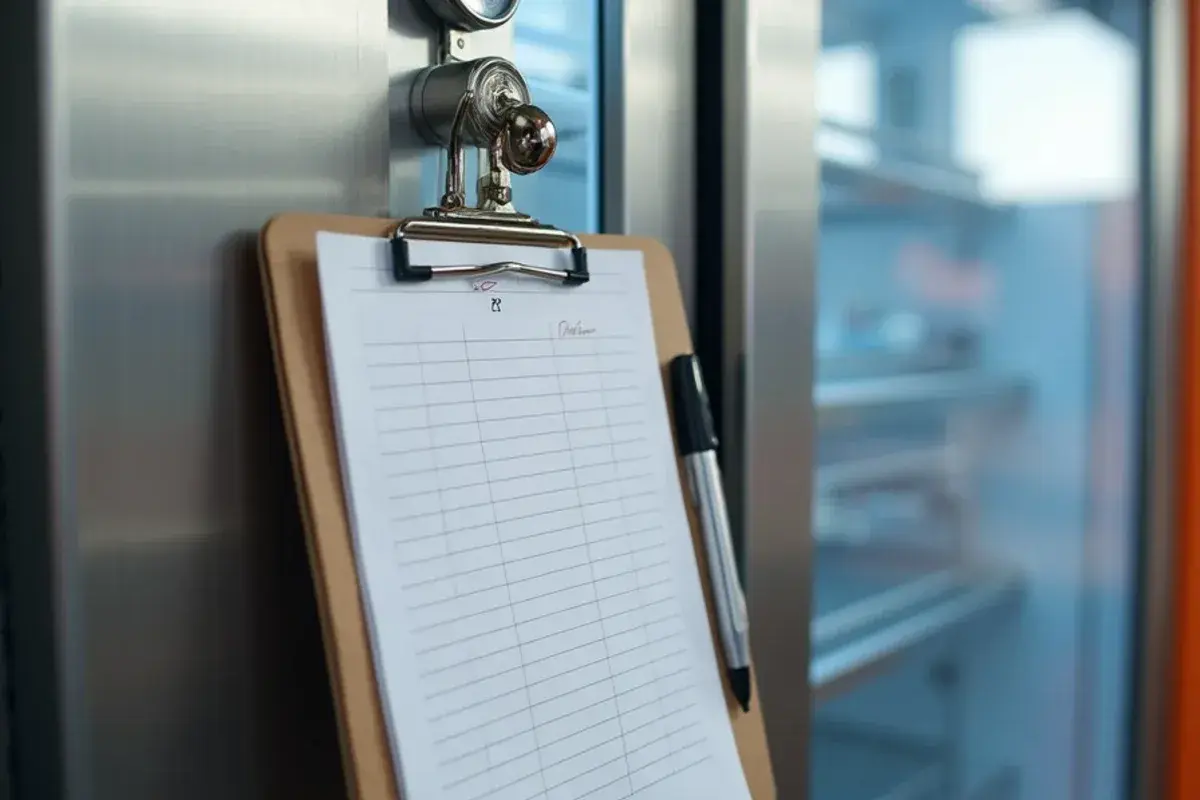
Write down the time and both readings every 30 minutes. For a store or restaurant, the FDA Food Code, which the Texas Food Establishment Rules follow, sets 41°F as the cold-holding limit for foods that need temperature control. USDA consumer guidance draws its line at 40°F and advises discarding perishables that have sat above it for more than two hours. A written log protects you when you decide what to keep, and it helps a health inspector or insurance adjuster later.
Quick checks for commercial walk-ins
Most walk-in coolers use a condensing unit outside or on the roof and an evaporator inside the box. These are safe checks for an owner or manager.
Power and controls
Confirm the breakers for the condensing unit and the evaporator have not tripped. Reset a tripped breaker one time; if it trips again, leave it off and call. Check that the thermostat or controller has not been bumped to a warmer setting and that a defrost timer is not stuck in defrost.
Ice on the evaporator
A solid block of ice on the coil inside the box means air cannot pass through it. Common causes are a failed defrost heater, a stuck timer, a door left ajar, or a fan motor that quit. Do not chip ice off the fins with a tool; you can puncture a refrigerant tube.
The outdoor coil
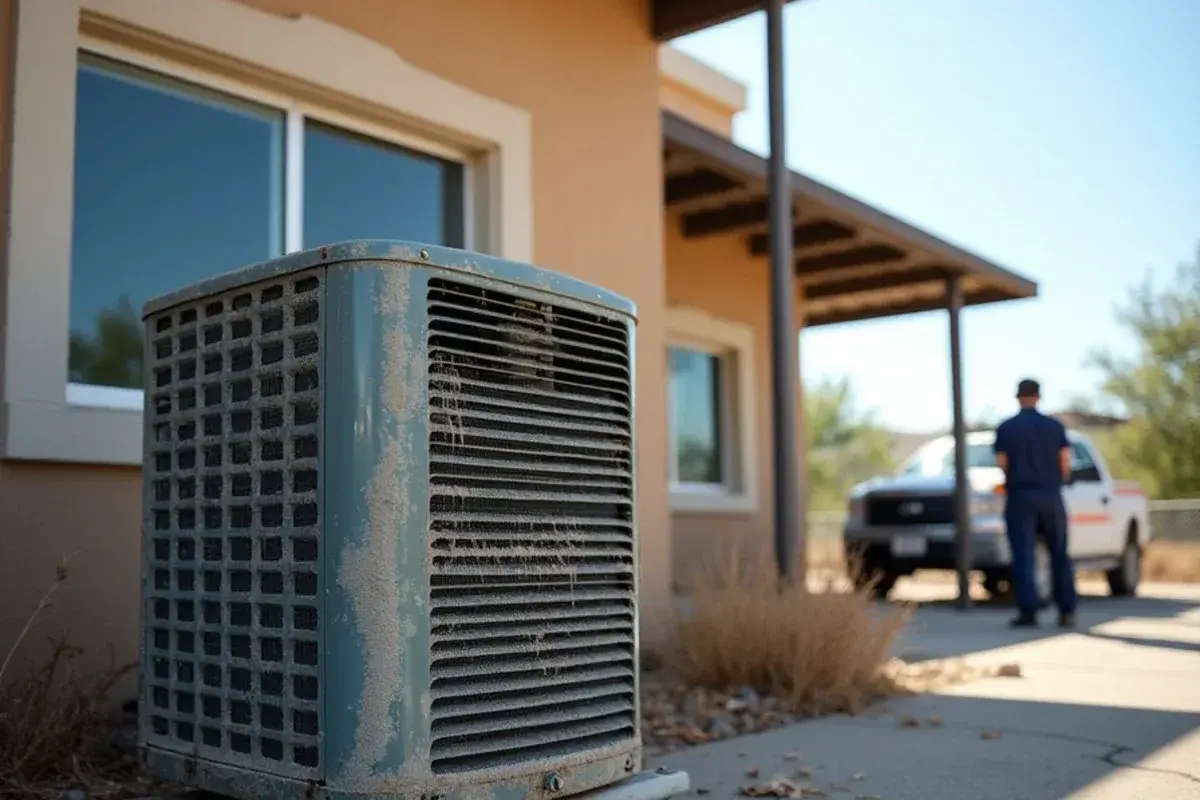
Behind the building, look at the condensing unit. In Valley heat, a coil caked with dust, grease from a kitchen exhaust, or grass clippings can push head pressure so high that the system trips on safety or barely cools. Listen for whether the fan and compressor are running at all.
Quick checks for CoolBot rooms
A CoolBot controller lets a standard window air conditioner cool an insulated room well below what the AC would normally allow. It does that with a small heater wire on the AC's own temperature sensor, a room sensor, and a fin sensor that tells the controller when the coil is starting to frost.
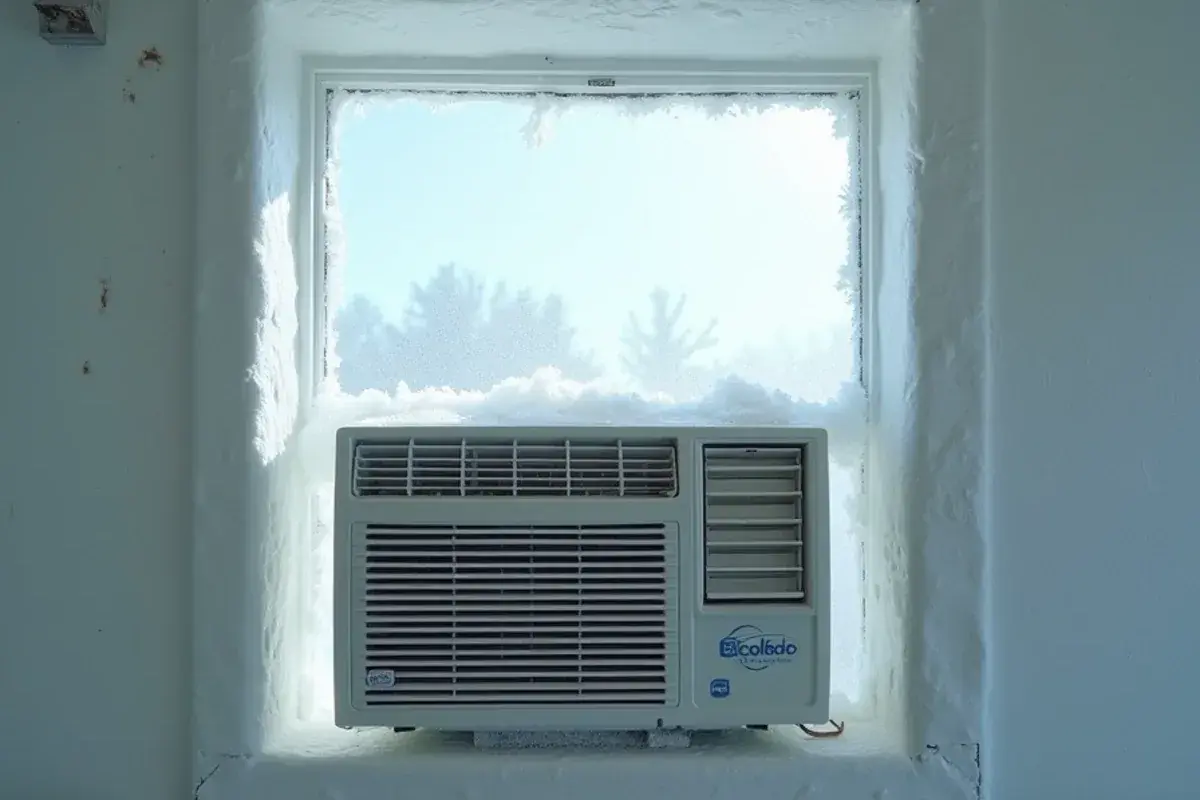
- Ice across the AC fins is the classic failure. Check that the fin sensor is still pushed into the coil where the instructions say, not hanging loose.
- AC running but room warm: confirm the heater wire is still attached to the AC's sensor and the AC itself is set to its coldest setting with the fan on high.
- Room temperature reading looks wrong: make sure the room sensor is not resting against the AC's cold air stream or touching a wall.
- Air conditioner dead: check the outlet, the breaker and whether the AC's own controls reset after a power blip.
If the AC is iced, turn it off, keep the room closed, and let it thaw completely before restarting.
Symptom and first move
| What you see | Common cause | Your first move |
|---|---|---|
| Box warm, nothing running | Tripped breaker, failed control, power outage | Check breakers once, then call |
| Inside fans running, outdoor unit silent | Contactor, capacitor or high-pressure safety trip | Look at the outdoor coil, then call |
| Thick ice on the evaporator | Defrost failure, door left open, fan motor out | Shut door, call; do not chip ice |
| CoolBot AC fins frozen | Fin sensor misplaced or AC running too long | Turn AC off to thaw, reseat sensor |
| Temperature creeping up slowly over days | Dirty condenser coil, low refrigerant, worn door gasket | Clean around the unit, book a service visit |
| Water on the cooler floor | Plugged evaporator drain or failed drain line heater | Mop up for safety and report it |
Protect the product while you wait
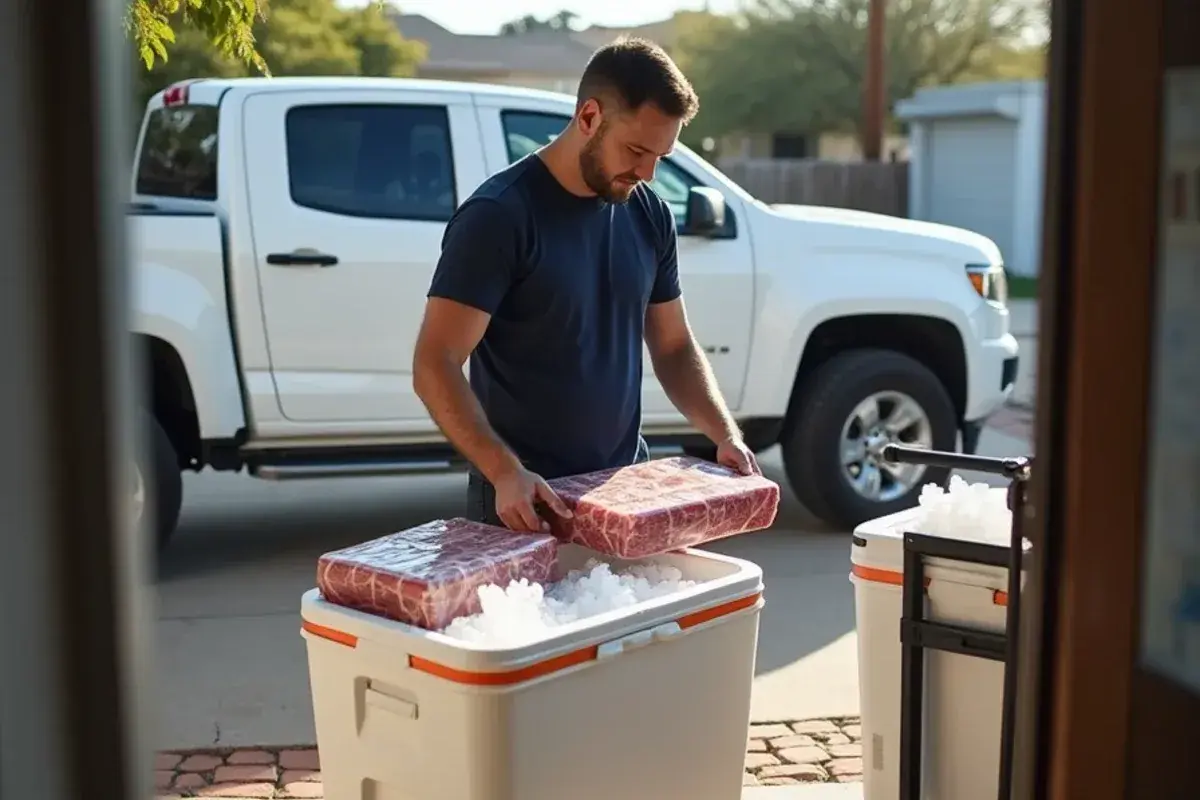
If the box is still above 40°F after your checks, start moving the most perishable items first: raw meat and seafood, dairy, cut produce, then everything else. Large ice chests packed with bagged ice, another cooler on site, or a borrowed refrigerated trailer all work. Keep product off the ice-melt water and close lids between trips.
For game, hang or pack quarters so air or ice reaches every side. A full, heavy load holds temperature longer than a half-empty one, so do not spread a few items out across empty shelves.
Making the repair call count
When you call for emergency refrigeration repair, have this ready: the type of system (condensing unit and evaporator, or CoolBot with a window AC), the box temperature and how long it has been rising, what is running and what is silent, and whether you see ice. That tells the technician which parts and tools to bring.
Our crew is based in Rio Grande City and services walk-in boxes and cold rooms across the Valley. Produce and cold-storage businesses around Pharr lean heavily on refrigeration, and a slow cooling loss there can affect a whole load. Ranch country is a different pattern: hunting camps around Hebbronville and across Jim Hogg County often run CoolBot rooms that sit idle much of the year, then work hard all season. Longer drives are scheduled, so call early.
What a refrigeration technician looks at, and the trade-offs
A warm box rarely has one mysterious cause. Most calls trace back to heat rejection outside, airflow inside, or the defrost cycle, and a technician works through them in that order before touching the refrigerant.
- Head pressure at the condensing unit. A coil matted with dust or kitchen grease, or a condenser fan motor that stopped, drives pressure up until a safety switch shuts the compressor off. On a 100-degree afternoon behind a stucco wall, that can happen every few minutes.
- Evaporator airflow. Fans that quit, product stacked against the coil, or boxes blocking the return side of the evaporator all starve the coil of air, and it ices over.
- Defrost. Most walk-in coolers use off-cycle air defrost, where the compressor rests while the fans keep moving box air across the coil. Freezers use electric heaters instead. A cooler set too cold, or a timer that no longer allows enough off time, lets frost build faster than it melts.
- Charge. Only after those checks do suction and discharge pressures, superheat and subcooling mean much. Ice that returns soon after a full defrost, with clean coils and working fans, often points to a leak.
Honest trade-offs during an outage
A coil wash or a new fan motor can usually be done on the spot, and the box often recovers within hours. A failing compressor at the height of the season is harder: a replacement brings the box back for years, but a temporary fix may only carry you to the end of a busy stretch. Ask the technician which one the readings support.
CoolBot rooms carry their own trade-off. The setup costs far less than a dedicated condensing unit, but a window air conditioner was never built to run nonstop through a Valley summer in a shed facing the afternoon sun. If a CoolBot room is failing every season, our page on commercial refrigeration service explains when stepping up to a dedicated system makes sense.
After the box is cold again
Once the cause is fixed, keep logging temperatures for a day to confirm it holds. Ask about the condition of the door gaskets, coil and defrost system so the next failure is not a surprise. Regular cleaning and inspection of a walk-in cooler or CoolBot room before the busiest season is the simplest way to keep a warm-box emergency from happening at the worst time. If your cooler is drifting warm right now, call (213) 423-7827 with the box temperature, the system type and what is running, and we will tell you what to check while we line up the visit.