
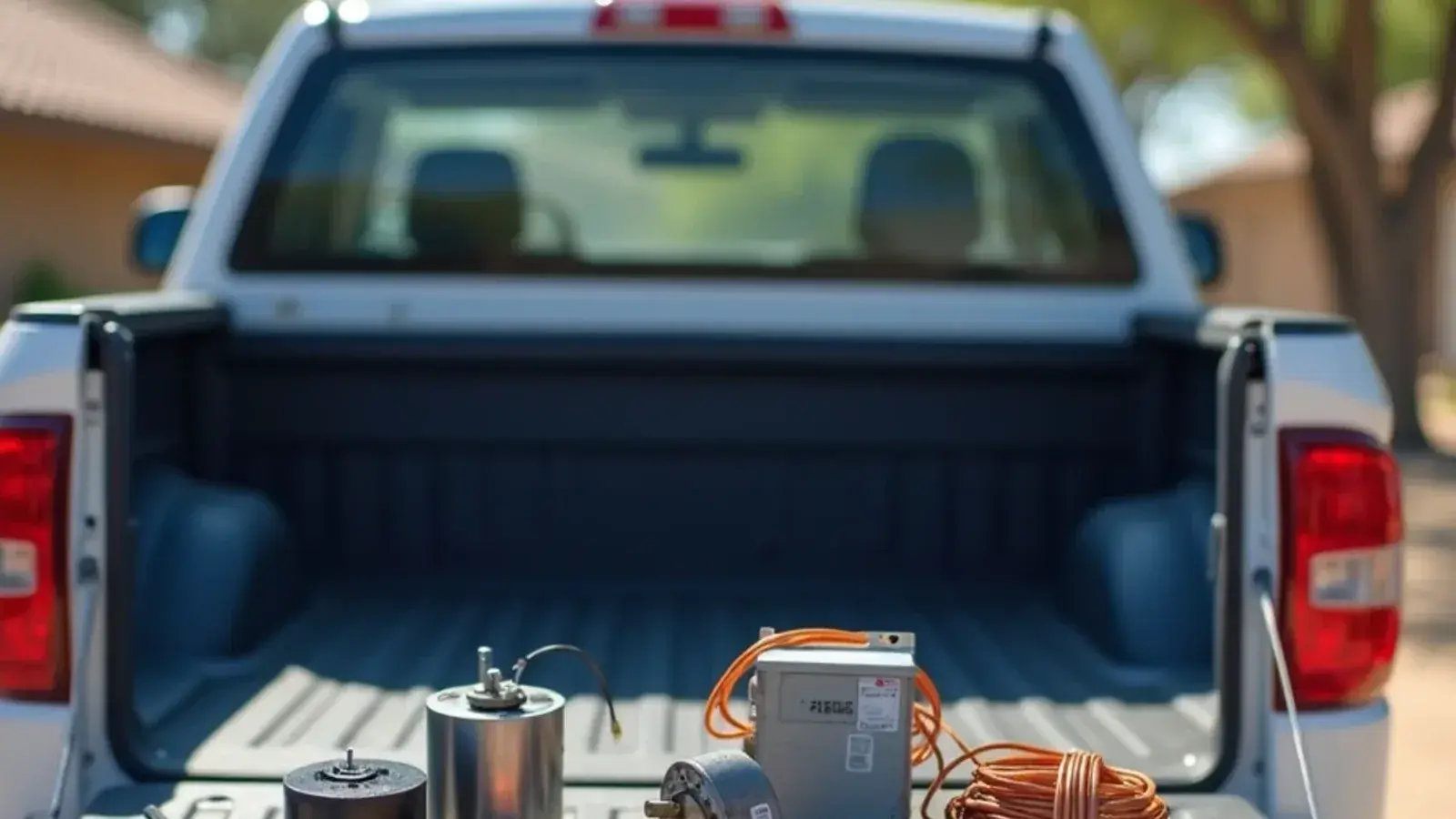
AC repair cost comes down to which part failed, how hard it is to reach and which refrigerant the system uses. Capacitors, contactors and drain clearing sit at the low end; fan motors and control boards in the middle; refrigerant leaks, coils and compressors at the top. A written quote should separate diagnosis, parts, labor and refrigerant.
A dead capacitor on a ground-level condenser is a quick visit. A refrigerant leak inside an attic coil, or a compressor on an older system, is a different conversation. Since every unit and house is different, this guide focuses on what each common repair involves and why prices vary, so you can read a quote with confidence.
How a repair price is put together
Almost every repair bill has the same building blocks:
- The diagnostic visit. During an AC repair visit, a technician tests the system to find the actual failure, not just the symptom.
- Parts. Universal replacement parts often cost less than factory-specific ones, but some boards and motors only come from the manufacturer.
- Labor. Time on site, including access, removal, installation and testing.
- Refrigerant, when the repair involves opening the sealed system.
- Timing. Evening, weekend and holiday calls typically cost more than scheduled weekday work.
A good quote separates these so you can see where the money goes.
Common repairs, from smallest to largest
| Repair | What it involves | Relative cost | Typical time on site |
|---|---|---|---|
| Capacitor replacement | Swap the part that helps the motors start and run | Lower | Short visit |
| Contactor replacement | Replace the switch that powers the outdoor unit | Lower | Short visit |
| Drain line clearing | Flush the condensate line, test the float switch | Lower | Short visit |
| Condenser fan motor | Replace the outdoor fan motor and often its capacitor | Moderate | About an hour or two |
| Blower motor | Replace the indoor fan motor, sometimes with a new control module | Moderate to higher | A few hours |
| Control board or thermostat wiring | Diagnose and replace electronics | Moderate | Varies with the fault |
| Refrigerant leak repair | Find the leak, repair or replace the part, evacuate and recharge | Moderate to high | Several hours, sometimes two visits |
| Evaporator coil replacement | Recover refrigerant, replace the indoor coil, braze, evacuate, recharge | High | Most of a day |
| Compressor replacement | Recover refrigerant, replace the compressor and filter drier, evacuate, recharge | Highest | A full day or more |
"Relative cost" compares repairs with each other, not with a dollar figure. Your actual price depends on the factors below.
Electrical parts: the quick fixes
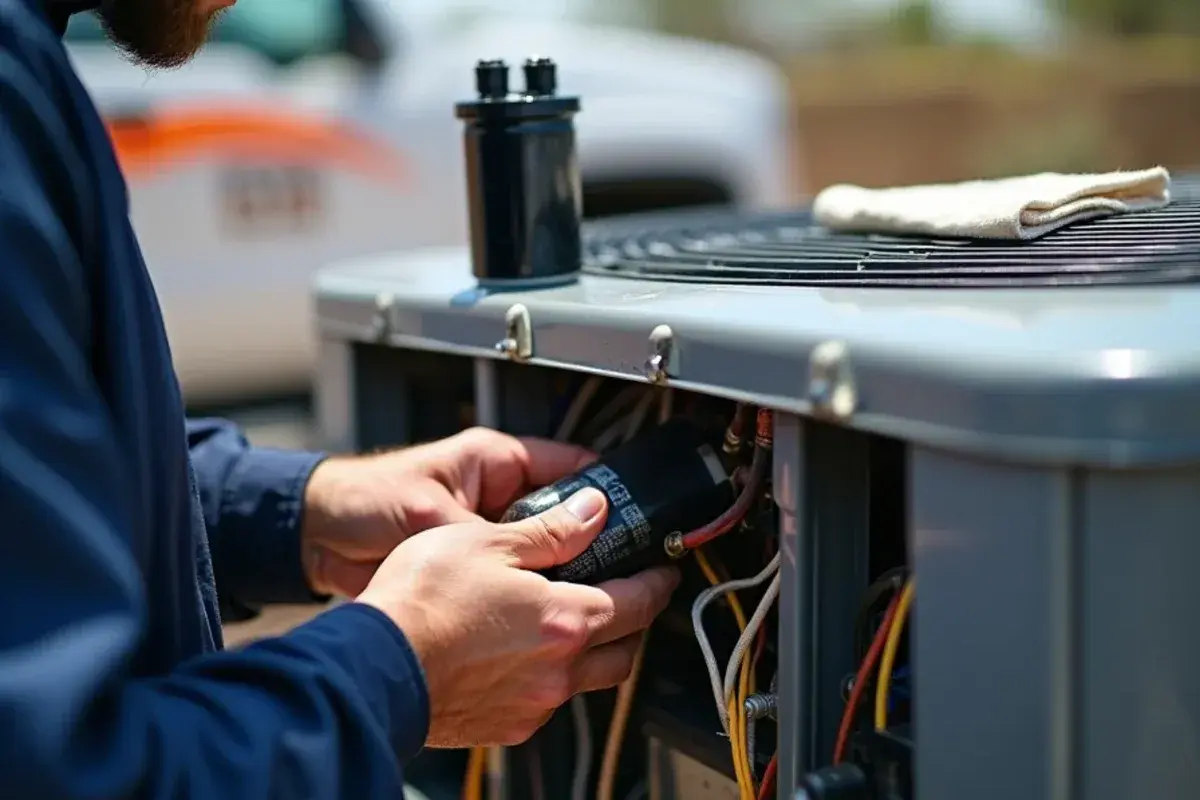
Capacitors and contactors are the parts that fail most often in Starr County summers. Heat, long run times and power fluctuations wear them down. A capacitor that swells or tests weak can leave the outdoor unit humming without starting. A contactor with pitted contacts can chatter or fail to close.
These are usually short repairs, but a good technician will ask why the part failed. A capacitor that keeps dying can point to a fan motor drawing too much current, and replacing only the capacitor means you will pay again.
Fan motors, indoors and out
The condenser fan pushes heat out of the outdoor coil. When it stops, the system overheats and shuts down. Indoor blower motors move air through your ducts; variable-speed models with electronic modules cost more to replace than older single-speed motors. Access matters: a blower in a closet is simpler than one in a cramped summer attic.
Refrigerant leaks
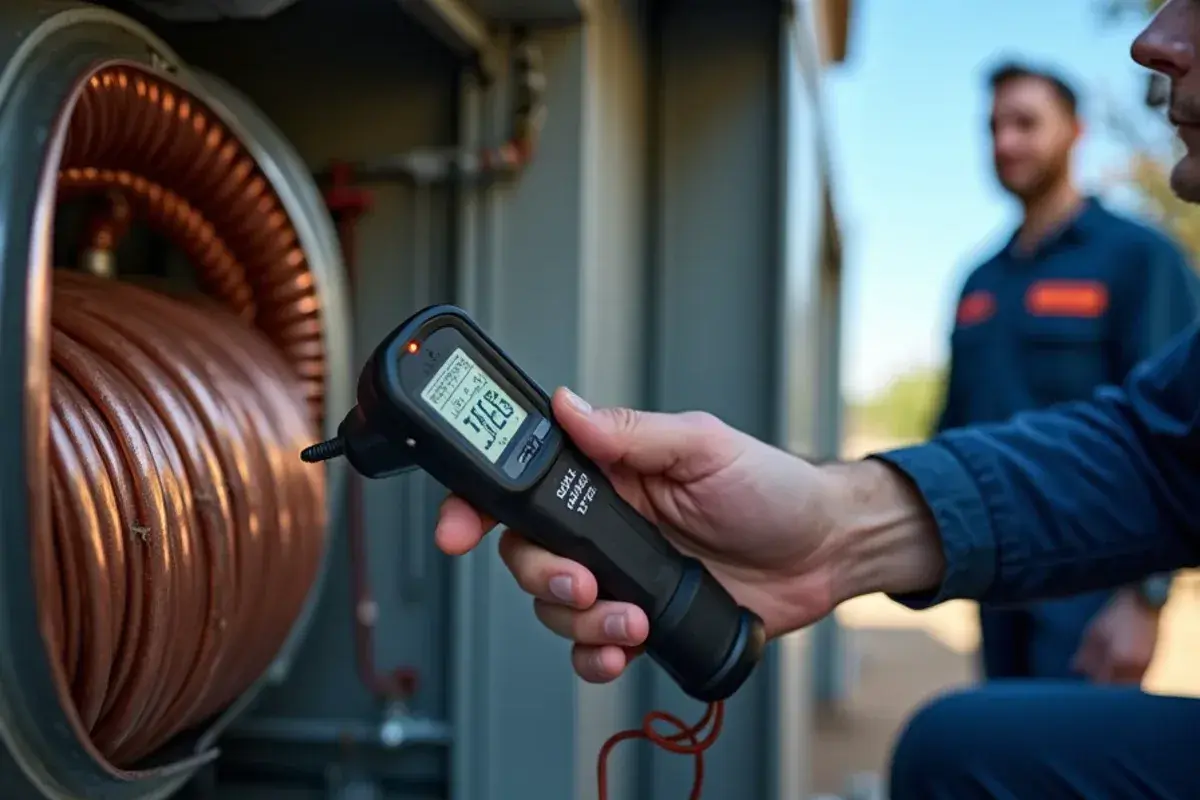
Refrigerant leak repair costs more than a recharge because the work is finding and fixing the hole, not just adding refrigerant. Small leaks in coils, valve cores and flare fittings are common. The technician may sniff for it electronically, brush on soap bubbles, or pressurize the system with nitrogen and watch the gauges.
The refrigerant type changes the cost a lot. R-22, found in many older systems, is no longer made in the US, and what is left comes from reclaimed or stored stock. That scarcity makes recharging an R-22 system expensive. R-410A systems are easier to service for now, although federal rules under the AIM Act keep cutting how much new HFC refrigerant can be produced, so supply and cost may shift over the next several years. The newer refrigerants such as R-454B and R-32 that arrived in 2025 have their own handling requirements. Refrigerant work in the US must follow EPA Section 608 rules.
Compressors: the big one
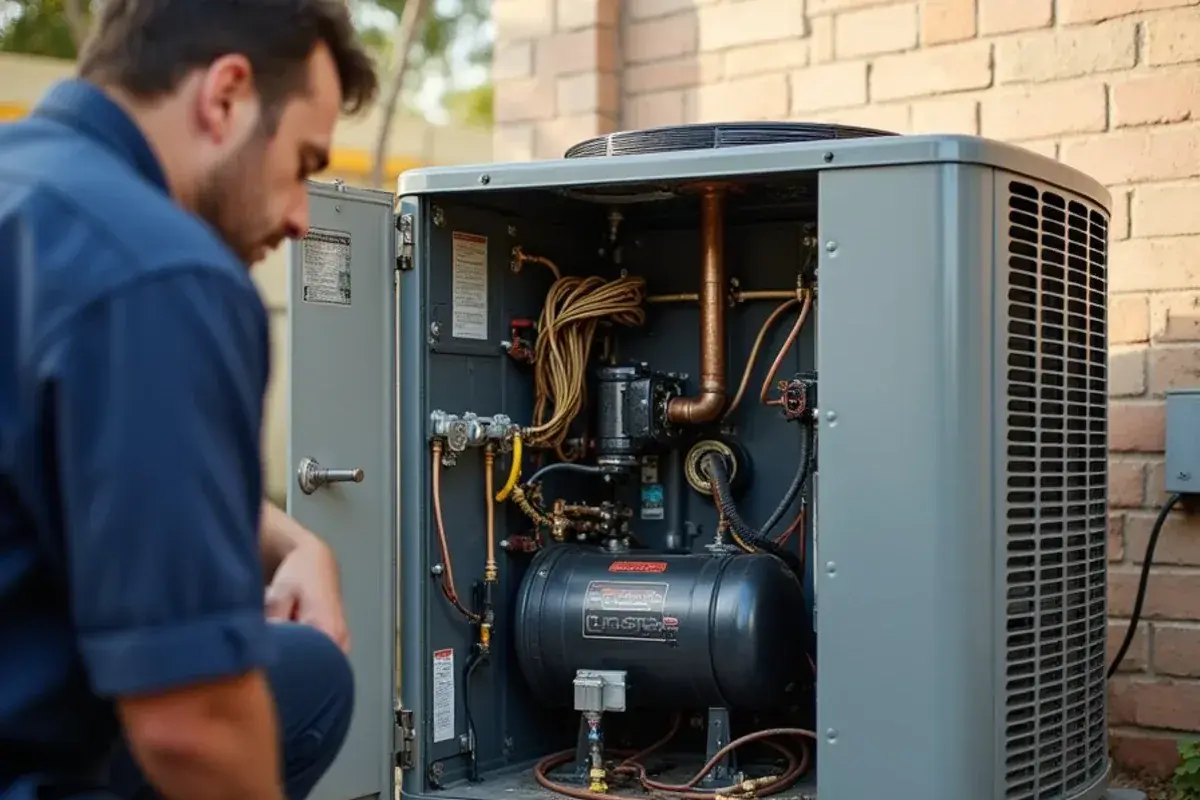
The compressor is the heart of the system and the most expensive single part to replace. AC compressor repair sometimes means fixing what keeps it from starting, like a capacitor or contactor. When the compressor itself has failed, replacement involves recovering refrigerant, cutting and brazing lines, a new filter drier, a deep vacuum and a full recharge.
When a manufacturer's warranty still covers the compressor, the part itself may be paid for while labor and refrigerant are not. On an older or R-22 system, the total often approaches the cost of a new outdoor unit, which is when replacement deserves a serious look.
Local factors that change the bill
- Distance. Our shop is in Rio Grande City, so homes across Starr County are generally a short drive. Farther stops take more travel time.
- Access. Attic units in summer, closets packed with storage and condensers boxed in by fences all add labor.
- Equipment age and parts availability. Older models may need parts that are harder to source.
- Condition of the system. Caliche dust, rust and pest damage can turn a simple swap into extra cleaning or wiring repair.
Southeast of town, La Grulla has many older frame homes with attic ductwork, where attic access often decides how long a coil or blower repair takes.
Reading a repair quote the way a technician would
Two quotes for the same symptom can look very different, and the gap is often in how the work is described rather than the work itself. These are the points worth checking line by line.
Flat-rate or time and materials
Many contractors price repairs from a flat-rate book: one set price per task, no matter how long it takes on your unit. Others bill time plus parts. Flat-rate protects you when an attic job drags on; time and materials can come out lower on an easy, ground-level swap. Neither is wrong, but you should know which one you are looking at.
A recharge with no leak search
If a quote adds refrigerant but says nothing about finding the leak, ask why. Refrigerant does not get used up. A system that is low has a leak, and topping it off without locating the hole just buys a refill that will leak away too.
Readings behind the diagnosis
Ask to see the number. A capacitor's measured microfarads next to the rating on its label, a motor's amp draw against its nameplate, or the pressures that point to a leak turn "it needs a part" into something you can check. Ask to keep the old part, too.
Add-ons, explained honestly
A hard-start kit gives a tired compressor extra torque at startup, and a surge protector or float switch can prevent a second failure. They can be worth it, but they belong on the quote as separate, optional lines, not folded into the repair. Opening the sealed system should also include a new filter drier and a deep vacuum; a quote that skips them to come in lower is saving money in the wrong place.
When repair stops making sense
Consider replacement instead of repair when:
- The system is old and uses R-22
- The compressor or coil has failed outside warranty
- You have paid for repeated repairs over the past two summers
- Cooling and comfort have been declining even when it runs
A trustworthy technician will lay out both options with the reasons behind each.
Getting a fair price on any repair
Ask for the diagnosis in plain words, the part that failed and why, a written quote before work starts, and whether any manufacturer warranty applies. Financing is available for larger repairs if you need to spread the cost; compare the rate, the payment schedule and the total repaid before you sign. Understanding the job is the best protection against paying for the wrong fix. For a repair quote on your system, call (213) 423-7827, describe what it is doing and where the equipment sits, and we will explain what the diagnostic visit covers before anyone opens a panel.