

Homeowners insurance often covers AC damage from sudden events such as lightning, hail, wind or a falling limb, and sometimes power surges. It usually does not cover wear and tear, rust, age or flooding, which needs a separate flood policy. Your policy wording decides it, so check the surge language, the wind and hail deductible and any equipment breakdown endorsement.
The cause of the damage matters far more than the equipment itself. This article is general information to help you ask better questions. It is not legal or insurance advice, and only your policy and your insurer can tell you what is covered. Read the declarations page and the exclusions, and call your agent when anything is unclear.
The line insurers usually draw
Most homeowners policies are written to cover sudden and accidental physical damage from a covered event. They are not maintenance contracts. That single distinction explains most AC claim outcomes.
- Sudden events such as a lightning strike, a tree limb falling on the condenser, a hailstorm or a vehicle backing into the unit are the kind of losses policies are often designed for.
- Gradual problems such as rust, a compressor that wore out with age, a slow refrigerant leak, a dirty coil or a part that failed from normal use are typically excluded as wear and tear or mechanical breakdown.
An adjuster will often look for evidence that ties the failure to a specific date and event. A unit that was cooling fine before a storm and dead after it is a stronger case than one that had been struggling for months.
How common causes are often treated
| Cause of damage | How standard policies often treat it | Points to check in your policy |
|---|---|---|
| Direct lightning strike | Often covered as a named peril | Deductible, proof of strike date |
| Power surge from nearby lightning | Often covered, sometimes with limits | Surge wording, any sublimits |
| Surge from utility or grid problems | Varies widely; sometimes excluded unless fire results | "Artificially generated electrical current" exclusion, equipment breakdown endorsement |
| Hail or windstorm | Often covered | Separate wind or hail deductible, whether wind is excluded |
| Falling tree or debris | Often covered | Who owned the tree, debris removal limits |
| Flooding or rising water | Usually excluded from homeowners policies | Whether you carry a separate flood policy |
| Age, rust, wear and tear | Typically excluded | Optional equipment breakdown or home warranty |
| Theft or vandalism of copper or the unit | Often covered | Deductible compared with repair size |
Lightning and power surges
Lightning is one of the most common reasons an AC claim succeeds, but surges are where policies differ the most. Some cover surge damage from any cause. Others cover surges only when they come from lightning, and exclude damage from "artificially generated electrical current," the language often used for utility switching or grid fluctuations, unless the surge causes a fire.
Some insurers sell an equipment breakdown endorsement that can cover electrical and mechanical failure of home systems, including surge damage. If you live in an area with frequent summer storms, it is worth asking whether your policy has it.
When a surge or strike damages the system, storm and power surge AC repair should start with testing each electrical component. Ask the technician to write down what failed and what they believe caused it, and to leave the damaged parts with you.

Hail and wind
Hail flattens condenser fins and can dent the cabinet or crack the fan blade. Light fin damage can sometimes be combed straight, but severe hail can reduce airflow enough to hurt performance. Wind can tip a unit off its pad, snap a line set or drive debris into the coil.
Texas policies often carry a separate deductible for wind and hail, sometimes calculated as a share of your dwelling coverage instead of a flat amount. In the coastal counties, wind coverage is often handled under a separate policy from the Texas Windstorm Insurance Association, and the Texas Department of Insurance notes you have one year from the date of damage to file a windstorm claim there. Other policies set their own deadlines, some much shorter for water damage, so report a loss as soon as you find it.
Flooding is usually a separate policy
Standard homeowners policies typically exclude damage from flooding and rising surface water. That matters in the Valley, where Hurricane Hanna in July 2020 flooded parts of Hidalgo and Starr counties. Flood coverage usually comes from a separate policy, such as one through the National Flood Insurance Program, which can include central air conditioning equipment and heat pumps under building coverage. New flood policies generally have a waiting period before they take effect, so they cannot be bought after a storm is forecast.
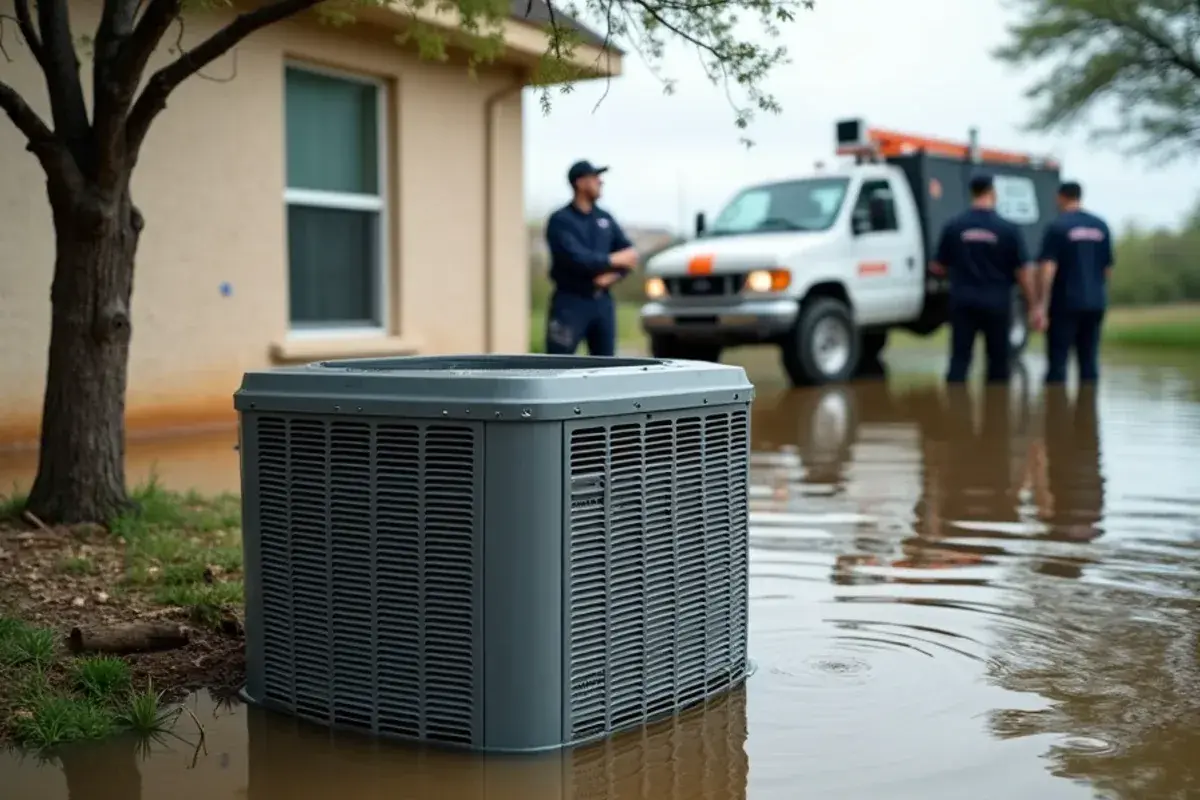
Across Hidalgo County, homes on low ground near the river levee face this risk most. In small riverside communities like Granjeno, south of Mission, raised condenser pads help reduce exposure, but flood insurance is a separate decision worth discussing with an agent.
What to document right away
The strength of a claim often depends on how well the loss is recorded.
- Photograph and video the unit from every side, including fins, panels, the pad and any debris, before anything is moved.
- Note the date and the event. Save weather alerts, news reports of lightning or hail, and any utility outage notices.
- Prevent more damage. Turn off the breakers to a damaged or flooded unit and do not run it. Keep receipts for any emergency steps.
- Get a written diagnosis that describes the damage, the likely cause and the repair needed.
- Keep the damaged parts. An adjuster may want to see a burnt board or capacitor.
- Call your insurer before permanent repairs when possible, and ask what they need from you.
Taking photos of your system and its data plate before storm season gives you a baseline that shows its condition before any loss.
What a technician's report can and cannot do for your claim
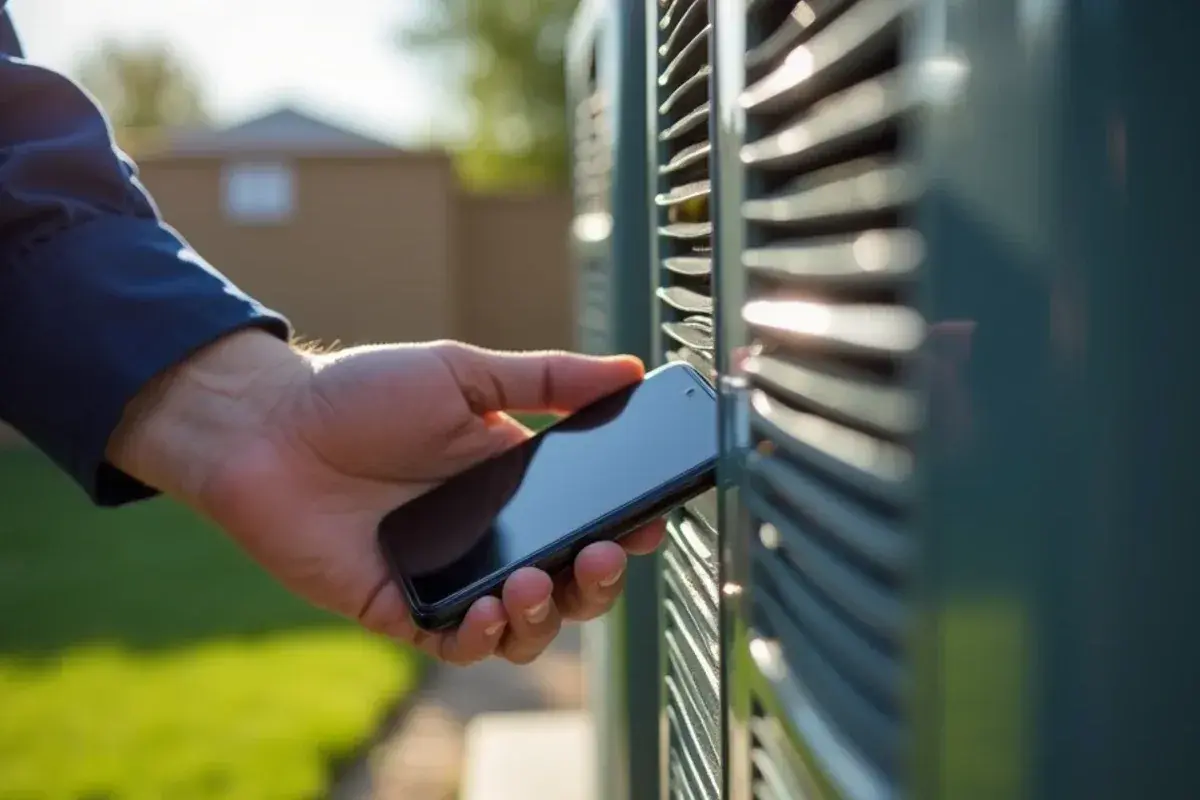
A written diagnosis is often the most useful document in an AC claim, but it helps to know its limits before the adjuster reads it.
What a good report records
- Measured findings, not opinions alone: a contactor with welded or blackened contacts, a scorched control board, a capacitor reading far below its rating, or a compressor winding that shorts to ground on an insulation test.
- Photos tied to the unit: the damaged parts next to the model and serial plate, so there is no question which system they came from.
- Age and refrigerant: the manufacture date decoded from the serial number and the refrigerant type, which both affect what a replacement involves.
- What was already worn: a rusted base pan or a coil corroded long before the storm. Listing it honestly keeps the rest of the report credible.
What it cannot do
A technician can say the damage is consistent with a surge or a lightning event, but cannot prove where the surge came from or whether it entered through the utility line or the ground. That is the adjuster's call, and on larger losses insurers sometimes send their own engineer. A report that overstates the cause tends to hurt a claim rather than help it.
Manufacturer warranties are a separate track. Most cover defects in parts, not damage from lightning, floods or power surges, so a warranty check usually confirms coverage for a failed part only when the cause was a defect rather than the storm.
Repair, replace and what a claim may pay
If the damage is limited to a part or two, repair is usually simplest. When the outdoor unit is destroyed, replacement gets more complicated. Older systems that run R-22, which is no longer produced in the US, may not have a like-for-like replacement, and a new condenser using a current refrigerant often needs a matching indoor coil. How your policy handles that, and whether it pays replacement cost or actual cash value after depreciation, varies.
If you are weighing AC replacement after a storm, get a written estimate that separates the damaged equipment from any upgrades you choose, so your adjuster can see what relates to the loss.
Keeping your claim on solid ground
Read your policy before you need it, ask your agent about surge, wind, hail and flood coverage, and keep records of maintenance and the system's condition. When a storm does hit, document first, prevent more damage, and get a clear written diagnosis. For questions about your rights in a claim, the Texas Department of Insurance publishes consumer guides and offers a help line. If a storm has already hit your system, call (213) 423-7827 and ask for a written diagnosis; tell us the town, what happened and what the unit is doing now, and leave it switched off until it has been checked.