
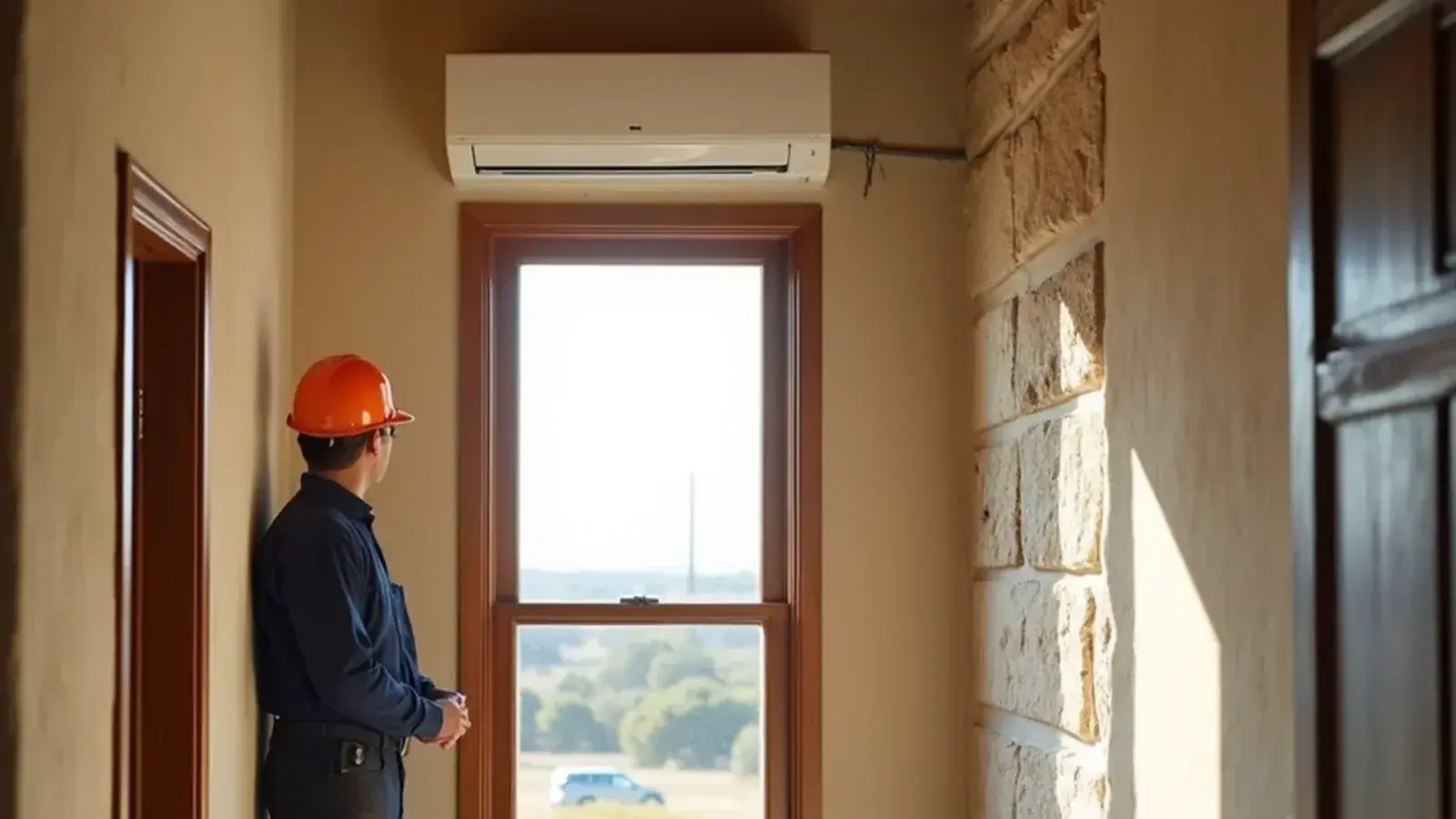
The best AC for historic homes in Roma and downtown Rio Grande City is usually a right-sized ductless mini-split system, installed so it can come out later: small sleeves through mortar joints, outdoor units on rear walls or ground stands, and no ductwork cut through solid masonry. Central air and window units rarely suit these buildings.
Getting it right is mostly about restraint. The old brick and sandstone buildings of Roma and downtown Rio Grande City were built to stay livable before refrigeration existed, with thick walls, deep window reveals and tall ceilings that let heat rise away from people. Modern cooling can make them comfortable through a 100°F summer, but only if the installation respects how they were built.
That rules out a lot of the usual options. There is rarely space for ductwork, attics may be shallow or missing, and every hole in old masonry is permanent unless it is planned to be reversible. For most of these buildings, ductless mini-splits are the cleanest fit.
What makes these buildings different
Roma's historic district occupies high ground overlooking the river. It was listed on the National Register of Historic Places in 1972 and designated a National Historic Landmark district in 1993, the highest designation the Department of the Interior gives to a historic district. Its buildings are known for river sandstone, caliche limestone and molded brick laid by skilled masons in the 1800s.
Downtown Rio Grande City has its own stock of older masonry storefronts and homes, and the Fort Ringgold historic district is part of the city as well. Upriver in Zapata County, San Ygnacio has a historic district of 1800s sandstone houses facing the same challenges, and we work that part of the river through our Zapata County coverage.
These walls have three traits that matter for cooling:
- Thermal mass. Stone and brick absorb heat during the day and give it back slowly at night. Rooms stay cooler in the morning but can feel warm late into the evening.
- No hidden cavities. Unlike frame walls, solid masonry offers no chase to hide pipes or wiring.
- Moisture movement. Old lime mortar lets moisture pass through the wall. Sealing or cutting it carelessly can trap water and damage the stone.
Why central air rarely fits a historic house
A central system needs a supply duct to every room and a return path back to the air handler. In a building with no attic space and solid interior walls, that means boxing in ceilings, cutting floors or running exposed ducts through rooms. All of that changes the character of the interior, and most of it cannot be undone cleanly.
Window units avoid ductwork but bring their own problems. They block historic windows, can drip on sills and stone below, and often need brackets screwed into old frames. They are also noisy in rooms with hard plaster and tile surfaces that bounce sound.
A ductless system, by contrast, needs only a small sleeve through the wall for each indoor head, about the size of a fist, to carry the refrigerant lines, drain and control wire. That is why ductless AC in an old house is the default recommendation for preservation-minded owners.
Ductless options compared for older masonry
Not every indoor unit style suits every room. This table compares the common choices.
| Indoor unit style | Where it fits | What it disturbs | Notes for historic rooms |
|---|---|---|---|
| High wall head | Most rooms with plain wall space above doors or windows | One small sleeve, mounting plate screws | Most common; keep it off decorative plaster or trim |
| Floor console | Under windows, or where upper walls are ornate | Sleeve low in the wall | Good for deep window reveals; easier to service |
| Ceiling cassette | Rooms with accessible space above the ceiling | Ceiling opening | Only where the ceiling is not original or is already altered |
| Slim ducted unit | Short runs to two nearby rooms from a closet or attic pocket | Small duct openings | Useful where a later addition has hidden space |
How a reversible install works
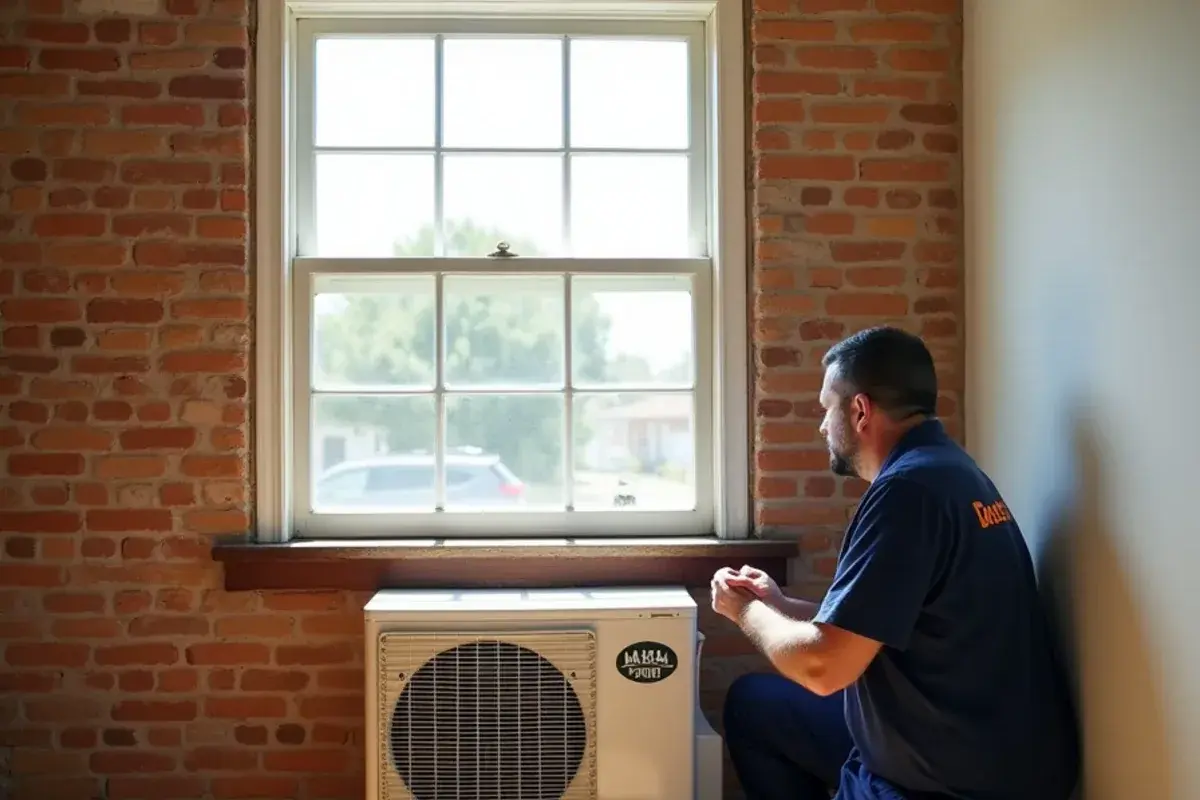
The goal is that a future owner could remove everything and find the building as it was, give or take a patched joint. On mini-split installation jobs in older buildings, that means a few specific choices.
Drill through mortar, not stone
Mortar joints can be repointed later; a hole through a carved sandstone block cannot be hidden. Wherever possible, the line set sleeve goes through a joint, using a core bit and slow speed to avoid cracking the face.
Use rear or secondary walls
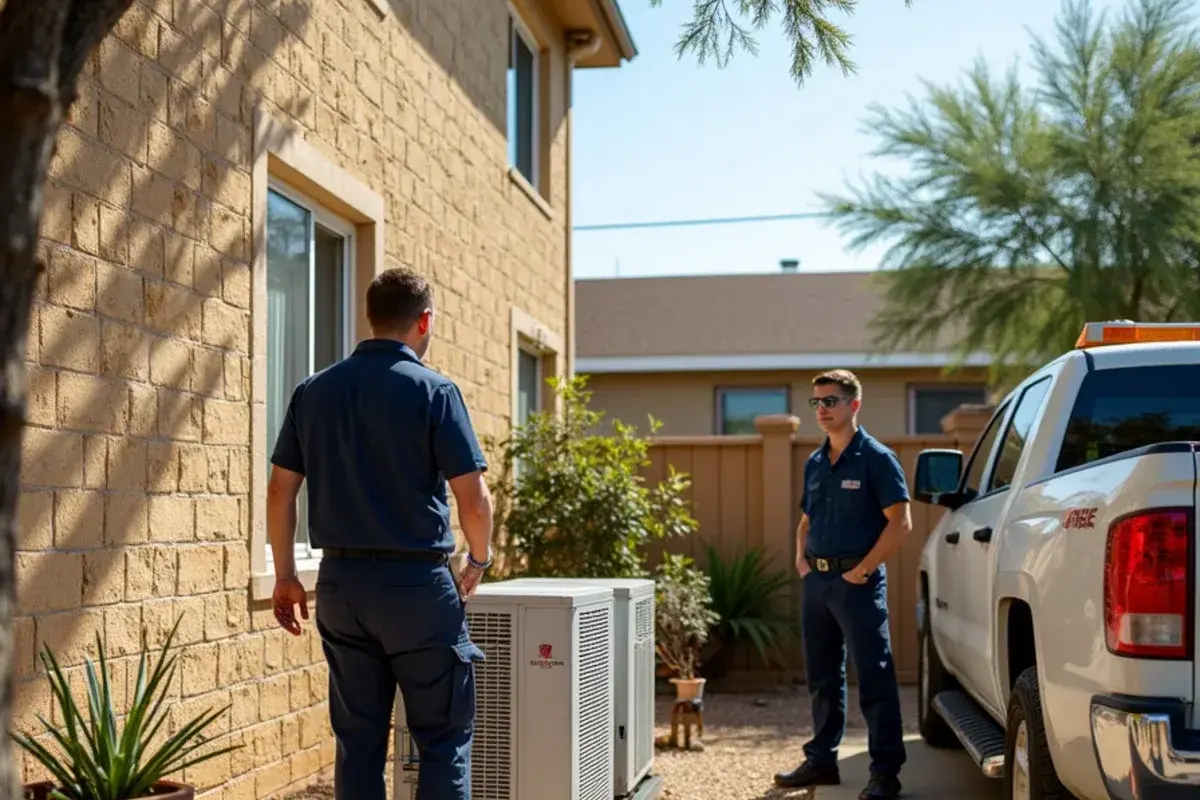
Street-facing facades are what make a district historic. Outdoor units, line sets and disconnects belong on rear walls, side yards or later additions whenever the layout allows.
Keep hardware off the masonry outside
A freestanding ground stand or pad holds the condenser without wall brackets. That avoids drilling anchor holes into historic stone and keeps vibration away from old mortar.
Choose removable covers
Line-hide channels can be painted to match plaster or brick and clipped off later. Inside, they are often the difference between an install that looks planned and one that looks patched.

Sizing for walls that hold heat
Historic masonry homes punish oversized equipment. A unit that is too big cools the air quickly, satisfies the thermostat and shuts off before the walls give up their stored heat or the coil pulls out much moisture. The result is cold, damp air and rooms that warm up again within minutes.
Right-sizing, often with smaller heads in more rooms, gives long, steady run times. That keeps humidity down, which also protects plaster, wood floors and stored items. In Roma and the older parts of Rio Grande City, a load estimate that accounts for wall thickness and window shading matters more here than anywhere else.
Moisture, mortar and setpoints: what a careful installer watches
The biggest risk in cooling an old masonry building is not the drill. It is water. The National Park Service's preservation guidance on heating and cooling historic buildings warns that in hot, humid climates, moisture moves from the damp outdoor air toward the cooled interior, and it can condense inside a wall if the cold side of that wall sits below the dew point. Lime mortar and soft sandstone tolerate a lot, but repeated wetting inside the wall breaks them down.
That changes how the system should be set up and run:
- Moderate setpoints, steady cycles. Holding a stone room at a very low temperature through a humid August makes the inner face of the wall the coldest surface in the building. A moderate setting with long run times dries the air without chilling the wall.
- Humidity before temperature. A head that removes moisture well matters more here than raw capacity. Some owners pair the system with a dehumidifier in rooms that stay damp, which the same NPS guidance suggests for houses without central air handling.
- No sealing the inside of the wall. Vapor-tight paints and coatings on old plaster can trap the moisture the wall used to release. Patch around a sleeve with a breathable lime-based material instead of foam and caulk where it shows.
- Drains that lead away from stone. Condensate dripping at the foot of a wall soaks the base of the masonry and the soil under it. Each drain should be run to a point where the water can soak in or flow away from the foundation.
- Passive features kept working. Shutters, awnings, transoms and deep window reveals were the original cooling system. Keeping them in use lowers the load, which can mean smaller heads.
An honest limit: an installer can read wall thickness, sun exposure and room size, and size the equipment around them. What no one can promise is how a particular wall will behave once the room is held cool all summer. Watching for damp patches, salt bloom or flaking plaster during the first season, and adjusting setpoints if they appear, is part of owning one of these buildings.
Questions to settle before work starts
- Is the building in a designated historic district, and does the city want to review exterior changes?
- Which walls are original and which are later additions?
- Is there a rear yard, courtyard or side wall for the outdoor unit?
- Can the condensate drain discharge away from the foundation and stone?
- Is the electrical service adequate, or does older wiring need attention first?
Our ductless mini-split page covers how the systems run, clean and get serviced over the years.
A light touch pays off
The old stone and brick of Roma and downtown Rio Grande City has stood up to river heat for more than a century. Cooling them well does not take heavy construction. A careful ductless layout, small penetrations in the right places and equipment sized for thick walls make these homes comfortable while keeping them intact for whoever comes next. If you own an older stone or brick building, call us at (213) 423-7827 and describe the rooms, the walls and where the yard space is, and we will talk through a layout before anything is drilled.