
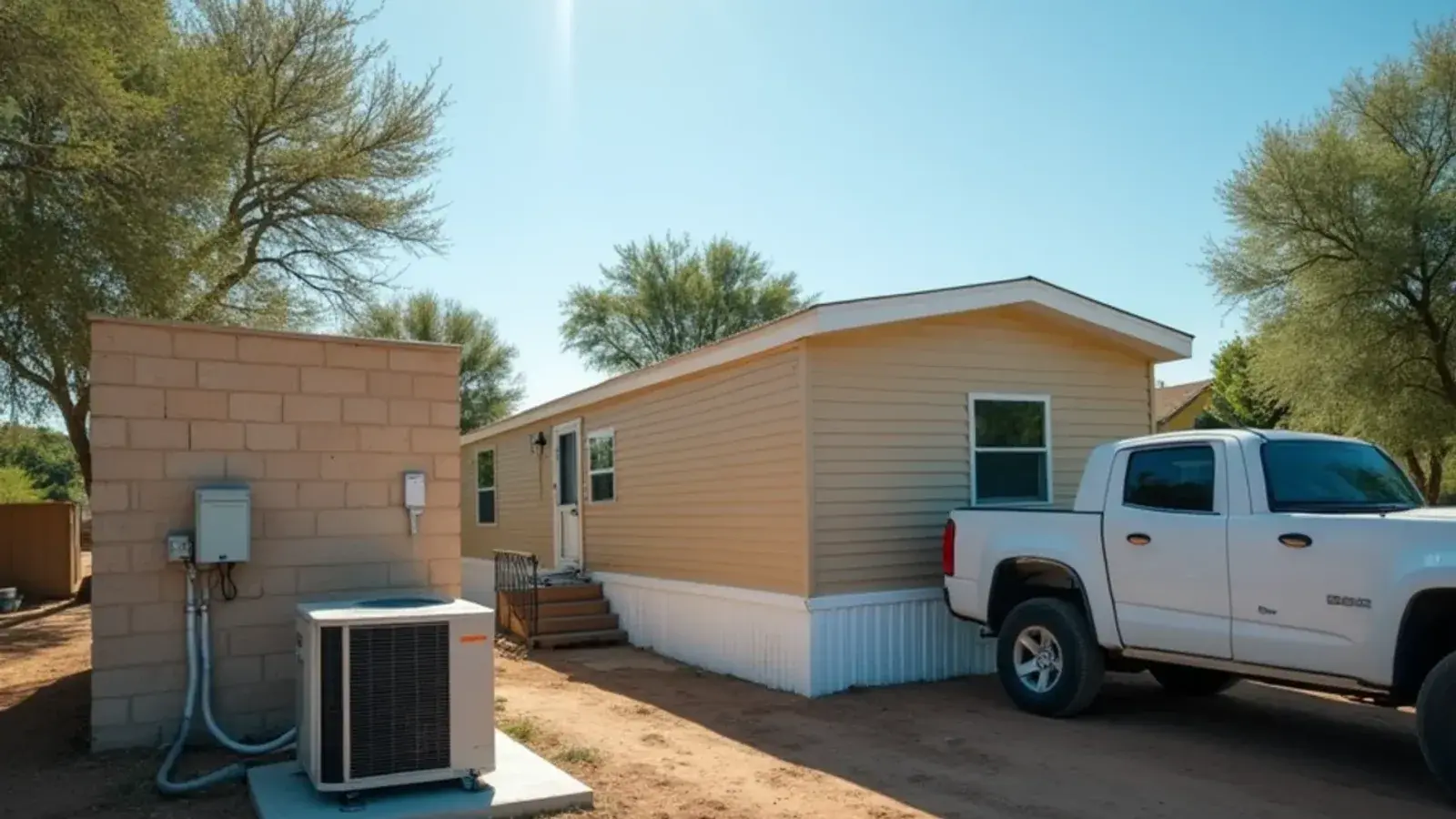
The best AC for a mobile home depends on its belly duct. If the duct under the floor is sound, a correctly sized package unit or a split system with a downflow air handler works well. If it is crushed or torn, or the home has add-on rooms, a ductless mini-split usually cools better. Inspect the ducts before choosing equipment.
Choosing well starts with how the home moves air. Most manufactured homes push cooled air through a duct running inside the underbelly, the insulated layer beneath the floor, and up through floor registers. If that belly duct is sound, a ducted system works well. If it is crushed, torn or disconnected, even brand-new equipment will struggle. In Starr County, where manufactured homes sit on caliche lots in full sun and owners often add block rooms later, the right answer depends on the home's layout as much as the equipment.
Below we compare the three main options, explain the duct problems that change the decision, and cover the extra step for single-wides and double-wides that have grown with a family.
How cooling works in a manufactured home
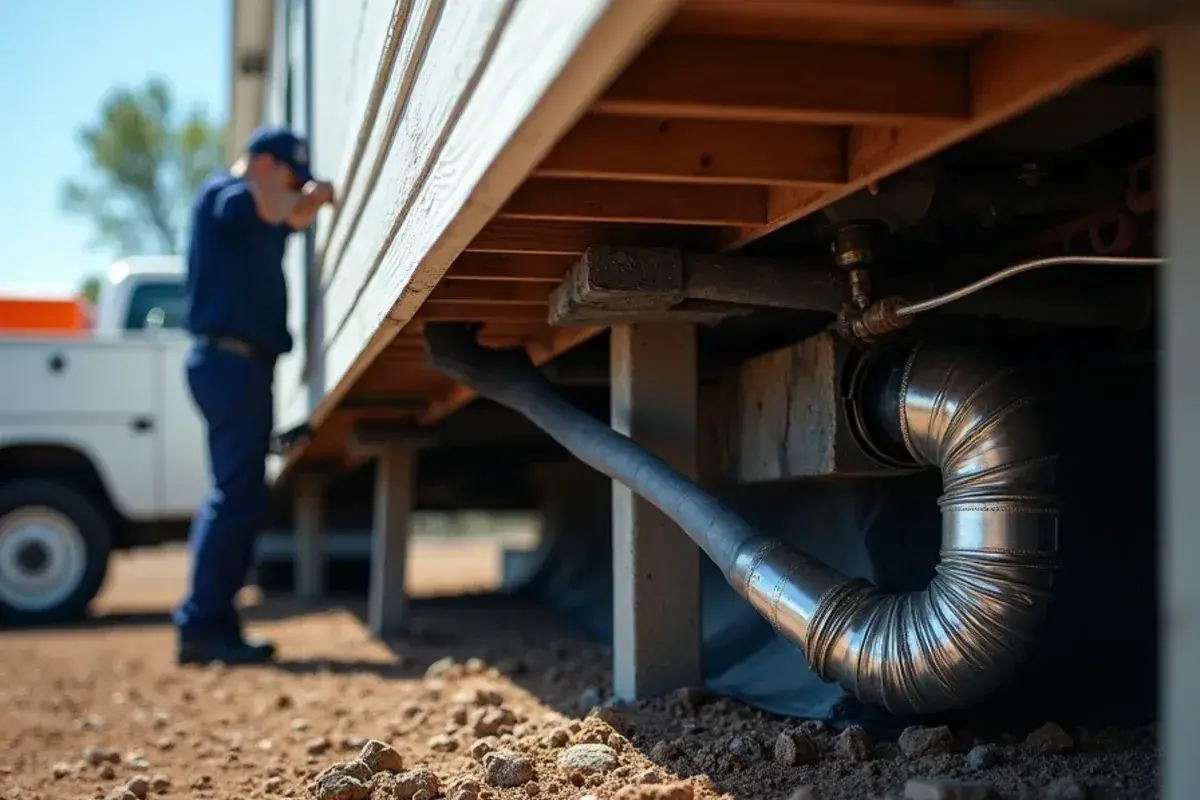
Site-built houses usually run ducts through an attic. A typical manufactured home instead has a long trunk duct in the floor cavity, with short branches to each register. The air handler or furnace often sits in a narrow hall closet designed for downflow equipment, blowing air straight down into that trunk. Return air comes back through a grille in the closet door or through gaps under interior doors.
Because the walls and roof are thin compared with block or frame homes, these houses gain heat quickly on long afternoons. That makes airflow and duct integrity especially important.
Package unit, split system or mini-split
| Option | How it is set up | Strengths | Drawbacks |
|---|---|---|---|
| Single-package unit | All components in one outdoor cabinet, connected to the belly duct with a short duct | Nothing extra inside the closet; common on single-wides | Relies entirely on sound ductwork; outdoor cabinet takes the full sun |
| Split system with downflow air handler | Condenser outside, air handler or furnace in the hall closet | Familiar layout; can use an existing closet setup | Closet space is tight; equipment must be rated for manufactured homes where required |
| Ductless mini-split | Outdoor unit plus one or more wall-mounted indoor heads | No duct losses; zoned cooling; good for add-ons | One head per zone; higher cost for many rooms |
| Window units | Separate units in each room | Low up-front cost | Noisy, inefficient, poor security and humidity control |
When a package unit makes sense
If the belly duct is intact and the home already has a package unit, replacing it with a correctly sized new one is usually the simplest path. Package units also free the closet for storage. Placement matters: a level pad, enough clearance for airflow and some shade from the afternoon sun help it last.
When a split system fits
Homes that already have a closet air handler or furnace often stay with a split system. The indoor equipment should suit the closet and the home's construction; manufactured-home equipment is built for those tight, downflow spaces.
When ductless is the better answer
When ducts are badly damaged, replacing or rebuilding them under the floor can be a big job. Mini-splits skip the problem entirely. They are also a natural fit for zones that the original duct never reached. Our mini-split installation service covers placement, line-set routing and how many heads a home typically needs.
Duct problems that change the decision
Before buying equipment, have the duct system inspected. Problems we look for under manufactured homes:
- Torn or sagging underbelly wrap that lets the trunk duct drop away from registers.
- Disconnected branch ducts dumping air into the crawl space.
- Crushed or rodent-damaged crossover ducts on double-wides.
- Register boots that have pulled away from the floor.
- Missing or blocked return paths, often from a closet door replaced with a solid one.
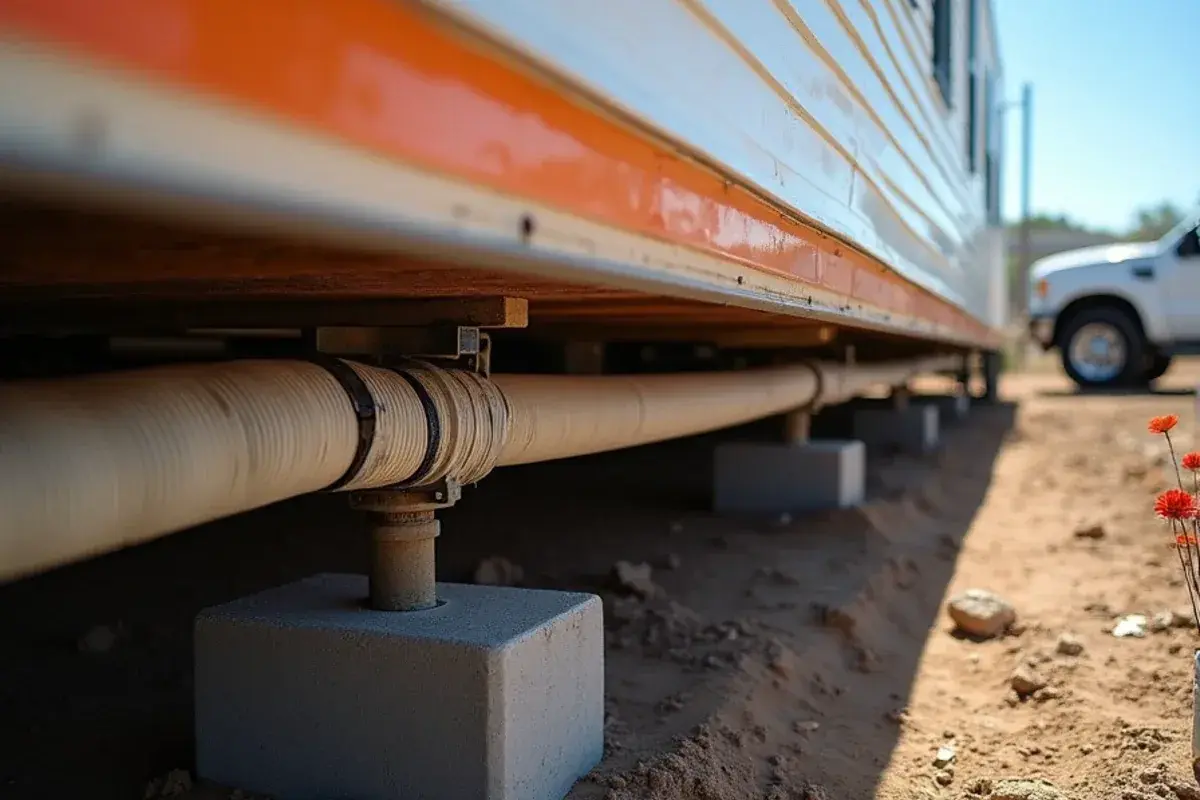
A double-wide adds a crossover duct, a large flexible duct that carries air from one half of the home to the other beneath the floor. When it is crushed or disconnected, the far half of the home never cools properly. Repairing these issues sometimes restores so much airflow that a homeowner keeps the existing equipment for a while longer.
Add-on rooms and two-system properties
Across Starr County, many families add a block room, porch enclosure or a second dwelling beside the original manufactured home. Extending the belly duct into an add-on rarely works well; the run is long, and the original system was not sized for the extra space. A dedicated mini-split for the addition is usually the cleaner solution.
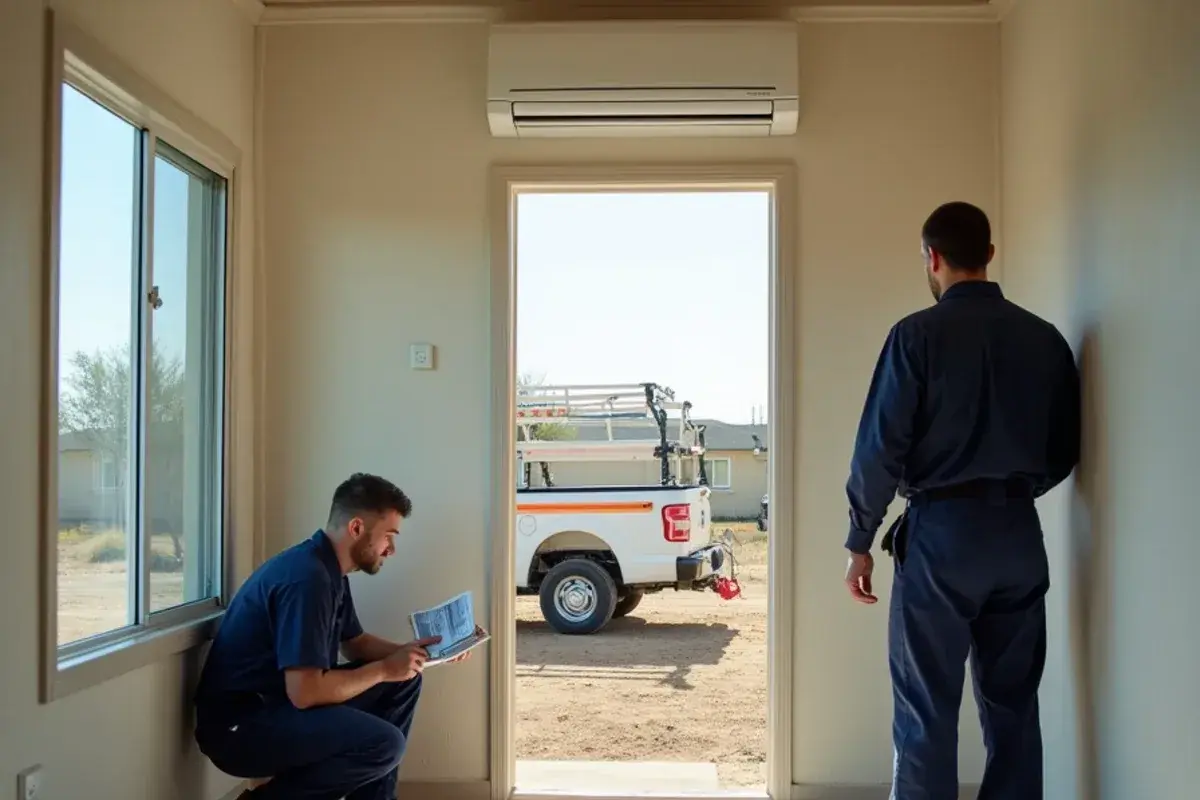
In Mi Ranchito Estate, on Rio Grande City's west edge, many lots pair a mobile home with a newer add-on, so one property often needs two cooling setups that work independently. In Mikes, north of La Grulla, the most common cause of weak airflow in manufactured homes is a crushed or disconnected belly duct, which is why duct inspection comes before any equipment recommendation there.
What we read before recommending equipment
A manufactured home comes with paperwork and construction details that a site-built house does not, and they shape the recommendation as much as the floor plan does.
The comfort cooling certificate and data plate. Federal manufactured-home standards (HUD's code at 24 CFR 3280) require a comfort cooling certificate fixed on an inside surface where the occupant can see it, usually near the home's data plate. When the home was built suitable for central air, the data plate lists the maximum cooling capacity the duct system was designed to carry. When it was not, the certificate says the air distribution system was not designed for central air conditioning. Exceeding that capacity forces more air through ducts than they were built for, which shows up as noise and weak far registers.
The return path. Many closet systems pull return air through a louvered door or a grille. Swap that door for a solid one, or block the grille with storage, and the blower starves. It is one of the cheapest fixes there is and one of the most overlooked.
Repairing the belly versus going ductless. Patching the underbelly wrap, reconnecting branches and replacing a crushed crossover is often worth doing on a home with years left in it, and it falls under the same ductwork repair work as any other leaky duct system. When the trunk duct itself is corroded or the belly has failed along most of its length, rebuilding it from below is slow, cramped work, and a mini-split can be the more sensible spend. A technician should show you photos of what is underneath before you decide.
Thin walls and mini-split heads. Wall panels in manufactured homes are thinner than block or frame walls, so the mounting plate for an indoor head needs to land on studs or added backing. The line set and drain should exit low enough to slope outward, and the wall opening needs to be sealed against rain and insects.
Older outdoor equipment. Package units from the R-22 era are common on older single-wides. Since R-22 is no longer produced, a major refrigerant leak on one of those units usually tips the decision toward replacement.
Where DIY stops. Checking the filter, the return grille and the registers is fair game. Crawling under the home around wiring, piers and possible wasps, snakes or rodents is not, and neither is opening the electrical side of the unit.
Electrical and placement checks
Older manufactured homes may have limited electrical service. A new system needs the correct breaker, wire size and an outdoor disconnect. Equipment must also sit where water drains away from the home and where skirting and piers stay dry. A raised pad helps keep the unit out of puddles after summer storms. Our mobile home AC service covers these checks along with equipment options.
Comparing options for your home
| Your situation | Option to consider first |
|---|---|
| Belly duct in good shape, existing package unit | Replace with a correctly sized package unit |
| Closet air handler, ducts sound | Split system matched to the closet |
| Ducts badly damaged, small home | Ductless mini-split, one or two heads |
| Double-wide with a weak far side | Repair the crossover duct, then reassess |
| Add-on room or second dwelling | Separate mini-split for the addition |
| Window units throughout | Mini-split or ducted system after a duct check |
A sensible order of steps
Start under the floor, not at the equipment. Have the belly duct, crossover and return path inspected, fix the damage, and then size the system to the home and any additions. If the ducts are beyond repair or the home has several separate zones, ductless equipment is often the more reliable choice. Getting the airflow right first means whatever system you pick can actually do its job. To have the belly duct and current system looked at, call 956 Multi Service at (213) 423-7827 and tell us whether it is a single-wide or a double-wide and what is happening in the far rooms.