
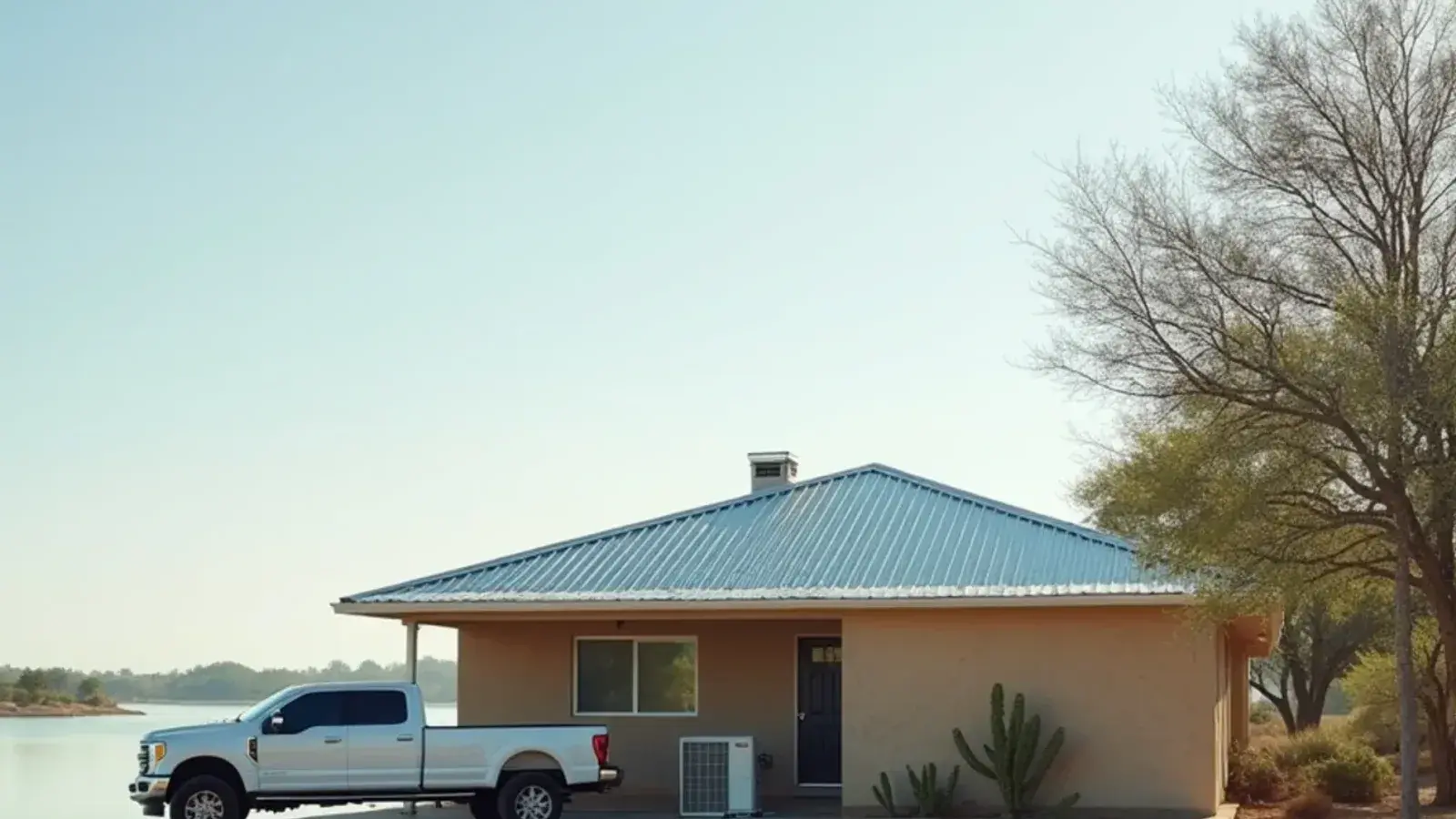
Lake house AC maintenance around Falcon Lake comes down to three habits: keep the cooling running at a higher setting while the house sits empty so humidity stays below 60 percent, book a pre-season check a week or two before your first long weekend, and deep clean mini-split heads that sat closed up through humid months.
The job has a few twists that a full-time home does not deal with. The house may sit empty for weeks, the air off the reservoir stays humid, and wind carries fine sand off the shoreline into every outdoor unit. When the owners arrive for a long weekend, they expect cold air the moment they open the door, and that is exactly when neglected systems tend to fail.
Here is how to keep the AC and mini-splits ready, whether your place is a retirement home you visit in season or a fishing getaway used a few weekends a year.
Why lake homes on Falcon Lake are different
Falcon International Reservoir stretches along the Rio Grande on the Texas side through Zapata County and into Starr County. It was created in the 1950s, and the town of Zapata was rebuilt on higher ground when the waters rose. Today the shoreline holds lake subdivisions such as Falcon Lake Estates, between Zapata and the Starr County line, along with ranches, fishing lodges and weekend houses. Our Zapata County service area covers that stretch, and on the Starr County end we reach homes near the dam around Falcon Heights.
Three things set these properties apart:
- Humidity from open water. Lake air carries more moisture than the dry brush country inland, and it settles into closed houses.
- Long idle stretches. Equipment that sits unused gives pests time to move in and lets small problems go unnoticed.
- Sand and grit. Wind off the shoreline drives fine sand into condenser coils and abrades fins over time.
Humidity in a closed house
The biggest mistake with a part-time house is shutting the AC off in summer. With no cooling running, indoor humidity climbs. Fabrics, mattresses and drywall absorb moisture, and mold can start in closets, on the backs of furniture and inside the indoor units themselves. The EPA recommends keeping indoor humidity below 60 percent to limit mold growth.
A better approach for warm months:
- Leave the system on at a higher temperature instead of off.
- Use dry or dehumidify mode on mini-splits that offer it.
- Leave interior doors open so air can move through the house.
- Consider a smart thermostat or humidity sensor that alerts your phone if readings climb.
For homes with central ducts, a whole-home dehumidifier can control moisture on its own, even when the house needs little cooling. That is especially useful in shoulder seasons, when the air is damp but not hot enough to make the AC run long.
Settings for the time you are away
| Season | Recommended approach | Why |
|---|---|---|
| Summer, house empty | Cooling on at a higher setting, dry mode if available | Controls humidity and protects the interior |
| Spring and fall, house empty | Moderate cooling setting or a dehumidifier | Damp air without much heat still feeds mold |
| Winter, house empty | Heat at a low setting during freezes, or off between cold snaps | Protects plumbing during hard freezes like those of February 2021 |
| Day before arrival | Lower the setting remotely or have someone switch it on | Gives the system time to pull down heat and moisture |
| After leaving | Rinse mini-split filters, empty trash, close blinds on sunny sides | Reduces dust, odor and heat load while you are gone |
What goes wrong while a lake house sits
Idle equipment is an invitation to visitors. Wasps and mud daubers build nests inside electrical compartments. Fire ants pack themselves into contactors. Rodents chew low-voltage wiring and nest in insulation. Lizards and frogs can get into control panels and short them out.
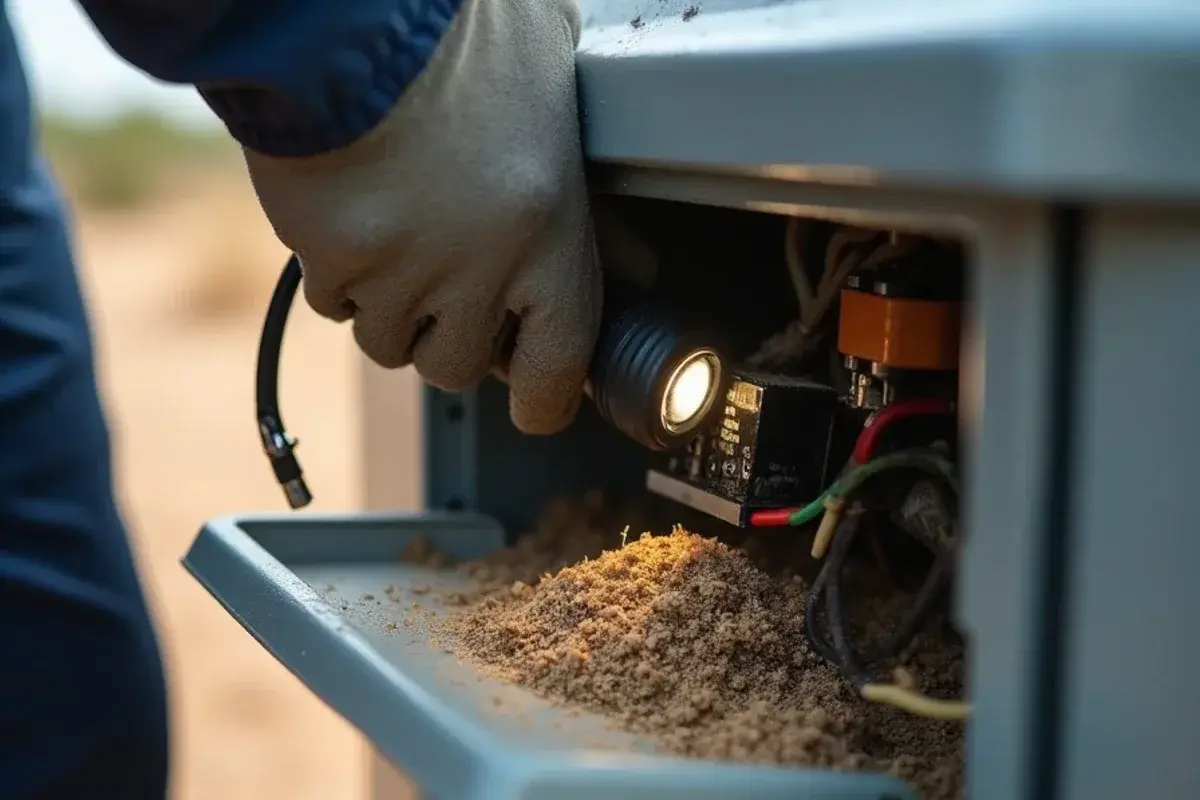
Condensate drains are another weak point. Water that sits in a drain line for weeks grows algae, and the first heavy run of the season can back it up into the pan, triggering a float switch or dripping through a ceiling. Mini-split heads in closed houses are prone to musty smells for the same reason: their coils and blower wheels stay damp with little airflow.
Power quality matters too. Lake areas see summer thunderstorms, and surges or outages while nobody is home can leave a system tripped or damaged without anyone noticing until the next visit.
Idle equipment from a technician's side: what sitting does to an AC
Most people assume a system that barely runs should last longer. Some parts do. Others age on the calendar whether they run or not, and a few problems only exist because the equipment sat. These are the ones a technician looks for first on a lake house.
- Capacitors age anyway. The run capacitor that helps start the compressor and fan loses strength over time and in heat, used or not. A meter reading against its rating shows whether it is still within range before it fails on a Friday night.
- Refrigerant in the wrong place. When a system sits cold and off for weeks, refrigerant can migrate into the compressor and mix with its oil. Starting it suddenly can push liquid through the compressor, which is hard on the valves. Many outdoor units have a crankcase heater for this reason, and it only works while the breaker is on. That is why manufacturers often call for power to be restored for several hours before starting a unit that was shut off at the breaker.
- Dry drain traps. A condensate line with a trap that dries out during idle months can pull air instead of draining water once the system starts, and water backs up into the pan. The first run of the season is the test.
- Contacts and wiring. Insects in the contactor, a mud dauber nest across a terminal or a chewed thermostat wire can stop a system that was fine when you left.
The lake itself adds to the wear. Water Data for Texas showed Falcon Reservoir only about 13 percent full in the summer of 2024, and when the water is low, broad stretches of exposed shoreline give the wind more grit to carry into condenser coils.
The honest trade-off is electricity against the house. Running the cooling at a higher setting while nobody is there costs power. Shutting it off saves that, but lake-air humidity in a closed house is how mold, warped cabinets and musty heads start. A dehumidifier, or a higher setting with a dry mode, usually lands in the middle.
A pre-season check before the first long weekend
Book an AC maintenance visit a week or two before the season starts, not the day you arrive. That leaves time for parts if something has failed. A pre-season check typically covers:
- Clearing nests, ants and debris from the outdoor unit and electrical parts
- Testing the capacitor and contactor, which often fail after idle periods
- Washing sand and dust from the condenser coil
- Flushing the condensate drain and testing any float switch
- Checking refrigerant operation and the temperature drop across the coil
- Confirming the thermostat or remote settings work

Mini-splits need their own attention
Ductless heads in lake homes often benefit from a full mini-split cleaning at the start of the season, since their coils and wheels collect growth during humid idle months. Rinse the filters yourself after each visit, and call for a deep clean if you smell mustiness the moment the heads start.
Simple habits between visits
- Ask a neighbor or caretaker to check the house after storms.
- Keep brush and tall grass trimmed back from the condenser.
- Leave a note inside with your system's model numbers and service history.
- Set thermostats with remote access so you can see if the system stopped.
Arrive to a cool, dry house
A lake house is supposed to be the easy part of your week. Keep the cooling running at a sensible setting while you are gone, control humidity, and have the system checked before the season, and you will open the door to cool, fresh air instead of a musty house and a service call. To set up a pre-season check, call 956 Multi Service at (213) 423-7827 and tell us where the lake house is and when you plan to arrive.